
How to Lease a Commercial Premises in Colombia: Legal Guide and the Commercial Code
Discover the rules of the Commercial Code for leasing shops, offices and warehouses in Colombia. Learn how to protect your property and understand the right of renewal.
IDIOMA DEL ARTÍCULO
Showing original language
Quick answer: Renting a commercial premises in Colombia is not governed by Law 820 on housing, but by the strict Commercial Code (Articles 518 to 524). The golden rule every landlord should know is that, after 2 consecutive years with the same business establishment, the tenant acquires a renewal right subject to the exceptions in Article 518. Eviction with at least 6 months' notice applies when the landlord invokes grounds 2 or 3 of that article.
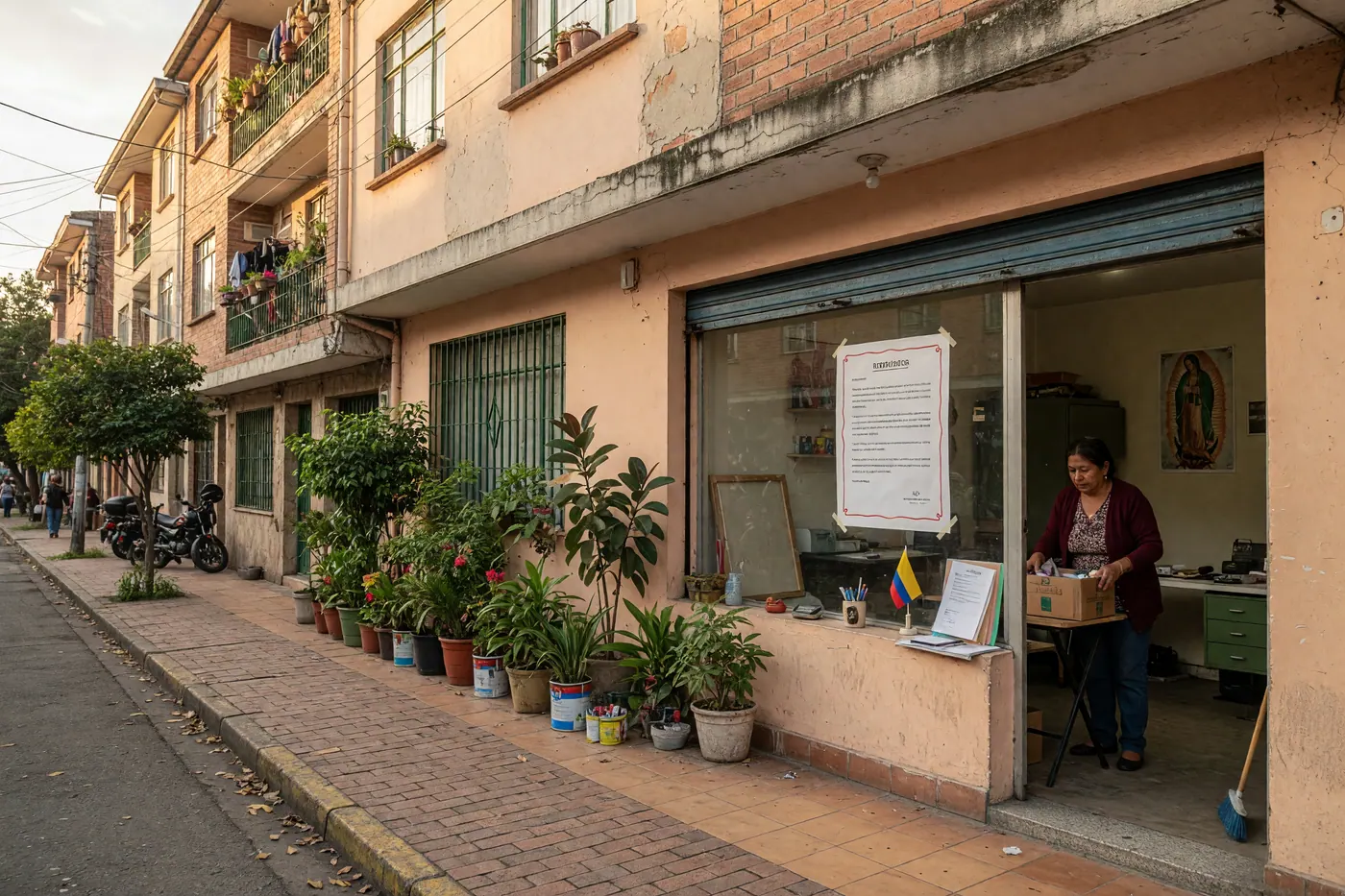
If you have a commercial premises in El Poblado, a warehouse in Paloquemao or an office in Chapinero, you know the commercial sector can be much more profitable than traditional housing. Tenants tend to be stable and fit-outs are at their own expense. However, legally it is a field where many landlords make costly mistakes. If you want to see real options right now, you can view apartments and houses in Colombia Move — listing is completely free.
Honestly, if you are going to rent out a commercial space, you cannot use the same contract format you used for your apartment. Here I explain exactly what the Commercial Code says and how to protect your investment.
1. Commercial Code vs. Law 820: The Big Difference
The most common mistake of novice landlords is believing that all rentals in Colombia work the same way. Law 820 of 2003 applies exclusively to urban housing. Commercial premises, offices and warehouses are governed by Articles 518 to 524 of the Commercial Code (Decree 410 of 1971).
Why this difference? Because commercial law seeks to protect the "goodwill" or customer base that a business has built at a physical location over time. The rules are mandatory, which means you cannot get around them even if you include a clause in the contract saying otherwise.
According to active listings on Colombia Move (July 2026), there are currently 9 active listings among offices and commercial premises. It is a good time to showcase your property well, but you should do so with the proper legal protection.
2. The Renewal Right (Article 518): The 2-Year Milestone

Article 518 is the core of commercial leasing in Colombia. It establishes that, once the tenant has occupied the premises for two consecutive years with the same business establishment, they acquire the right to renew the contract, subject to the exceptions set out in Article 518.
As a landlord, you can only refuse to renew the contract in three specific situations (legal grounds):
- Breach: If the tenant does not pay rent, utilities or breaches other contract clauses.
- Own need: If you need the premises for your own housing or to set up your own business that is substantially different from the tenant's.
- Reconstruction or demolition: If the property must be demolished, requires major repairs that cannot be carried out with the premises occupied, or for new construction.
I would avoid any attempt to invent excuses to remove a commercial tenant. If you do not fit one of these three grounds, you are obliged to renew.
3. Commercial Eviction (Article 520): The Golden 6-Month Rule
If you meet grounds 2 or 3 mentioned above and want to recover your premises, you must carry out the "desahucio" (notice to vacate). Article 520 requires you to notify the tenant in writing with no less than 6 months' notice before the contract's expiry date.
Keep this in mind: when you invoke grounds 2 or 3 of Article 518, if you do not give notice at least six months in advance, the contract will be understood to be renewed on the same terms and for the same term, according to Article 520. If you get the timing wrong, ending a lease contract early becomes a huge legal and financial headache.
Make sure to send the notice by certified mail to have legal proof of the date of delivery and receipt.
4. Rent Setting and Disputes (Article 519)
A frequent question is: "If the tenant has the right to renew, can they force me to keep the same price?" The answer is no.
Unlike the rent increase rules for housing, where the government sets a maximum cap based on the CPI, for commercial premises increases are governed by free agreement between the parties. If at the time of renewal they cannot agree on the new rent, Article 519 establishes that the difference will be decided judicially through a verbal proceeding, with the involvement of appraisal experts.
In practice, almost nobody wants to end up in court, so the ideal is to establish from day one in the contract how annual increases will be calculated (for example, CPI + 3 points, or a fixed percentage).
5. Subletting and Assignment (Article 523)
Another point where the Commercial Code surprises owners is subletting. According to Article 523, the lessee could sublet up to half of the property, with the limitation of not changing its use in a way that harms the lessor. The code does not explain whether that half is measured in square meters, frontage or rent.
To sublet the entire premises, express or tacit authorization from the lessor is required. Article 523 does not require that authorization to be in writing, and it does not say that silence always amounts to a yes. Assignment is valid if the lessor authorizes it or if it results from transferring the business establishment.
6. Practical Tips for Landlords When Drafting the Contract
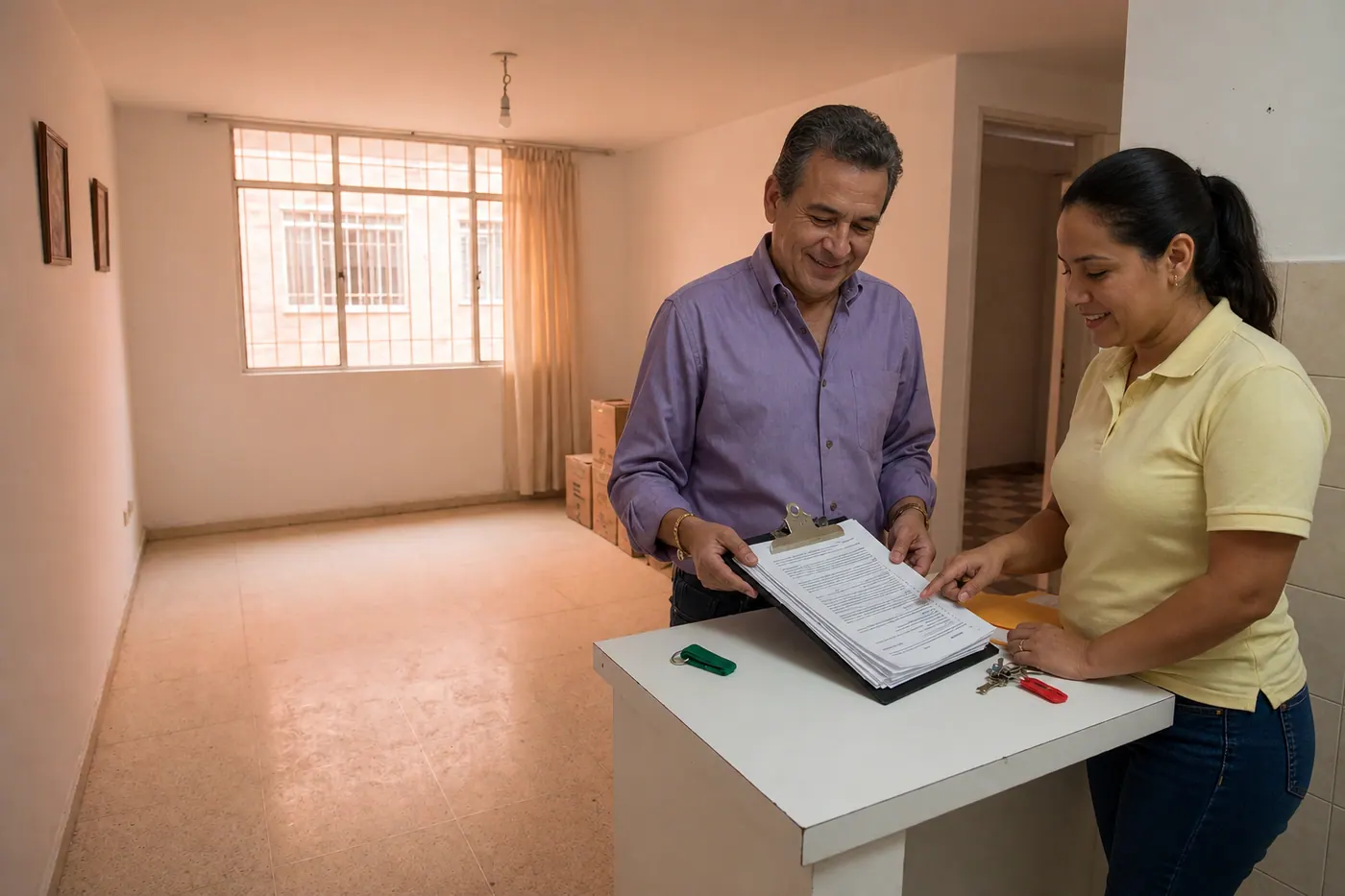
To wrap up, here are three practical steps you should take before handing over the keys to your commercial property:
- Check the land use (POT): Before signing, make sure the tenant's commercial activity is permitted in your area under the Territorial Planning Scheme (POT). If the business is shut down for improper use, it will stop paying you.
- Require solid commercial guarantees: Unlike housing, security deposits are legal and very common in commercial leases. You can require insurance policies, joint guarantors or cash deposits to cover possible damage to the property after heavy fit-outs.
- Register the contract: Although it is optional, registering the lease contract with the local Chamber of Commerce legally protects the establishment and formalizes the commercial relationship with third parties.
Frequently asked questions
❓ Which law governs commercial premises lease contracts in Colombia?
Commercial premises contracts are strictly governed by the Commercial Code (Articles 518 to 524), not by Law 820 of 2003. The latter applies solely and exclusively to urban housing contracts, so its rules do not apply to businesses.
❓ When does the tenant acquire the right to renew the contract?
The tenant acquires the renewal right after occupying the property for two consecutive years with the same business establishment. According to Article 518, it is not an automatic and unconditional extension: the lessor may refuse if there is a breach, if they need the property for their own housing or a substantially different business, or if it must be vacated for reconstruction, necessary repair, demolition, ruin or new construction.
❓ When does the six-month notice (desahucio) apply?
The six-month notice applies when the landlord invokes the grounds in paragraphs 2 or 3 of Article 518. According to Article 520, they must notify the lessee no less than six months before expiry; if that notice is omitted in those cases, the contract is understood to be renewed on the same terms and for the same term.
❓ Is it legal to charge a security deposit on a commercial lease in Colombia?
Yes, cash security deposits are legal and common in commercial leases. Unlike housing contracts, where Law 820 restricts cash deposits, in commercial premises there is freedom to agree on these guarantees.
❓ Can the tenant sublet the commercial premises without my authorization?
Article 523 allows subletting up to half, with the limitation on use, and the code does not say how that half is measured. Subletting the whole requires express or tacit authorization; it does not say it must be written or that silence is enough. Assignment is also valid if it results from transferring the establishment.
❓ What happens if we do not agree on the rent increase at renewal?
According to Article 519, the dispute must be resolved by a judge through a verbal proceeding with the involvement of appraisal experts. Since there is no government-set cap on increases for commercial premises, it is advisable to agree on an adjustment mechanism from the start.

Comments
Loading comments...
Checking sign-in status...