
Medellín Digital Nomad Cybersecurity Guide: How to Stay Safe
Protect your data and devices while working remotely in Colombia with our complete digital and physical security guide.
IDIOMA DEL ARTÍCULO
Showing original language
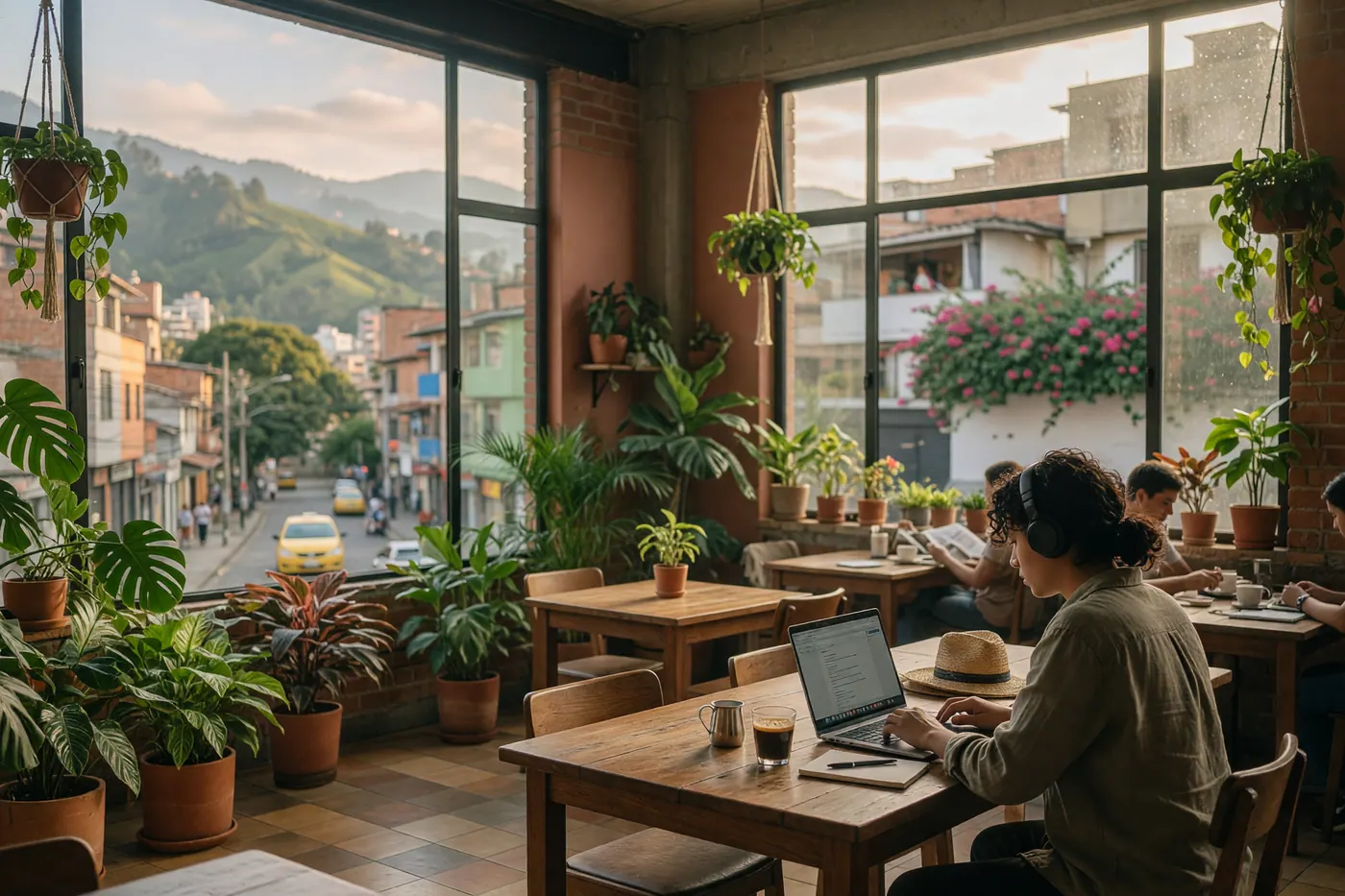
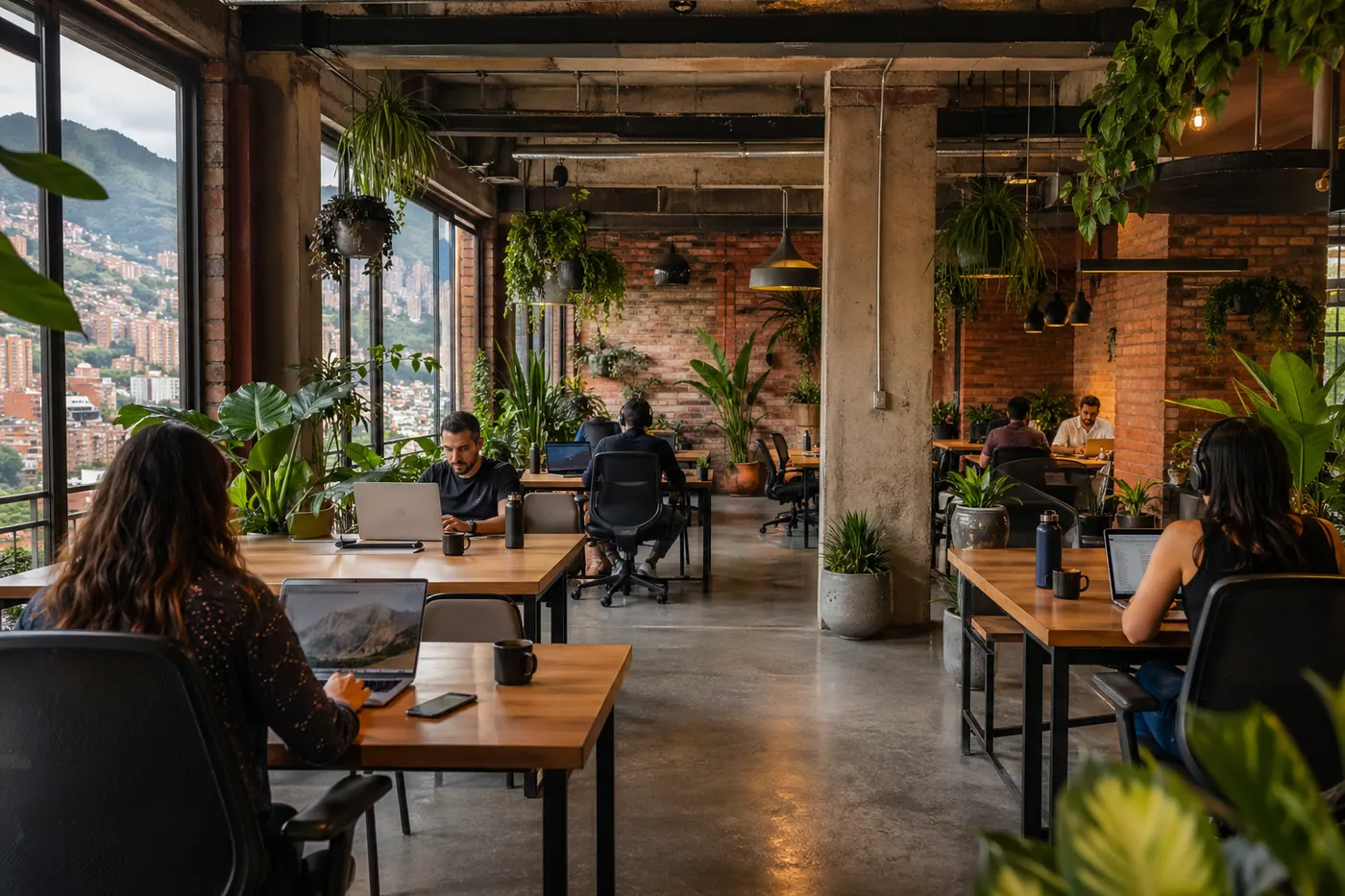
Setting up your laptop at a wooden table in El Poblado, ordering a freshly brewed local roast, and knocking out a few hours of work is the quintessential Medellín digital nomad experience. But trusting an open network with your banking passwords or leaving your phone on that table for ten seconds is a massive mistake.
Honestly, the biggest threat to remote workers here isn't a dramatic street robbery—it's the silent interception of your data on an unsecured public WiFi network, or a physical theft that quickly escalates into digital identity fraud.
The Reality of Public WiFi in Colombia
Colombia is incredibly well-connected. As of 2026, the country boasts over 16,000 public free WiFi zones. The Ministry of Information and Communications Technologies (MinTic) manages over 7,500 of these through its “Free Wi-Fi for People” initiative, supporting more than 390,000 daily connections.
While this infrastructure is fantastic for basic browsing, it is a playground for Man-in-the-Middle (MITM) attacks and rogue hotspots. Even when you are working from the best cafés in Medellín for remote work—like Pergamino on Calle 10b in El Poblado or Circular 73 in Laureles, or Café Velvet on Carrera 37—their networks are fundamentally public and unencrypted.
If you check your bank balance or log into a client’s server without an encrypted tunnel, your data is vulnerable. Hackers often set up spoofed networks with names like “Pergamino_Guest_Free” to intercept credentials from unsuspecting expats.
Digital “No Dar Papaya” (Physical Security)
You cannot talk about cybersecurity in Colombia without talking about physical security. The golden local rule is no dar papaya (don’t give anyone a reason to take advantage of you). In a digital context, this means your physical hardware is the primary gateway to your digital life.
If someone grabs your unlocked phone off a cafe table, they aren’t just stealing a piece of metal and glass. They are after your two-factor authentication (2FA) SMS codes and banking apps to commit identity theft (Suplantación de Identidad). If you want to know more about general street smarts, our Medellín safety guide covers the broader neighborhood dynamics.
Cafe OPSEC Checklist
- Never leave devices unattended: Not even to grab a napkin or use the restroom. Pack your bag and take it with you.
- Use lockable zippers: Keep your backpack zipped and physically looped around your leg or chair.
- Disable SMS 2FA: Switch your accounts to an authenticator app (like Authy or Google Authenticator) so thieves cannot intercept text messages if they steal your SIM card.
- Use privacy screens: Shoulder surfing is real, especially in crowded nomad hubs.
Why a VPN is Non-Negotiable (and Legal)
There is a persistent myth that using encrypted networks might flag you with local authorities. Let’s clear that up: VPNs are 100% legal to use in Colombia. There are no government restrictions on securing your connection.
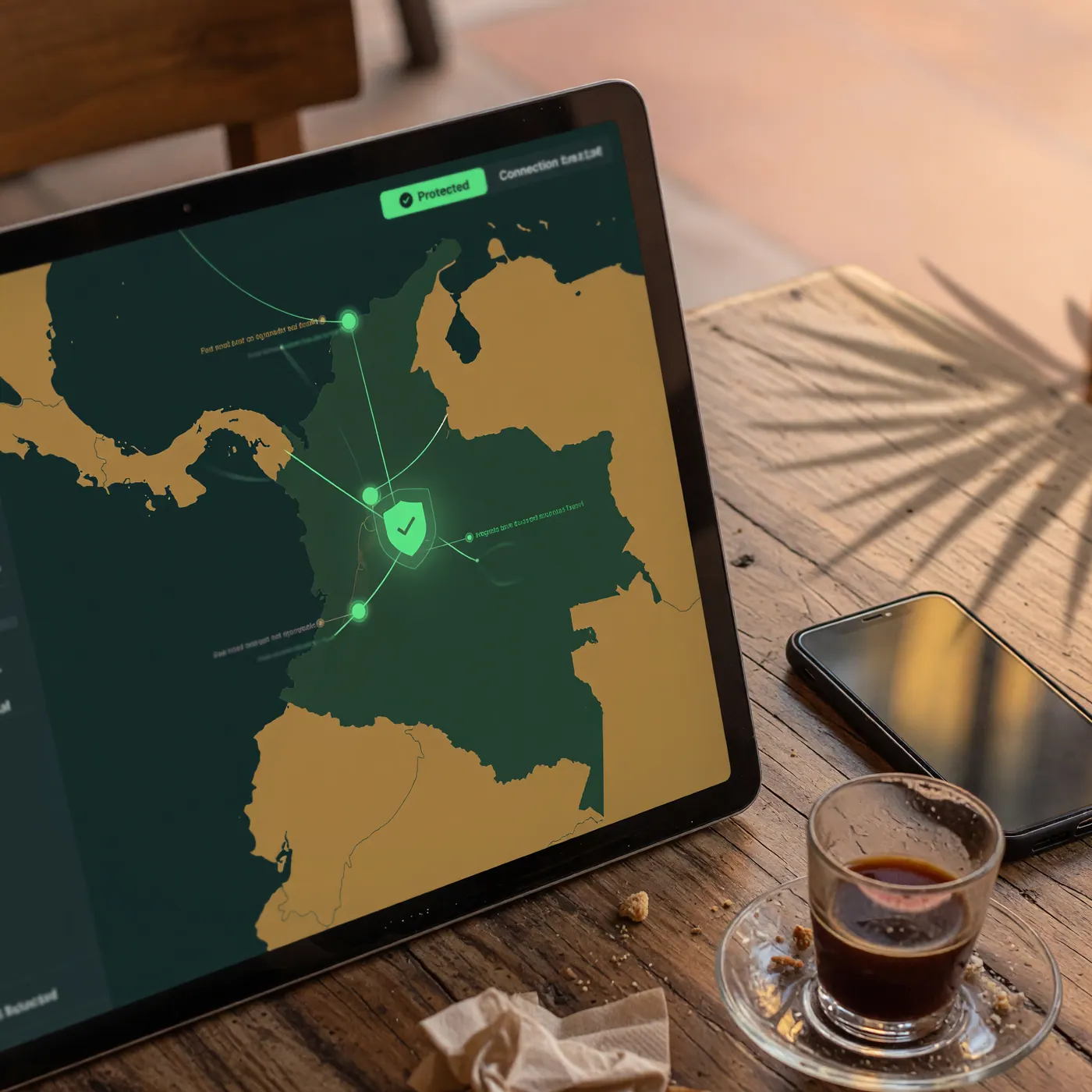
A premium VPN is your first line of defense against rogue cafe hotspots. I highly recommend NordVPN for its Colombia/Bogotá server location and independently reviewed no-logs policy—meaning your browsing history, IP address, and DNS queries are never stored. It automatically kicks in when you join an untrusted network, masking your IP address and encrypting your traffic.
Not sure if your current setup is actually protecting you? You can test for DNS leaks and verify your connection status using our free exposed IP checker tool.
What to Do If Your Devices Are Stolen
If the worst happens and your phone or laptop is stolen, your immediate goal is containment. You have a very narrow window before attackers try to pivot from the physical device to your digital identity.
- Block the SIM and IMEI: Use a friend’s phone to call your Colombian carrier (Claro, Tigo, Movistar) immediately. Suspend the line to stop SMS password resets.
- Lock down your finances: Freeze all debit and credit cards linked to your digital wallets.
- File an official complaint: For cybercrime and identity theft, use A Denunciar (adenunciar.policia.gov.co)—Colombia’s official virtual complaint system operated by Policía Nacional and the Fiscalía. CAI Virtual (caivirtual.policia.gov.co) is also a Police cybercrime and citizen-services portal with prevention resources; coverage varies by incident type.
Handling these administrative headaches is stressful enough without worrying about your immigration status, which is why keeping digital copies of your passport and digital nomad visa securely stored in an encrypted cloud drive is crucial.
Secure Your Base: Finding Safe Housing
Working securely starts with where you live. Relying on sketchy short-term rentals with shared, unencrypted building WiFi is a recipe for disaster. You need a secure, private connection in a verified apartment.
According to active listings on Colombia Move (June 2026), demand for temporary rentals heavily outweighs supply—temporary housing listings are seeing over 140 views for a single active listing. Nomads are actively scrambling for secure, reliable bases.
Frequently Asked Questions
❓ Is public WiFi safe to use in Medellín?
Yes, but only if you use a VPN. While most modern websites use HTTPS to protect basic data, unencrypted public networks at airports and cafés are still highly vulnerable to DNS leaks, rogue hotspots, and local interception by hackers.
❓ Are VPNs legal in Colombia?
Yes, VPNs are 100% legal to use in Colombia as of 2026. There are absolutely no government restrictions on using a Virtual Private Network for privacy, digital security, or accessing geo-restricted content while living or traveling here.
❓ What is the best VPN for digital nomads in Colombia?
NordVPN is highly recommended for remote workers. It lists a Colombia server location in Bogotá, features an independently reviewed no-logs policy (your browsing history, IP, and DNS queries are never stored), and offers automatic WiFi protection that secures your connection the moment you join a café network.
❓ How can I check if my VPN is actually working?
You can verify your connection using the Colombia Move exposed IP checker tool at /herramientas/seguridad-vpn. Currently updated for 2026, it confirms your real IP and location are properly masked from the network.
❓ Is it safe to leave my laptop on a café table in El Poblado?
Absolutely not. The Colombian rule of “no dar papaya” strongly applies to your physical devices; never leave your laptop, phone, or passport unattended on a table, even for a brief bathroom run in upscale cafés like Pergamino or Velvet.



Comments
Loading comments...
Checking sign-in status...