
Moving in Residential Complexes: A Legal Guide to Permits, Schedules, and Damage Deposits
Moving into a residential complex in Colombia does not have to be a headache. Discover which permits you really need, the legal schedules, and how to avoid abusive charges.
IDIOMA DEL ARTÍCULO
Showing original language
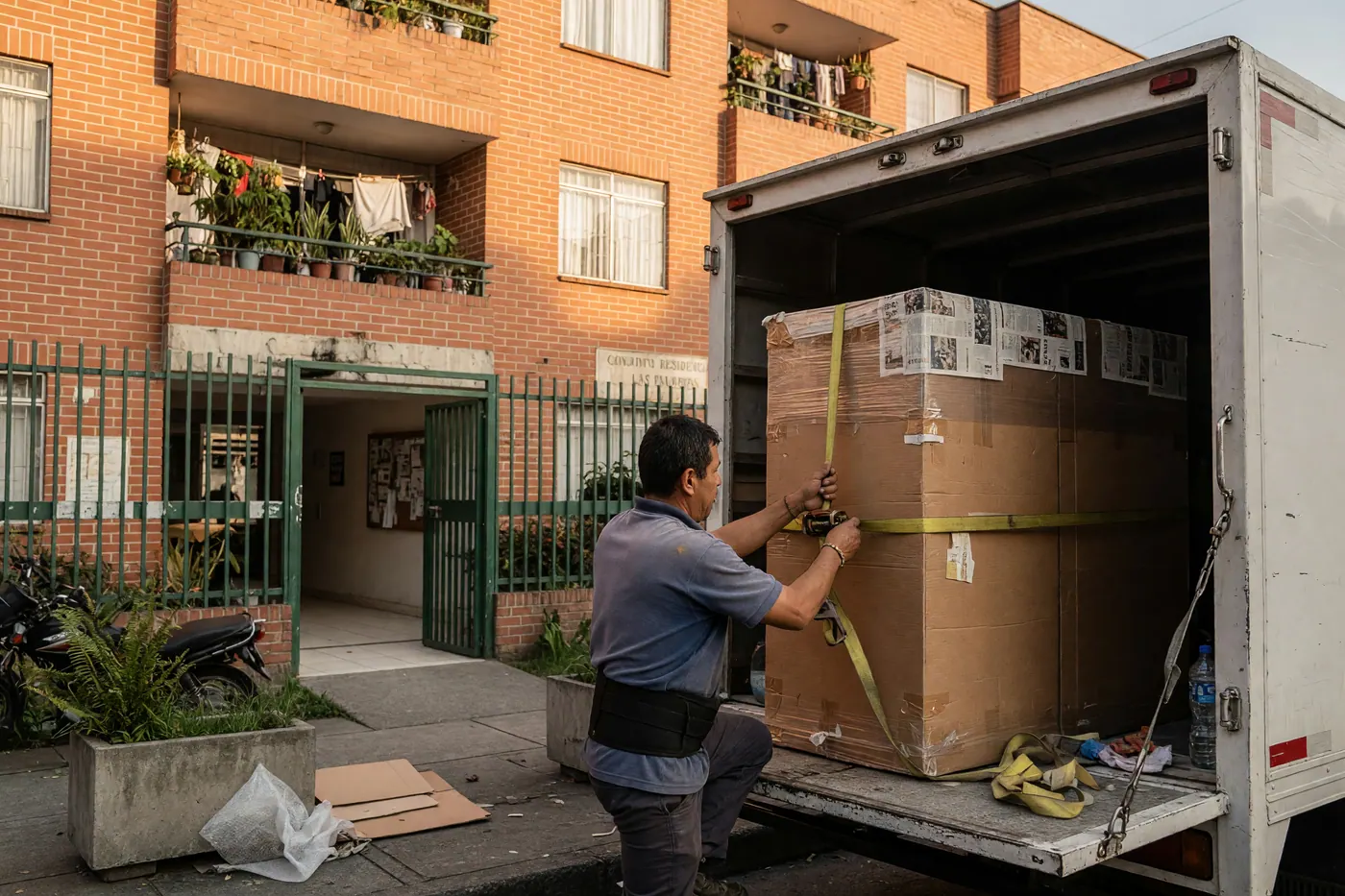
Moving into an apartment in Colombia is an exciting step, but facing the building manager on moving day can be a real headache. Watch out for this: many tenants and owners assume their move depends on the mood of the security guard on duty or that they need a special permit from the mayor's office. I have seen moves stopped dead in their tracks at the front desk simply because the rules weren't clear.
The reality is that Colombian law is very specific about what a building administration can and cannot demand of you. In this article, I explain the truth about permits, legal schedules, and the famous damage deposits so you don't get tied up in knots. If you want to see real options right now, you can view apartments and houses on Colombia Move — posting is completely free.
Quick answer:
- Permits: Law 962 of 2005 eliminated police permits for moves. You only need to coordinate your building's internal authorization.
- Retention: It is completely illegal for your furniture to be withheld due to unpaid administration fees (Ruling T-440/97).
- Deposits: The building can charge a security deposit for damages only if it is explicitly approved in the regulations or the Coexistence Manual approved by the general assembly.
Is a permit needed to move in Colombia?
Many years ago, moving meant going to the police station or the local mayor's office to ask for a safe-conduct pass. Nowadays, that is a myth. Thanks to Law 962 of 2005 (known as the Anti-Red Tape Law), no public official, police officer, or mayor can demand a government permit for you to transport your household goods.
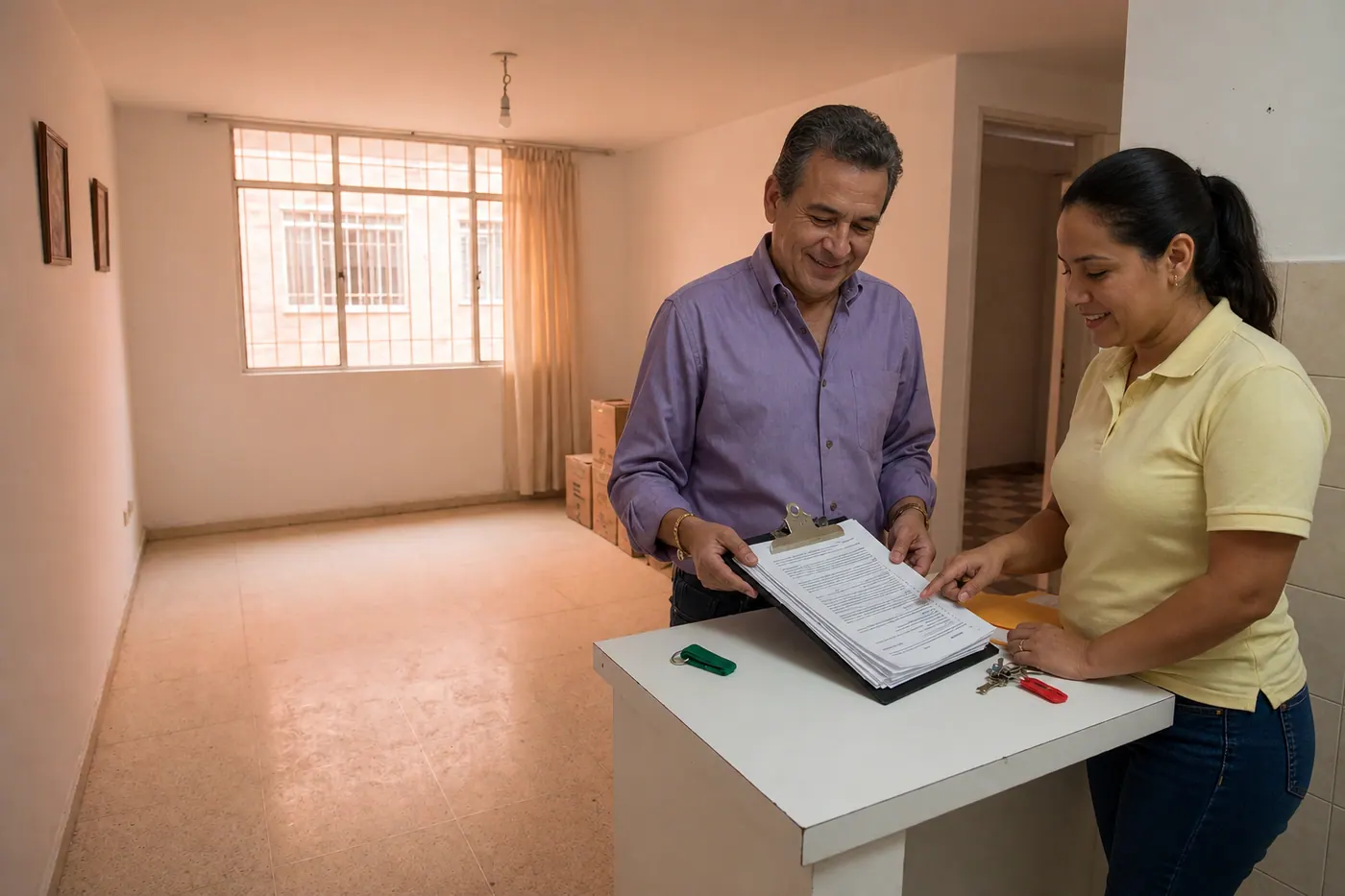
However, just because you don't need a police permit doesn't mean you can show up with a truck by surprise. If you live in a horizontal property (a building or gated community governed by Law 675 of 2001), you must notify the administration according to their internal regulations. Generally, they will ask for written notice, the driver's details, the vehicle license plate, and the names of your helpers for security reasons.
Permitted hours (Bogotá and other cities)
You don't make up your moving schedule, but neither does the building manager make it up on a whim. The schedules are dictated by a mix of municipal mobility decrees and your building's internal regulations.
In Bogotá, for example, District Decree 495 of 2002 establishes that urban moves can only take place between 6:00 a.m. and 6:00 p.m., Monday through Sunday.
Now, even if the city allows moves on Sundays, many residential complexes restrict these hours in their Coexistence Manuals to guarantee rest for neighbors. They may limit moves to business days and office hours, and prohibit them on Sundays or holidays. Check the specific rule for your co-ownership and keep in mind that the horizontal property regulation must be registered to be binding.
The damage deposit: Is it legal and who should pay it?
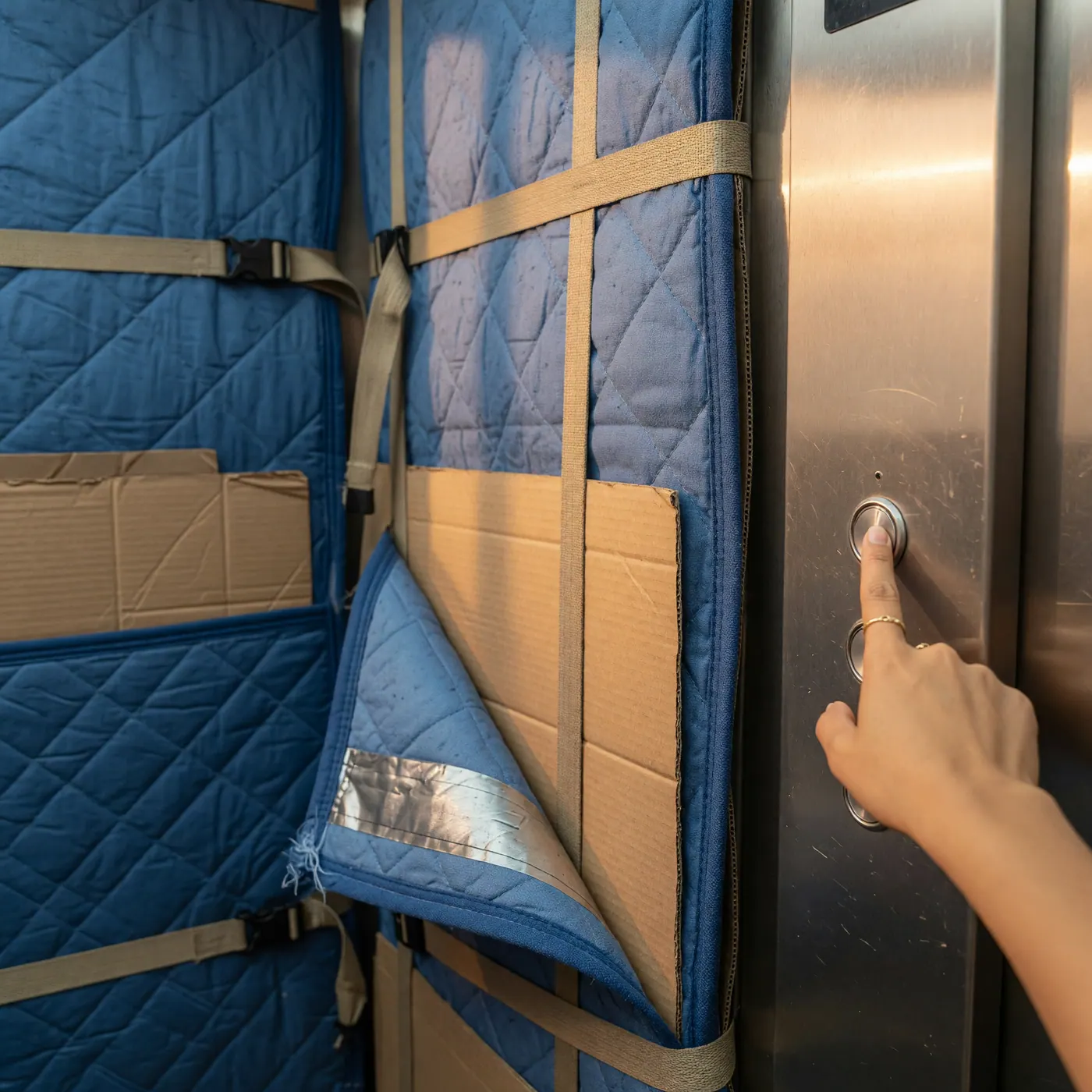
One of the biggest points of friction is when the administration demands that you pay a "moving deposit" before letting you use the elevator. Many tenants get confused and believe this is illegal because Law 820 of 2003 prohibits cash deposits to guarantee a rental contract. But watch out, those are two very different things.
| Type of deposit | Is it legal in Colombia? | Purpose |
|---|---|---|
| Rental deposit | Restricted by Law 820 of 2003 | To guarantee the rental contract. |
| Moving deposit (building) | Legal if approved in the regulation or manual | To cover potential damage to elevators or hallways during the move. |
The damage deposit is legal if it is written and approved in the Horizontal Property Regulation or the Coexistence Manual approved by the assembly. If the manager makes it up on the spot, ask them to show you the applicable rule. This logistics cost is usually assumed by the person performing the move (almost always the tenant, unless agreed otherwise), and if there are no scratches or damages to common areas when the move is finished, the administration must return the money.
Can they withhold my move due to administration debts?
This is an abusive tactic that still causes problems. Imagine you are about to leave the apartment, you have the truck waiting, and the security guard blocks you saying you can't take your things out because the apartment owner owes three months of administration fees.
I tell you this with total clarity: this is illegal. The Law 675 of 2001 does not give any administrator the power to seize your property. The Constitutional Court, in Ruling T-440 of 1997, made it clear that withholding a resident's belongings due to debts violates fundamental rights.
An administrator is not a judge. If they block your exit or withhold your belongings, you can call the National Police to ask for support and evaluate filing a guardianship action (acción de tutela). The building can indeed collect debts through the corresponding legal mechanisms, such as an executive process, but they cannot keep your fridge or your bed.
Checklist for a move without surprises in co-ownerships
So that your moving day flows without fights or extra costs, I recommend following this basic checklist before the truck arrives:
- Confirm the procedure: Ask in writing for the schedule, documents, applicable deposit, and the inspection method for common areas.
- Protect the elevator: Require your moving company (or do it yourself) to line the elevator walls with cardboard or padded blankets.
- Document everything: Just as you do a rental delivery inventory when receiving the apartment, take photos of the hallway and the elevator before and after moving in your boxes. It is your proof if they want to charge you for damage you didn't cause.
- Verify the height of the parking garage: Many stake trucks do not fit in basements. Confirm the maximum permitted height before hiring transportation.
How to offer your moving services and get more clients
If you are an independent carrier, friend, here is a concrete opportunity. According to active ads on Colombia Move (July 2026), there are 0 active ads in the moving category and its supply gap score is 76 out of 100. The available supply still does not cover that category.
People who are moving need serious drivers who know how to deal with building administrations, who protect elevators, and who have their papers in order. If you know how to offer moving and transportation services with professionalism, you can set yourself apart.
Frequently Asked Questions
❓ Is it mandatory to pay a deposit to the administration before moving in?
Yes, provided that such a charge is explicitly regulated in the Horizontal Property Regulations or in the Coexistence Manual approved by the assembly. If you did not cause damage to common areas, they must return it after the inspection.
❓ Can the property manager block my move if I owe administration fees?
No, Law 675 of 2001 and Ruling T-440 of 1997 prevent them from retaining your belongings or blocking your move due to debts. The administration maintains its legal channels to collect what is owed.
❓ Who is responsible for paying the moving deposit, the landlord or the tenant?
Unless otherwise agreed, it is usually paid by the person moving, which is typically the tenant. It is advisable to put in writing who pays it, the inspection criteria, and when it is returned.
❓ What is the legal permitted schedule for moving in Bogotá?
District Decree 495 of 2002 establishes a general urban schedule from 6:00 a.m. to 6:00 p.m., Monday through Sunday. The complex may set a narrower time frame in its internal regulations.
❓ What should I do if the security desk retains my belongings illegally?
You can call the National Police to request assistance and document what happened. Depending on the circumstances, you can also seek legal guidance regarding a 'tutela' (writ of protection) to protect your fundamental rights.
❓ Where can I find freight or moving services in Colombia?
You can search for and compare independent carriers in the Colombia Move services section. Confirm in writing the vehicle, helpers, coverage, payment method, and liability for damages before hiring.
Comments
Loading comments...
Checking sign-in status...