
Public Utilities in Colombia: How to Pay for Electricity, Water, Gas, and Internet and File Complaints (PQR)
Learn how to pay your bills, understand the responsibilities between landlord and tenant, and follow the legal steps to file a PQR if you receive an unjustified charge.
IDIOMA DEL ARTÍCULO
Showing original language
I have been through the headache of seeing an electricity bill arrive for triple the usual amount and not knowing where to start filing a claim. Paying, understanding, and disputing utility bills in Colombia is an art form, but the law is more on our side than it seems if you know how to use it.
Quick answer: In Colombia, you can pay for electricity, water, gas, and internet via PSE, banking apps, or physical locations like Efecty. If you receive an unjustified charge, Law 142 of 1994 allows you to file a PQR (Petition, Complaint, or Claim) without having to pay the disputed amount, and if the company does not respond within 15 business days, the claim is resolved in your favor due to positive administrative silence (Art. 158). If you want to see real options right now, you can view apartments and houses on Colombia Move — posting is completely free.
Who Pays What? Landlord vs. Tenant (Law 820 of 2003)
One of the biggest conflicts when renting a property in Colombia is the payment of utilities. According to Article 15 of Law 820 of 2003, the rule is clear: the tenant is responsible for paying the utilities consumed during their occupancy, as agreed upon in the lease contract.
But watch out for this! There is something called "solidarity" (Article 130, Law 142 of 1994). This means that both the landlord and the tenant are jointly liable to the utility companies. If the tenant leaves without paying, the debt remains tied to the property and the owner ends up assuming the cost. To break this solidarity, the owner must demand guarantees or deposits from the tenant at the start of the contract and present them to the utility companies (Art. 15, Law 820 of 2003).
If you are a landlord, clearly understanding this is vital, especially now that there is a spike in interest for short-term rentals. According to Colombia Move data (July 2026), 30 recent searches on the marketplace found no results in the temporary housing category — there is a real, unsatisfied demand from nomads and locals looking for rentals with utilities included. If you are going to meet that demand, define the consumption rules well in your contract.
How to Pay Your Utility Bills in Colombia (Physical and Digital Channels)
Waiting in endless lines at the bank with the receipt in hand is a thing of the past. Today, the payment ecosystem in Colombia is very robust:
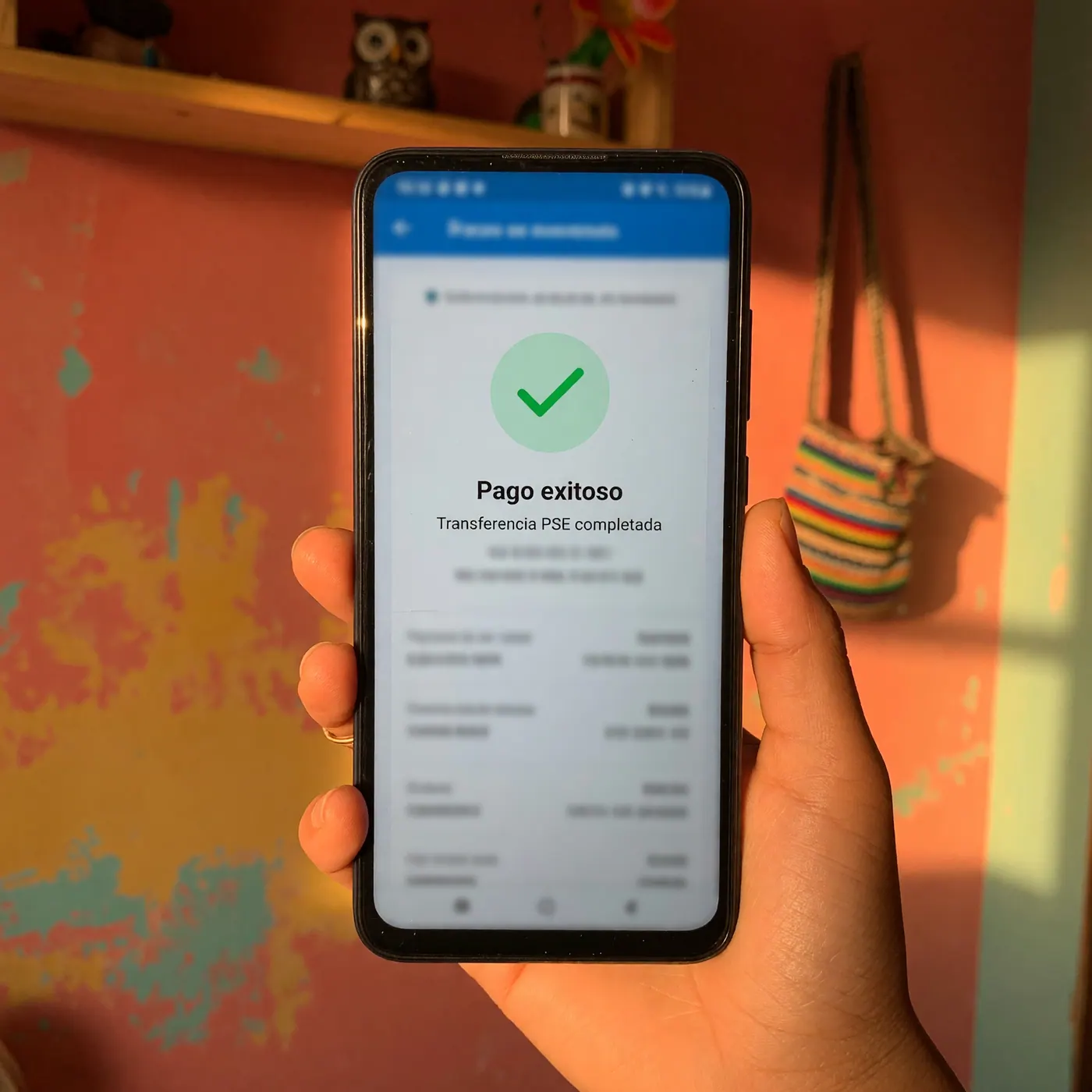
- Digital Channels: The undisputed king is PSE (Secure Online Payments), which allows you to pay from any savings account. Additionally, banking apps (Bancolombia, Davivienda) and mobile wallets like Nequi and Daviplata have dedicated modules where you simply scan the barcode or enter your reference number.
- Physical Channels: If you prefer using cash, you can go to Efecty (present in 99% of Colombian municipalities), Baloto, or SuperGIROS. You just need to bring your printed bill.
Remember that the final amount of your electricity, water, and gas bill depends in part on your "estrato" (socioeconomic stratum). You can check our guide to socioeconomic strata in Colombia to understand how subsidies (strata 1, 2, and 3) or contributions (strata 5 and 6) affect your monthly pocketbook.
Suspension and Reconnection: Rules and New Legal Caps
If you forget to pay, your service will be cut, and you will be charged for reconnection. The legal landscape has recently changed to offer more protection to users, although there are important differences depending on the type of service.
As of July 17, 2026, the CRC regulation based on Law 2485 of 2025 came into effect. This law sets mandatory maximum caps for reconnection charges for telecommunications. The maximum they can charge you to reconnect your mobile line is $285 COP; for most fixed services (home internet), the cap is $1,232 COP (source: CRC, June 2026 press release).
But pay close attention: these caps do NOT apply to water, electricity, or natural gas. These services are not covered by Law 2485. Their reconnections remain regulated under Law 142 of 1994 (Art. 96), which allows companies to charge the "efficient costs" of sending a technician, which typically ranges between $30,000 and $60,000 COP depending on the service and the city.
Practical Tips to Avoid Leaks and Overcharges on Your Bill
Before reaching the point of disputing a bill, prevention will save you many headaches. Here are three basic checks you should do in your home:
- Check the toilet seals: A silent leak in the toilet tank can double your water bill in a single month. If you hear the water continuing to run after it has filled up, change the flapper (the valve) immediately.
- Be careful with old appliances: Refrigerators with worn-out seals that do not close well consume a lot of extra energy trying to maintain the cold.
- Close the gas valve if you go on a trip: In addition to being a vital safety measure, it prevents micro-leaks from generating phantom consumption while you are not at home.
How to File a Claim for Unfair Charges or Anomalies (The PQR Process)
If you receive a charge that doesn't make sense, you have the right to file a Petition, Complaint, or Claim (PQR) protected by Article 152 of Law 142 of 1994. Here is the step-by-step process:
1. Do not pay what is in dispute: The golden rule (Art. 155, Law 142 of 1994) is that companies CANNOT demand payment of the disputed amount to address your complaint. You must, however, pay the undisputed portion (usually the average of the last 5 months) so that they do not cut your service while they investigate.
2. File the PQR: Do this through the company's official channels (in-person, by phone, or online) and always keep the tracking number.
3. Wait for the 15 business days: The company has exactly 15 business days to respond to you. If they do not, the Positive Administrative Silence (Art. 158, Law 142 of 1994) kicks in: your claim is automatically resolved in your favor and the company has 72 hours to execute the decision.
4. Appeal if necessary: If the company denies your claim, file a "Recurso de Reposición y en subsidio de Apelación" (Request for Reconsideration and secondary Appeal). If they deny it again, the case goes directly to the Superintendence of Public Utilities (Superservicios) for a final decision. Keep in mind that a PQR does not guarantee forgiveness of the debt; if the appeal is rejected, you must pay the total balance.
Frequently asked questions
❓ What happens if I don't pay utility bills on time in Colombia?
The provider will suspend service after the bill is past due (usually after 1 or 2 months in arrears). Reconnection fees will apply and will be added to your next bill.
❓ Is it legal for the landlord to cut off my utilities if I don't pay rent?
No, it is illegal. Only utility companies can suspend supply due to non-payment. If the landlord does so, they are committing a serious fault and harassment; you can report them to the Superservicios.
❓ How long does the company have to respond to my claim (PQR)?
The company has a maximum of 15 business days (Art. 158, Law 142 of 1994). If they do not respond within that timeframe, positive administrative silence operates in your favor, and they have 72 hours to execute the decision.
❓ Do I have to pay the entire bill to be able to file a claim?
No (Art. 155, Law 142 of 1994). You only pay the undisputed portion or the average of the last 5 months so they can process your complaint without cutting off your service.
❓ Does the new law for cheap reconnection apply to water and electricity?
No. Law 2485 of 2025 and the CRC caps (effective since July 2026) apply only to telecommunications (internet and telephony). Water, electricity, and gas remain under the ordinary regime for efficient costs.
Comments
Loading comments...
Checking sign-in status...