
Registration of Special Handling Dogs in Colombia: Insurance Policy, Census and Law 1801
Practical guide to Law 1801 and Decree 380: which dogs fall under the law, the annual census, the insurance policy, microchipping, the muzzle, fines and how to transfer the animal.
IDIOMA DEL ARTÍCULO
Showing original language
Quick answer: if your dog attacked a person, killed another dog, was trained for attack and defense, or is of a listed breed (or a cross of one), the law treats it as a special-handling canine. That means an annual census with the mayor's office, civil liability insurance, a microchip, a muzzle, and a leash on the street.
Watch the name: since Law 2054 of 2020, it's no longer called "potentially dangerous"; it's called "special handling." And many people feel reassured because their dog is a mix. If it's a cross of a listed breed or has a history of aggression, it still applies.
Which dogs fall into the category
According to arts. 126 to 130 of Law 1801 of 2016 (Secretaría del Senado), the following are special-handling dogs:
- Those that have attacked people or killed other dogs.
- Those trained for attack and defense.
- American Staffordshire Terrier, Bullmastiff, Doberman, Dogo Argentino, Dogue de Bordeaux, Fila Brasileiro, Neapolitan Mastiff, Bull Terrier, Pit Bull Terrier, American Pit Bull Terrier, Presa Canario, Rottweiler, Staffordshire Terrier and Japanese Tosa, their crosses or hybrids, plus any others the government sets.
My advice: don't try to "paper" the dog as an unlisted breed if there was an attack. That history changes the classification even if the phenotype doesn't match, and hiding it can cost you dearly if something happens.
The annual census and the papers the mayor's office requires
The census is municipal or district-level, is renewed every year, and is the route to the keeping permit, which the Police can ask you for. It must include the animal's name, your ID and location, its phenotypic traits, and its usual place of residence. Minimum documents: insurance policy, vaccination record, and a valid health certificate from the Health Secretariat.
There is no single national platform. Each mayor's office runs its own census, and article 133 lets them set fees, so outside Bogotá, ask the mayor's office of the municipality where the dog lives how much it costs (check the current figure).
Bogotá example
According to the Secretaría Distrital de Gobierno (consulted in November 2026), the process is online and free, at tramite.gobiernobogota.gov.co/registro-caninos. It requires an ID card or Chamber of Commerce certificate, vaccination card, health certificate, insurance policy, and a color front-facing photo. The local mayor's office reviews and responds within a maximum of 15 business days. The card is digital, with a QR code, is renewed every year, and must be carried when the dog is with people or other animals. The health certificate is issued by the District Health Secretariat through its subnetworks; it is requested through Bogotá te Escucha. Support: registro.caninos@gobiernobogota.gov.co.
Medellín example
In its note of March 5, 2026, the Alcaldía de Medellín instructs you to go to www.medellin.gov.co/animales, click "Registrar animal," and upload a valid policy of no less than 50 monthly minimum wages, vaccination card, health certificate, microchip number, and front and side photos. The note does not publish a fee, so I'm not saying it's free.
Note: Bogotá's QR card does not replace a new registration if you move to another municipality.
Insurance and microchip: the order matters
Decree 380 of 2022 (Función Pública) requires extracontractual civil liability insurance with an insurer authorized in the country. The insured amount cannot be less than 50 SMLMV per canine. That is the minimum coverage cap, not what you pay: the premium is quoted by the insurer, and this guide does not publish it. The policy lasts the animal's lifetime, can be issued annually, and covers property and non-property damages from injury or death of people or animals, or damage to third-party property.
The microchip comes first, because its unique number is written into the policy. It is subcutaneous, follows ISO 11784-11785 or its replacement, and its code combines the DANE code of the implantation location with five consecutive digits. A veterinarian with a professional license and a valid COMVEZCOL certificate must implant it. The six-month deadline in the decree has already expired: these are now full obligations, not a grace period. Without insurance, in addition to the corrective measure, you assume full liability for any damage.
Street, transport and fines
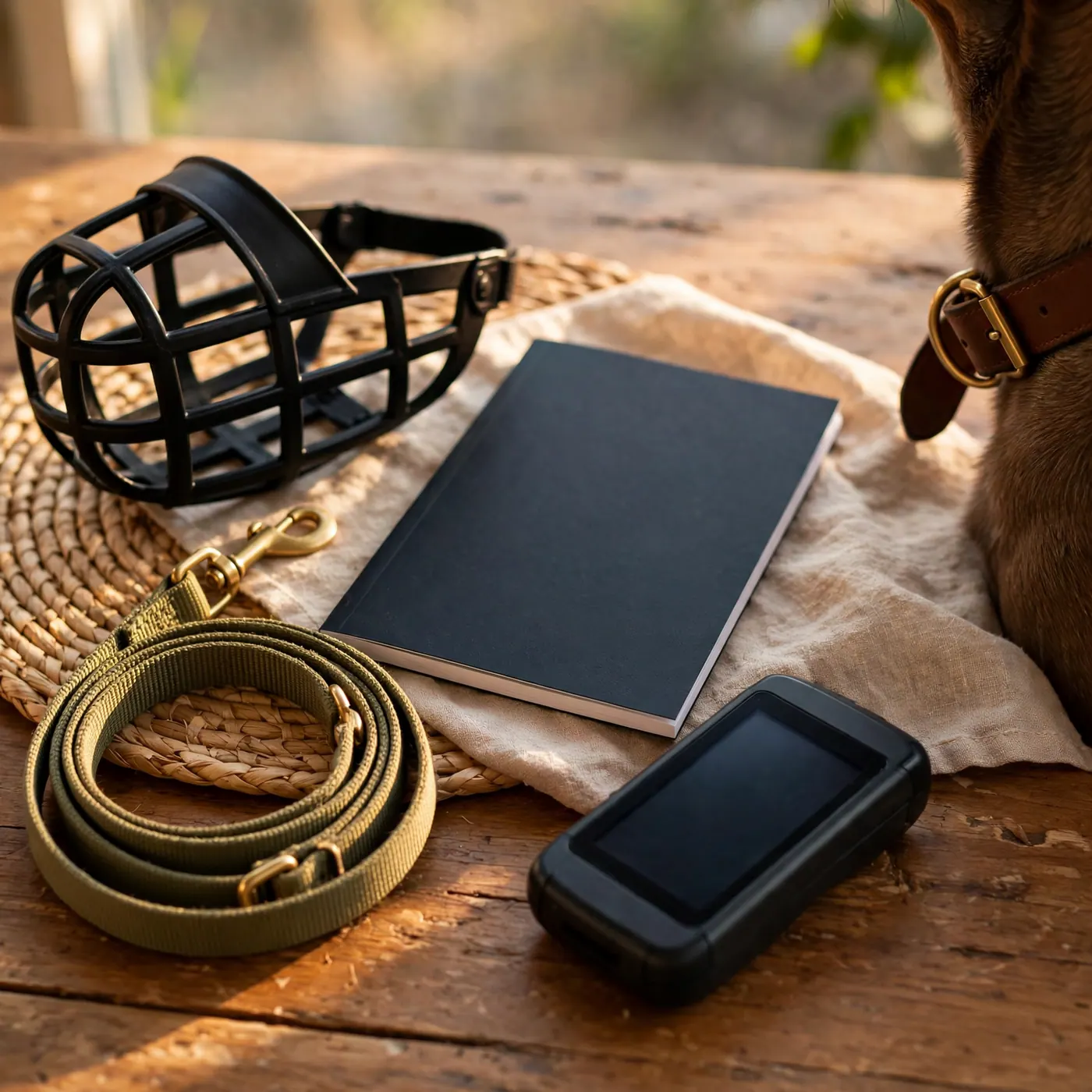
In public spaces, common areas, places open to the public, and public transport where animals are allowed, the dog must wear a muzzle and be on a leash. Minors may not own, keep, or transport these animals (numeral 6), and neither may anyone with limitations that prevent them from controlling it (numeral 7). Bogotá also asks that elderly people or people with disabilities that prevent control not walk them; that is district instruction, not an article of Law 1801. If you offer dog walks, see how to declare a zone and experience in esta guía para paseadores: the keeper maintains insurance and a muzzle.
| Conduct | Fine (art. 180, Law 2450 of 2025) |
|---|---|
| No muzzle or leash; letting it roam in public space | Type 2 = 4 SMDLV |
| Attacking another pet (plus damages) | Type 3 = 8 SMDLV |
| Not registering, not recording the transfer, or not having insurance; permanent injuries to a person (plus damages) | Type 4 = 16 SMDLV |
If you pay within five business days after the citation, you get a 50% discount. Keep two nuances in mind: according to Constitutional Court Ruling C-059 of 2018, letting the dog roam within your private property is not fined, and a bite without permanent injury does not automatically trigger a type 4 fine. In case of repeat offenses, confiscation applies, with evaluation by a veterinarian, preferably an ethologist; confiscation does not mean automatic euthanasia.
Housing complexes and horizontal property
A complex may prohibit these dogs from staying only if a co-owner or resident proposes it and three-quarters of the assembly or board of directors approves it. A security guard cannot decide it, and the bylaws alone cannot prohibit it. And note: the assembly does not replace your census. Review the general rules in the guía de la Ley 675.
A home shelter must have walls and fences that are sufficiently high and sturdy, doors the animal cannot open, and a sign indicating there is a special-handling dog.
Selling or transferring the dog, and selling equipment
Every sale, transfer, donation, or cession is recorded in the census. You must immediately notify the mayor's office and the insurer, and the new keeper takes out their own policy; if you donate it, the dog must arrive with a policy. If it moves to another municipality, it must be registered again with a copy of the previous registration. In your notice, tell the truth: microchip, valid policy, card if it already exists, and whether there were attacks. And don't even think about advertising breeding or importing Staffordshire, American Staffordshire, Bull Terrier, Pit Bull, or their crosses: art. 132 prohibits them (the exception is private security and the armed forces).
If you want to sell a used muzzle, leash, or kennel, detail size, condition, and clear photos; here we explain how. According to active listings on Colombia Move (November 2026), the pet accessories category has 0 listings and the dog category only 2, so there is currently room for anyone with good equipment. You can also check the pets section.
Frequently asked questions
❓ Which dogs are special-handling dogs in Colombia?
Those that have attacked people, killed other dogs, were trained for attack and defense, or are of the breeds listed in art. 126 of Law 1801 or their crosses. Law 2054 of 2020 requires the term "special handling" rather than "potentially dangerous" (verify with the official source).
❓ Is the mandatory policy's coverage the 50 monthly minimum wages?
No. The 50 SMLMV is the minimum insured amount per dog, not the premium. The insurer quotes the premium. The policy lasts the animal's lifetime, can be issued annually, and carries the microchip number (verify with the official source).
❓ How much does registration with the mayor's office cost?
In Bogotá, the online process is free. In other municipalities, each one sets the fee. Medellín requires documents and its own portal, but its note does not publish a fee, so check the current figure with your mayor's office (verify with the official source).
❓ Must I use a muzzle and leash, and does it apply inside the home?
In public spaces, common areas, and public transport where animals are allowed, yes: muzzle and leash. The fine for letting it roam does not cover your private property, according to Constitutional Court Ruling C-059 of 2018 (verify with the official source).
❓ What is the fine if I don't register the dog or have no insurance?
Art. 134 sanctions it with a Type 4 General Fine, equivalent to 16 SMDLV. If you pay within five business days after the citation, you get a 50% discount. You also assume any damage the dog causes (verify with the official source).
❓ Can the housing complex prohibit me from having the dog?
Only if a co-owner or resident requests it and three-quarters of the assembly or board of directors approve it. It is not automatic, and a security guard does not decide it (verify with the official source).
❓ Can I sell or give away a special-handling dog?
Yes. Record the transfer in the census, notify the mayor's office and the insurer, and the new keeper takes out their own policy. Show the microchip, policy, and history of aggression. Hand over the dog only against paperwork, and avoid advance payments to strangers (verify with the official source).




Comments
Loading comments...
Checking sign-in status...