
How to offer online classes in Colombia and get students
Teaching what you know online is an excellent way to generate income in Colombia. Learn how to formalize your service, define your rates, and find students quickly.
IDIOMA DEL ARTÍCULO
Showing original language
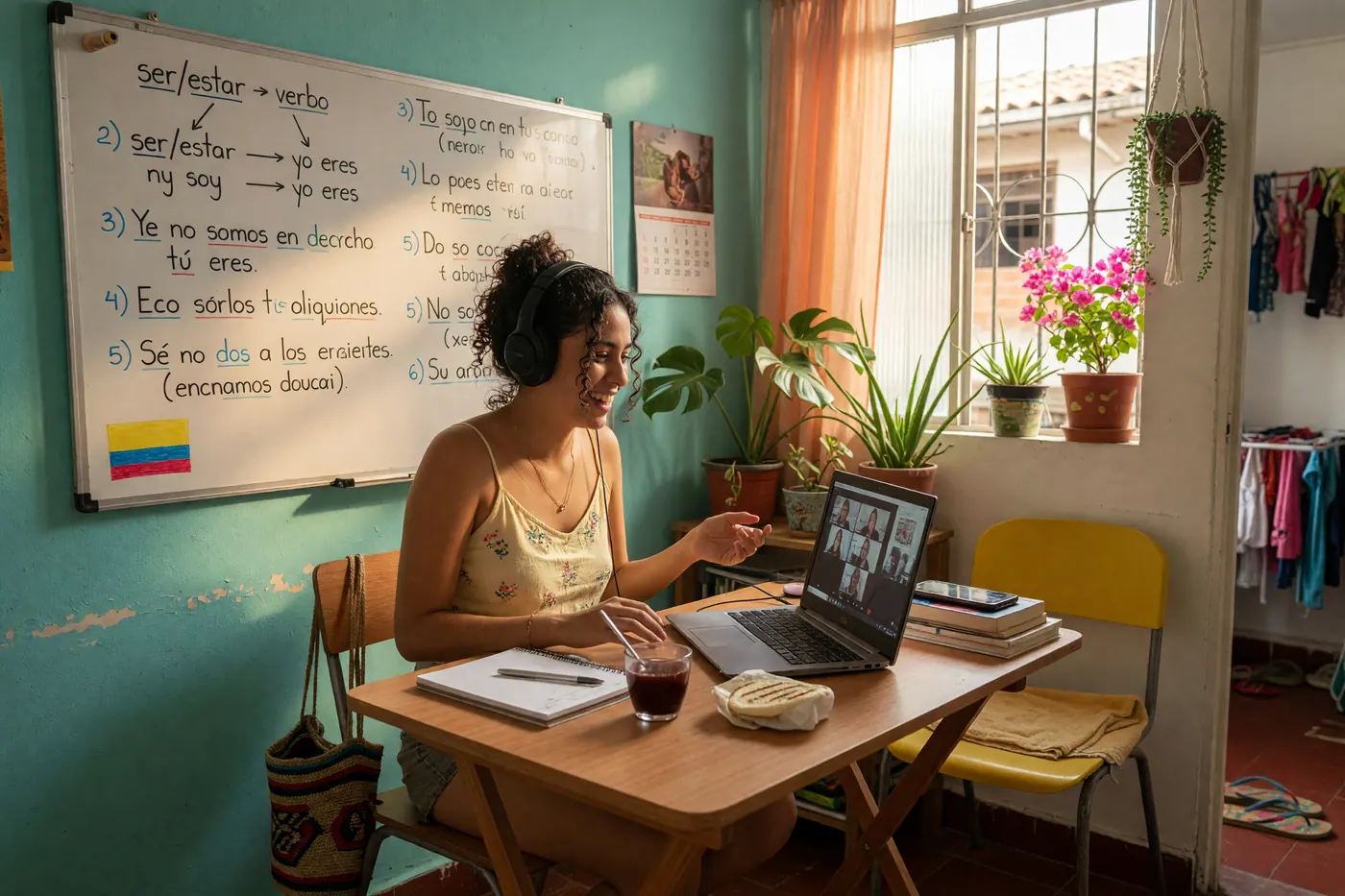
Since the pandemic, the world realized that you don't need to be in the same room to learn something new. If you're one of those who masters English, math, programming, or even playing the guitar, teaching online classes in Colombia has become an excellent way to generate extra income or even make a full-time living from it. But, let's be honest, the hard part isn't teaching; the real challenge is finding those first students and formalizing your work without getting tangled up with the DIAN.
Quick answer for future teachers:
- Legality: Getting your RUT is free, 100% online (if you have an ID card), and doesn't expire.
- Taxes: Most independent tutors do not charge VAT by qualifying as "non-responsible" according to Art. 437 of the E.T. (annual income below 3,500 UVT); confirm your case with an accountant.
- Rates: The average in Colombia ranges between 20,000 and 60,000 COP per hour, depending on your experience.
- Where to post: There are dedicated platforms and commission-free directories to start today.
Legal and tax requirements for private tutors in Colombia
Pay attention to this: if you are going to charge for your services professionally, you need the Registro Único Tributario (RUT). Many fear the DIAN, but registering for the RUT is free, has indefinite validity (no need to renew it every year), and can be done online through the DIAN website if you are a Colombian citizen with a national ID card. If you are a foreigner with a Foreigner's ID card, you will need to schedule a virtual or in-person appointment to process it. If you want to see real options right now, you can view available jobs in Colombia Move — posting is completely free.
When registering, you must choose your economic activity. The correct CIIU code will depend on what you teach:
- 8559 (Other education services n.e.c.): This is the right one for academic tutoring, language classes, and exam preparation.
- 8553 (Cultural education): Use this if you are going to teach art, music, dance, or theater.
- 8552 (Sports and recreational education): Ideal for yoga, fitness, or sports instructors.
Regarding VAT, most independent tutors do not charge it: if your annual gross income is less than 3,500 UVT, you qualify as 'not responsible for VAT' according to Article 437 of the Tax Statute (E.T.). Informal education is not expressly excluded by Article 476 E.T., so it is the non-responsibility due to income thresholds that protects most private tutors. Consult with an accountant to confirm your situation, especially if your income grows.
How to set your rates (without giving your work away)
One of the most common mistakes when starting is charging very little to "steal" students from the competition. Don't give your work away. Rates usually vary between 20,000 and 60,000 COP per hour depending on the specialty, the complexity of the subject, and your proven experience.
My recommendation is to structure your prices in packages. Instead of selling individual hours, offer a "10-Class Package" with a slight discount. This ensures you consistent income and commits the student to finishing the process, which translates into better learning results and, therefore, better recommendations for you.

The best platforms to find students in Colombia
To find students, you can rely on recognized platforms like Superprof, Tusclases.co, or Apprentus. These sites have good traffic of people looking to learn, but they have a downside: competition is fierce, and in some cases, the payment models (whether to the teacher or the student for contacting you) can be an obstacle.
Here's a key piece of information you can't ignore: according to active listings in Colombia Move (July 2026), the supply in our classes category is currently very low, with only 3 active listings. This means there's a huge gap in the local market compared to a growing demand from students. It's the perfect time to post your profile and stand out without having to compete against thousands of identical profiles.
Post your service for free on Colombia Move
Honestly, I would skip platforms that charge you high commissions from day one. If you want to reach students all over the country, I recommend taking advantage of remote services in Colombia. By posting on a specialized directory, students can contact you directly on your WhatsApp, without intermediaries.
You can upload photos of your workspace, detail your methodology, and make your prices clear in the services section. The key is to write an attractive title, for example: "Conversational English Classes for Professionals" instead of a simple "I give English classes."
Practical tips for succeeding as an online teacher
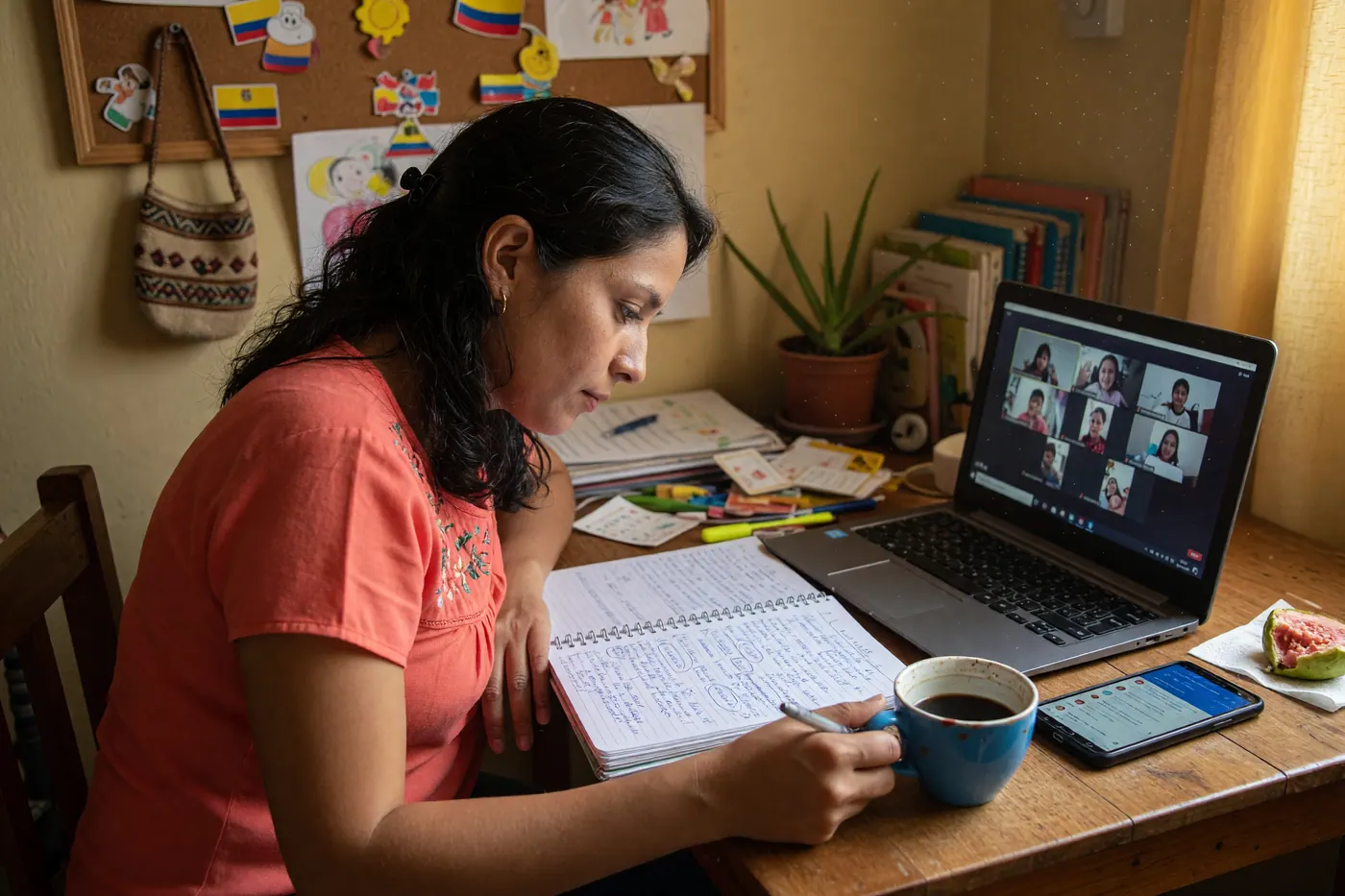
Teaching online requires more than just turning on the camera. Make sure you have a stable internet connection (use a wired connection if possible) and good lighting; if the student can't see or hear you well, they'll hardly book again.
Use interactive tools. Zoom and Google Meet are the standard for video calls, but adding platforms like Miro (virtual whiteboards) or Notion to organize your students' notes will make the difference between an average teacher and a premium one. Also, always offer a brief free 15-minute exploratory session. Use it to get to know the student, assess their level, and explain your methodology.
Frequently Asked Questions
❓ Is it mandatory to have a RUT to give private classes in Colombia?
Yes, it is mandatory for any independent economic activity. According to the DIAN (effective 2026), the process is completely free, does not require annual renewals, and you can do it online on the DIAN portal if you have a national ID card.
❓ What CIIU code should I register in the RUT if I am a private tutor?
According to DANE CIIU Rev. 4 A.C. (effective 2026), the code for academic tutoring and language classes is 8559 ('Other education services n.e.c.'). For art, music, or dance: 8553. For sports, yoga, or fitness: 8552. Confirm with the DIAN if your activity has specificities.
❓ Do online classes in Colombia include VAT?
It depends on your situation with the DIAN. Informal education (tutoring and free courses) is not expressly excluded from VAT under Article 476 of the Tax Statute. However, most tutors do not charge VAT because they qualify as 'not responsible for VAT' by having annual income below 3,500 UVT (Art. 437 Tax Statute, effective 2026). Note: 'excluded' and 'exempt' are distinct concepts in tax law. Validate your case with an accountant or the DIAN.
❓ How much does a private tutor charge per hour in Colombia?
Rates vary widely: they usually range between 20,000 and 60,000 COP per hour as a guideline, depending on the specialty, complexity, and experience of the tutor. This is not an official rate; each tutor sets their price according to the local market.
❓ How can I securely receive payments from my students?
The most recommended method is to use direct bank transfers through Nequi, Daviplata, or Bancolombia, or to generate digital payment links. Charging in advance or selling class packages reduces the risk of no-shows without payment.
❓ Where can I post my virtual class services for free?
You can create profiles on platforms like Superprof or Tusclases.co. Additionally, we recommend using the remote services section of Colombia Move to reach students across the country without paying commissions.



Comments
Loading comments...
Checking sign-in status...