
How to Check Traffic Tickets and Fines Before Buying a Car
How to check traffic tickets, fines, SOAT, and technical-mechanical inspection in SIMIT and RUNT before buying a used car in Colombia, and what to do if a debt appears.
IDIOMA DEL ARTÍCULO
Showing original language
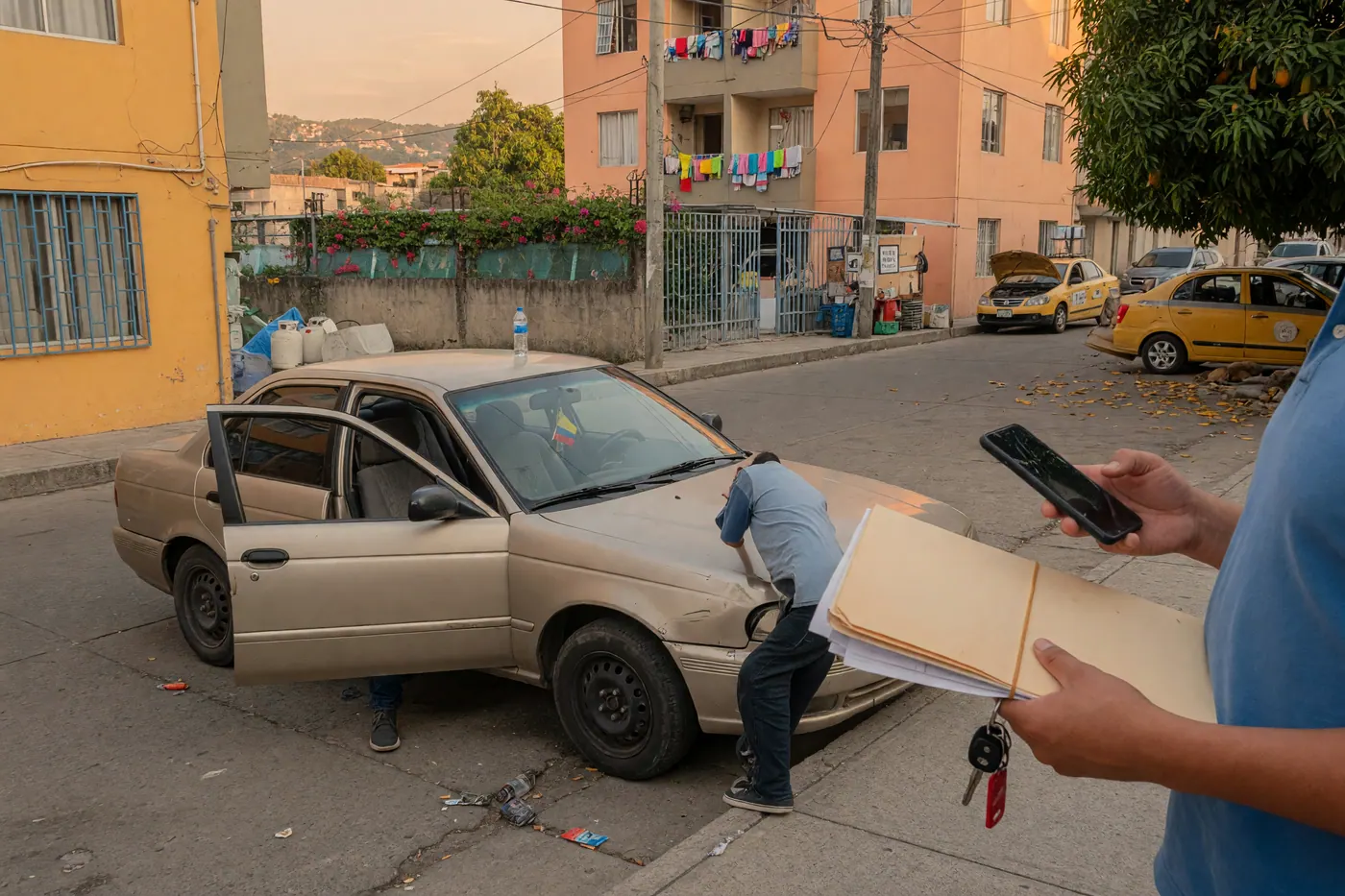
Last month, a buddy in Bogotá was one day away from paying seven million for a used sedan that looked flawless. Before closing the deal, I told him to check the license plate on SIMIT right there from his cell phone, standing in the parking lot. A list of unpaid traffic tickets associated with the vehicle appeared. The car was fine; the paperwork was not. And that, in Colombia, can ruin the entire deal.
Checking for traffic tickets, fines, and the status of the paperwork before buying a used car is not paranoia; it is the difference between driving off worry-free and inheriting someone else's debt. The good thing is that almost everything can be checked for free and in minutes, without moving from where you are. Here I show you, step by step, how to do it using official sources, what each thing means, and what to do if something pending appears. If you are just starting, complement this with our guide to buying a used car or motorcycle.
Quick answer:
- Check the license plate (and the seller's ID) on SIMIT to see traffic tickets and fines.
- Check the RUNT with the license plate and, if requested, the owner's document.
- Confirm valid SOAT, technical-mechanical inspection, taxes up to date, and that the seller is the registered owner.
- If a pending obligation appears, ask the seller to resolve it before paying the balance of the deal.
Traffic ticket vs. fine: why they are not the same
In practice, the traffic ticket is the citation—the order to appear—for an alleged traffic violation; the fine is the economic sanction that becomes final once that violation is confirmed. That difference is supported by the framework of the National Traffic Code (Law 769 of 2002) and is usually explained this way by mobility authorities themselves.
Why does it matter to you as a buyer? Because a traffic ticket that the seller is challenging is not the same as a final fine accumulating interest. Knowing the status of each item tells you how much that debt really weighs and who should resolve it before closing.
Step 1: check SIMIT by license plate and by ID
SIMIT (Integrated Information System on Fines and Sanctions for Traffic Violations), managed by the Colombian Federation of Municipalities, is usually the first point to check the account status of traffic tickets and fines. Go to fcm.org.co/simit, search by the vehicle's license plate and, in addition, by the seller's ID: this way you know if the person has obligations of their own, not just the car.
An honest detail: do not assume SIMIT is updated in real-time. A recent payment may take time to be reflected, and a newly issued ticket as well. That is why it is convenient to cross-reference it with what the seller shows you and with the RUNT.
Step 2: check the RUNT with the license plate and owner's data
The RUNT (National Single Registry of Traffic) gathers information on the vehicle and its associated records. The citizen inquiry is done on the official RUNT portal and, depending on the case, may ask you for the license plate along with the current owner's data. That is why it is convenient to ask the seller for their document number in advance; if they refuse without a reason, that is already a sign.
Be clear on one thing: the RUNT does not show you all the debts or all the legal problems of a car on its own. It is a piece of the puzzle, not the complete X-ray. Use it together with SIMIT and the physical paper review.
Step 3: SOAT, technical-mechanical inspection, taxes, and that the seller is the owner
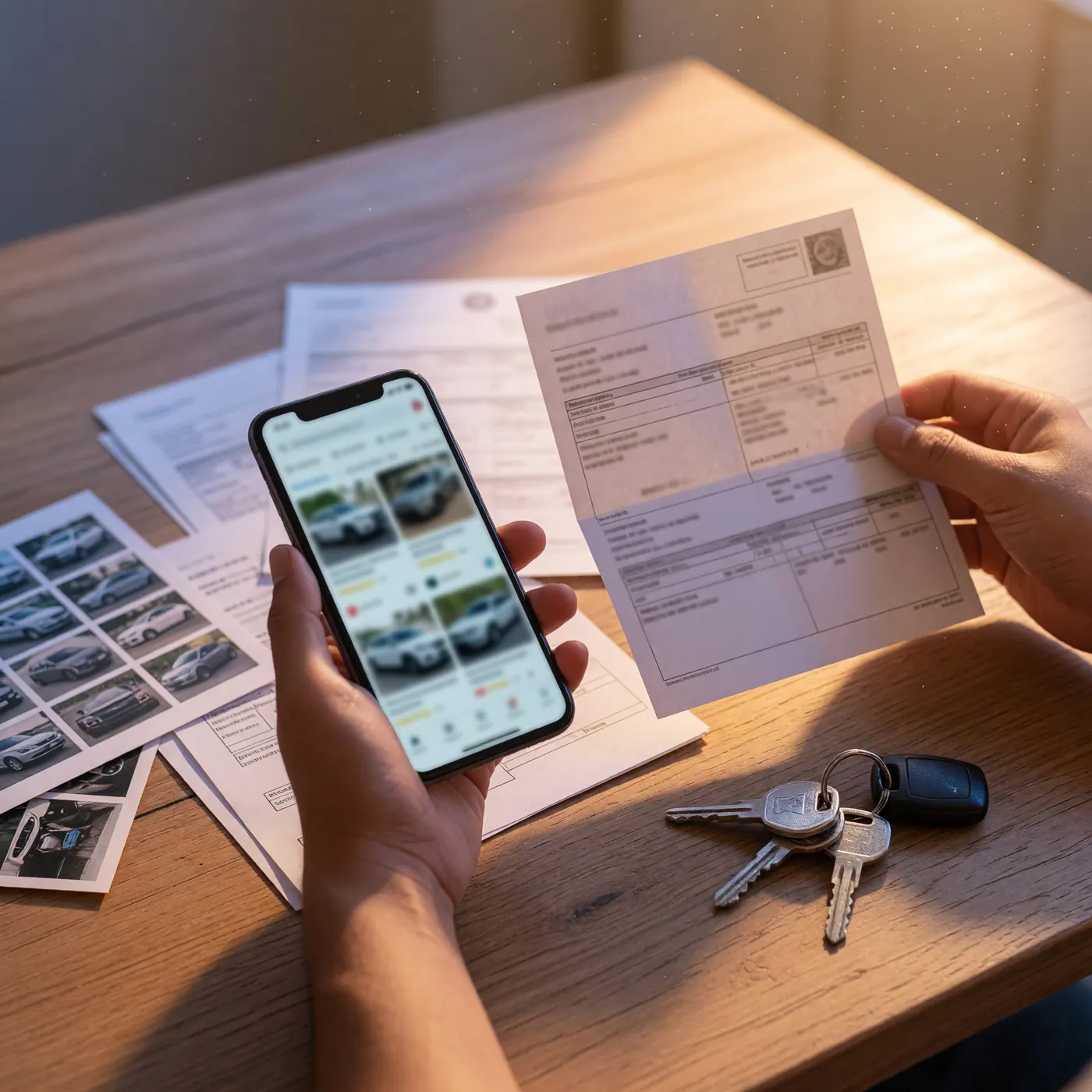
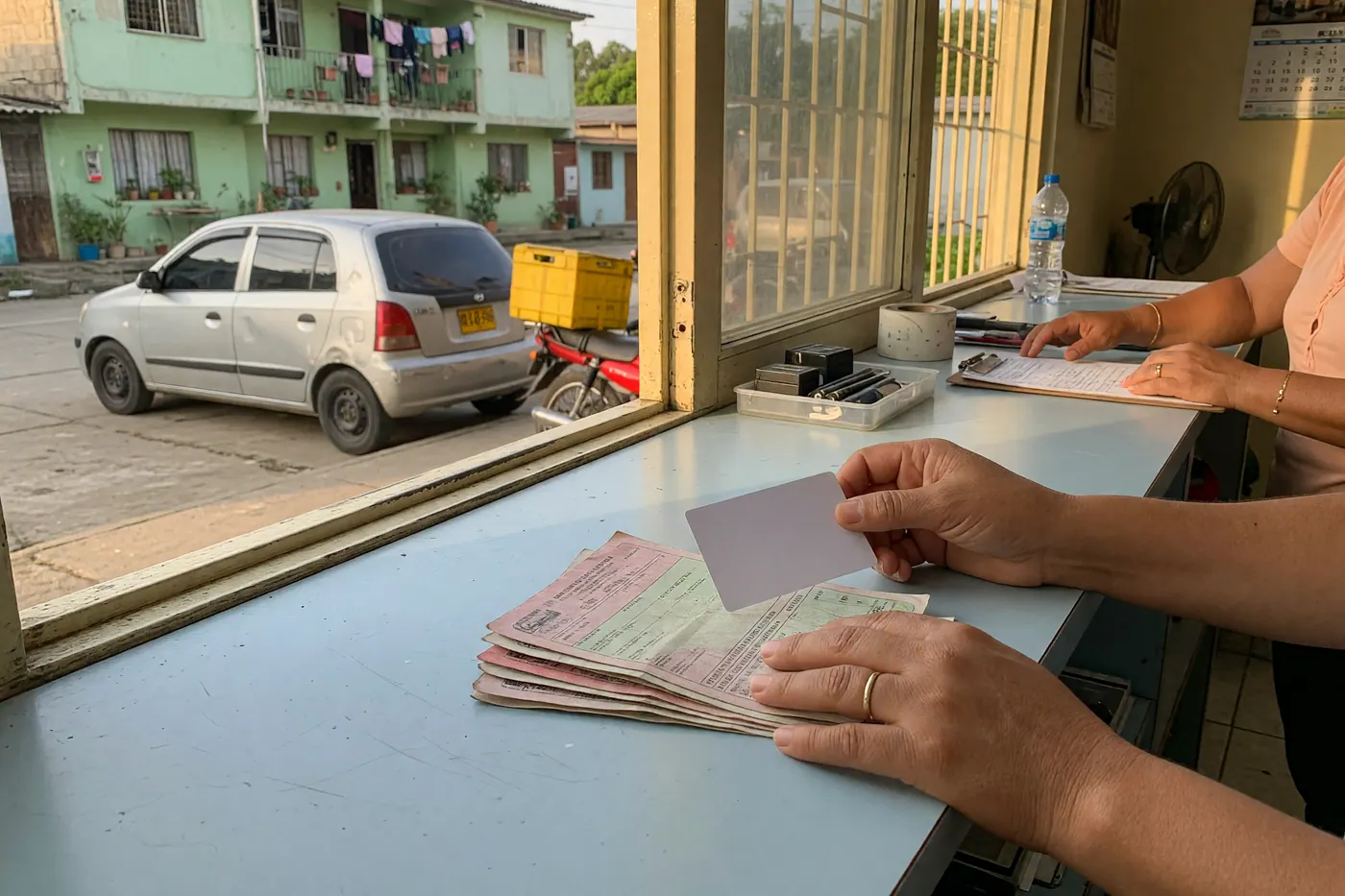
Checking for tickets is only one part. Automotive procedures normally require being registered in the RUNT and being up to date on fines; depending on the procedure and local authority, the SOAT, technical-mechanical inspection, and taxes are also verified. This is documented, for example, by the Mobility Service Window (Ventanilla Única de Servicios) in Bogotá (do not generalize that process to the rest of the country: each local authority manages its own).
Before parting with your money, check this minimum list:
- Valid SOAT in the correct vehicle's name.
- Technical-mechanical inspection up to date (when applicable according to the car's age).
- Vehicle tax with no pending balances.
- Ensure the seller's name matches the registered owner's.
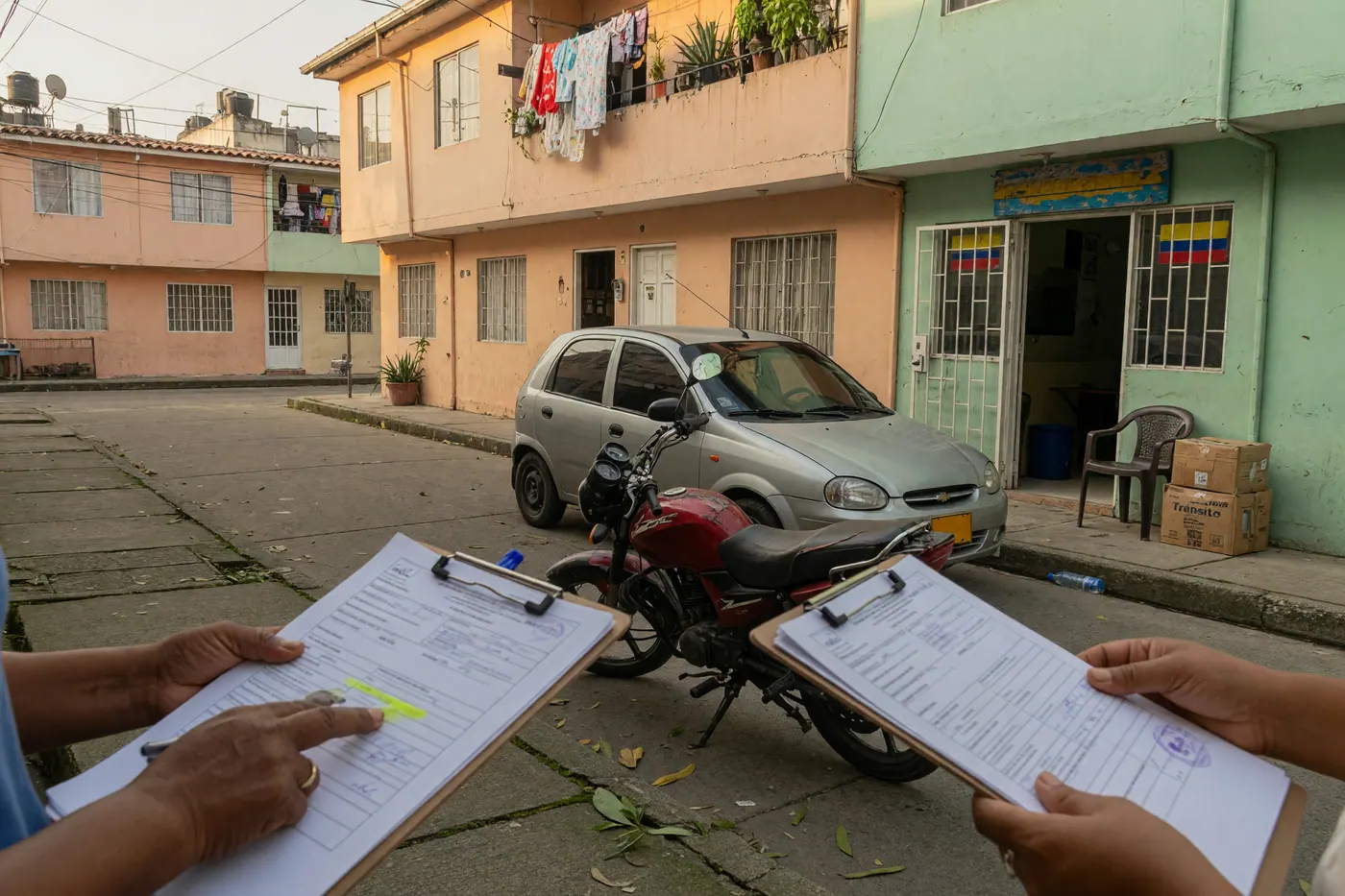
- Engine and chassis numbers that match the property card (tarjeta de propiedad).
- Liens or pledges: if the car is backing a loan, that changes the deal.
Step 4: what to do if a debt or a ticket in dispute appears
If something pending appears on SIMIT or RUNT, do not overlook it thinking that it will be fixed later. The prudent thing is to ask the seller to resolve it before signing or paying the balance of the deal, because a pending obligation can delay or prevent procedures before the corresponding traffic authority. Do not settle for a Don't worry, I already paid that: ask for the proof and verify it.
If the ticket is in dispute (challenged), understand who takes the risk if the decision goes against you. And a current note: in May 2026, the Ministry of Transport announced a review of millions of photo-fines, which left doubts about their validity. Do not assume those photo-fines were automatically voided; review it case by case and do not ignore the cameras. When the debt is clean, the next step is the transfer (traspaso), which has its own process.
If you are going to sell: list with the papers in order
Let us switch sides of the deal for a moment. If you are the one selling, be clear: the serious buyer is going to check your license plate. Get ahead of them. Arrive with SIMIT and RUNT clean, valid SOAT and technical-mechanical inspection, taxes up to date, and total clarity regarding the transfer status. A seller who provides that information upfront generates trust and closes faster. If you want the detail on how to do it without intermediaries, look at our guide to selling your used car without an intermediary.
And a concrete fact that works in your favor: according to the active ads on Colombia Move (June 2026), the car category is currently practically empty—without active ads—so a well-made listing, with clear papers and honest photos, has very little competition to appear first to buyers who are indeed searching.
Final checklist before setting aside or paying
- I checked the license plate on SIMIT and also the seller's ID.
- I checked the RUNT with the license plate (and the owner's document if requested).
- I confirmed SOAT, technical-mechanical inspection, and taxes.
- The seller matches the registered owner.
- Pending items were resolved and backed up before paying the balance.
Frequently asked questions
❓ How much does it cost to check traffic tickets and fines?
It is free. Checking traffic tickets and fines on SIMIT and reviewing the RUNT is done at no cost through their official portals (checked in June 2026). Be wary of anyone charging you for 'the full report': you can do the basics yourself in minutes.
❓ Can I check for tickets using only the license plate?
Yes. SIMIT allows you to search by vehicle license plate and shows associated tickets and fines (June 2026). For a serious deal, it is also advisable to check the seller's ID and the RUNT, because the license plate alone doesn't always tell the whole story.
❓ What is the difference between a ticket (comparendo) and a fine (multa)?
A 'comparendo' is a citation for an alleged infraction; a 'multa' is the financial penalty that becomes binding once it is confirmed. This is a distinction under the National Traffic Code (Law 769 of 2002) and it determines who resolves the debt and when.
❓ Can a car with fines be sold?
It can be negotiated, but an outstanding obligation can delay or prevent paperwork with traffic authorities. It is prudent for the seller to resolve it before you pay the balance; verify it in an official source like SIMIT before signing.
❓ Does checking SIMIT and RUNT protect me from a scam?
It helps a lot, but it does not guarantee it. Checking for tickets, paperwork, and ensuring the seller is the owner reduces the risk of a scam, but it doesn't eliminate it (June 2026). Combine this with seeing the car in person, checking the engine and chassis numbers, and being wary of a seller who is in a rush.
❓ What do I do if SIMIT shows a fine that the seller says they already paid?
Ask them for proof of payment and keep in mind that SIMIT does not always update in real-time (checked in June 2026). Before signing, wait until the system reflects the payment or confirm it with the corresponding traffic authority.
❓ Do RUNT and SIMIT show the same information?
Not exactly. SIMIT focuses on traffic tickets and fines, while RUNT gathers information about the vehicle and its registrations (checked in June 2026). That is why it is best to check both: each one provides a different piece of the puzzle before buying.




Comments
Loading comments...
Checking sign-in status...