
Buying a Used Car or Motorcycle in Colombia: Where to Look and What to Check
Everything you need to know before buying a used car or motorcycle in Colombia: platforms, real prices, essential documents, and warning signs.
IDIOMA DEL ARTÍCULO
Showing original language
When a friend of mine decided to buy a motorcycle in Medellín, the first thing he did was open Facebook Marketplace. Three days later, he almost lost four million pesos in a scam: the seller had incomplete paperwork, the engine number didn't match the vehicle registration card, and according to him, 'the deal had to be closed that same afternoon.' Luckily, someone warned him in time.
Buying a used vehicle in Colombia can be an excellent deal. The market is vast, prices are competitive compared to new cars, and there are options for every budget—from a work motorcycle to a family SUV. The problem is that it is also full of traps: bad-intentioned sellers, platforms saturated with outdated listings, and transfers that become complicated if you don't know the process.
This guide covers everything essential: where to search with criteria, which documents to check before paying a single peso, how to understand actual market price ranges, and how to complete the transfer without setbacks.
Private seller or used car dealership? What really matters
Before you start searching, you need to understand the difference between buying from a private seller and doing it at a used car dealership. There is no universal answer—it depends on your budget and how much time and knowledge you have to do the due diligence.
Buying from a private seller
The main advantage is the price. Without intermediaries or a retail markup, private vehicle prices are usually 10% to 20% cheaper than dealership ones for equivalent conditions. The disadvantage is that all the responsibility of verifying the vehicle's condition falls on you. Once the transfer is signed, the deal is closed—no warranties, no going back.
Buying from a used car dealership
Reliable used car dealerships offer some form of basic mechanical inspection and, in many cases, 30 to 90-day warranties on specific parts. Some facilitate financing through banks or cooperatives. The price is higher, and you have to read the fine print carefully—many 'warranties' have so many exclusions that they are practically useless. Even so, if it is your first car and you don't have a trusted person to help you with the mechanical inspection, a serious dealership reduces the risk.
Car markets
In Bogotá (Autopista Norte and Chapinero zones), Medellín (La Minorista, El Centro), and Cali, there are sectors with a high concentration of resellers. They are useful for comparing prices in one place, but they are also the favorite ground for intermediaries who inflate margins without adding value. Use them to get a sense of prices, not necessarily to buy.
Where to look for used cars and motorcycles in Colombia
The first step—before talking to any seller—is to research the market online to understand what prices are reasonable. This prevents you from being offered something 'at a good price' when it is actually overpriced.
TuCarro.com
TuCarro is the largest vehicle classifieds portal in Colombia. It has a broad database, filters for city, make, year, and price, and is updated constantly. The downside: most of the listings come from dealerships and resellers, so prices tend to be higher than in the private market. Use it mainly as a price reference.
MercadoLibre Autos
MercadoLibre mixes private individuals and professional sellers. It offers more protection to the buyer than a Facebook group, but sellers pay for advertising, which can inflate prices. For small motorcycles and low-displacement vehicles, there is quite a bit of supply and interesting options.
Facebook Marketplace and WhatsApp groups
This is where the largest number of private offers are found—and also the highest number of scams. Groups like 'Carros Usados Medellín' or 'Motos Colombia' can have good deals, but sellers with incomplete paperwork or vehicles with legal issues also abound. Immediate red flags: price well below market, blurry photos, artificial urgency ('I need to sell it today'), and sellers who refuse to show the vehicle in person.
Colombia Move — the free and bilingual alternative
For those who want to reach both Colombian buyers and resident foreigners, colombiamove.com offers free listings, organized by category, in Spanish and English. Vehicle categories include cars, motorcycles, trucks, SUVs, and bicycles. No commissions, no visibility fees, and the ability to contact the seller directly.
🇨🇴 Search and post vehicles for free in Colombia
Cars, motorcycles, trucks, and more — no commissions, no mandatory registration, in Spanish and English. Posting takes less than 2 minutes.
View cars → View motorcycles →Price ranges by vehicle type in Colombia
These are indicative ranges for the used market in 2026. Prices vary according to year, mileage, city, and the general condition of the vehicle:
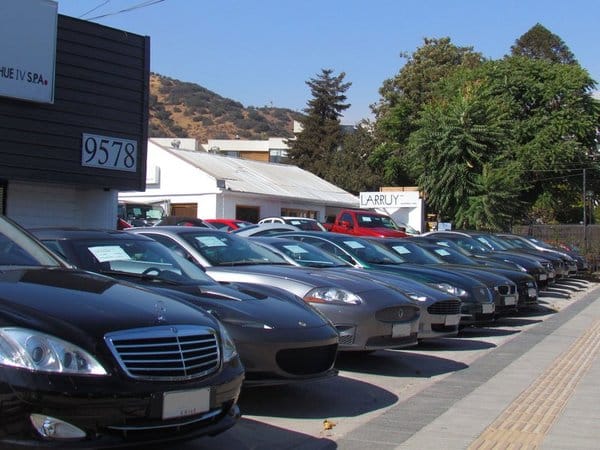
100–150cc motorcycles (Bws, Pulsar 135, AKT 125): between $3,500,000 and $7,000,000 COP. 200–250cc motorcycles (Pulsar 200, Honda XRE 300): between $8,000,000 and $14,000,000 COP. High-displacement motorcycles (600cc or more): from $18,000,000 up to $45,000,000 COP or more depending on make and condition.
Economy cars like Chevrolet Spark, Kia Picanto, or Renault Kwid that are 5 to 8 years old: between $18,000,000 and $32,000,000 COP. Mid-size sedans like Hyundai i10, Renault Logan, or Volkswagen Polo (4–6 years old): between $28,000,000 and $50,000,000 COP. Popular SUVs and crossovers like Renault Duster or Chevrolet Tracker (4–7 years old): between $55,000,000 and $95,000,000 COP. Trucks and pickups like Mazda BT-50 or Chevrolet D-Max: between $60,000,000 and $130,000,000 COP depending on year and version.
Basic rule: if a vehicle is more than 20% below the average market price for that model and year, there is always a reason. The question is whether that reason is mechanical, legal, or simply a good deal—and you have to find that out before paying.
What to check before signing any paperwork
This is where many buyers mess up: they fall in love with the vehicle, let their guard down, and sign without checking the essentials. These are the non-negotiable points.
The documents you must request
Vehicle registration card (Tarjeta de propiedad): it must be in the seller's name. If the name does not match the ID of the person selling it to you, ask for a clear explanation. Valid SOAT: the Compulsory Accident Insurance is mandatory for driving. If it is expired, the seller should deduct it from the price or renew it before the deal. Technical-mechanical inspection (RTM): verify that the sticker matches the license plates and that it is not expired. Proof of payment for road taxes: in some municipalities, this is a requirement for the transfer. Ask for the receipt.
The independent mechanical inspection
Never buy a car or motorcycle without having a trusted mechanic inspect it. The cost of an inspection is between $50,000 and $150,000 COP—a tiny fraction of what a faulty engine or damaged transmission might cost you. Critical points: brakes, suspension, engine (noises, smoke, knocks), gearbox, and the condition of tires.
Verification via RUNT
The National Registry of Transit (runt.gov.co) allows you to check the history of any vehicle by license plate: whether it is reported as stolen, has pending fines, was declared a total loss, or has liens or seizures. The check is free and takes less than a minute. If the seller refuses to let you perform this check or makes excuses, it is an immediate red flag.
The transfer: how to register the vehicle in your name
The transfer (traspaso) is the legal process that registers the change of ownership in the RUNT. There are two main ways:
At a notary — the most common option for cars. The buyer and seller go with their original ID cards, registration card (tarjeta de propiedad), and a purchase agreement (a standard format can be used). The cost at the notary varies depending on the declared value of the vehicle, but it generally ranges between $200,000 and $600,000 COP, plus traffic rights ($80,000–$120,000 COP additional). The time for the RUNT to reflect the change is 3 to 5 business days.
At the transit authority — for motorcycles, in many municipalities it is sufficient to go directly to the Traffic Secretariat with the vehicle's documents and ID cards. It is faster and can be cheaper.
A detail many people ignore: if the vehicle has a lien (it was bought on credit and the bank is still listed as the creditor in the RUNT), the transfer cannot be made until that lien is formally canceled. Check the status of liens in the RUNT before closing any deal.
Warning signs you should take seriously
Price far below market value without a reasonable explanation — a 2019 Spark at ten million when the market is at twenty-five isn't a bargain, it's a red flag. A seller who doesn't allow a mechanical inspection or is in a rush — forced urgency is a classic pressure tactic. Registration card with scratches or corrections — this may indicate document tampering. Scratched chassis or engine number — driving with an altered VIN is a crime in Colombia. Pending fines or taxes that the seller wants you to take on — these debts pass to the new owner if not cleared. A seller who only accepts cash and refuses to sign a purchase contract — without that document, you have no legal backup.
Frequently asked questions
❓ How much does a car transfer cost in Colombia?
The cost varies by notary and the declared value of the vehicle, but it is generally between $200,000 and $600,000 COP at a notary, plus $80,000 to $120,000 COP in traffic fees. For motorcycles, the transfer at the Traffic Secretariat is usually cheaper — between $80,000 and $200,000 COP in total.
❓ Can foreigners buy cars in Colombia?
Yes. Foreigners with a foreign ID card (cédula de extranjería) can buy vehicles and register them in their name in the RUNT without any problem. Even with a passport, it is possible at most notaries, although some prefer the Colombian identification document. The process is the same as for any Colombian.
❓ How do I know if a car is reported as stolen?
Go to runt.gov.co, look for the license plate inquiry option, and enter the license plate of the vehicle you are being offered. The system will tell you if there is a theft report, fines, liens, or if it was declared a total loss. The inquiry is completely free.
❓ How much does the technical-mechanical inspection (RTM) cost in Colombia?
The RTM costs between $60,000 and $100,000 COP for motorcycles and between $100,000 and $160,000 COP for cars, depending on the Automotive Diagnostic Center (CDA) and the city. Its validity is one or two years depending on the age and type of vehicle. CDAs are authorized by local traffic secretariats — find the one closest to where the vehicle is.
❓ Where can I list my used car or motorcycle for free in Colombia?
You can post on TuCarro.com, MercadoLibre Autos, Facebook Marketplace, or on colombiamove.com — the latter is completely free, commission-free, and has reach in both Spanish and English to reach Colombian buyers and resident foreigners. Available categories include cars, motorcycles, pickup trucks, and SUVs.
Make the deal with a cool head
Buying a used vehicle in Colombia doesn't have to be a Russian roulette. With the right verification in the RUNT, a trusted mechanic for the inspection, and the documents in order, you can make an excellent deal — whether it's a motorcycle to get around the city or a family car to travel the country.
Did you recently buy or sell a vehicle in Colombia? Tell us how it went in the comments — did you use any of these platforms? Did you have any scares during the process? Your experience can help others. And if you have something to sell, posting on colombiamove.com is free and takes less than two minutes.



Comments
Loading comments...
Checking sign-in status...