
SWIFT Wire Transfers & DIAN Form 1060 in Colombia: Bank Compliance for Expats
Sending money to Colombia via SWIFT requires navigating closed-loop exchange controls, SARLAFT AML checks, and Banco de la República declarations. Here is how to keep your capital safe.

IDIOMA DEL ARTÍCULO
Showing original language
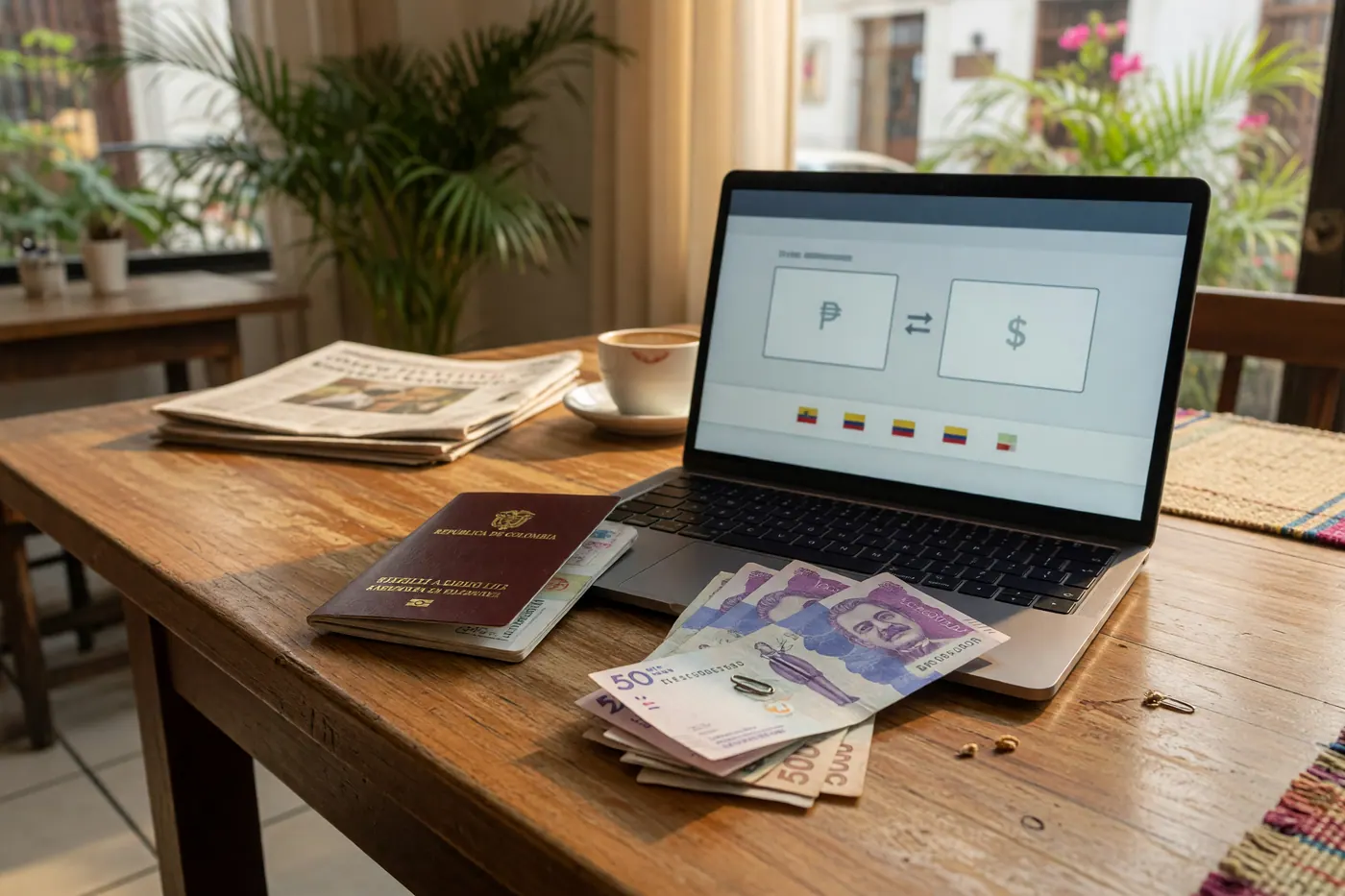
Few moments are more stressful for an expat or property investor in Colombia than watching tens of thousands of dollars vanish into the SWIFT banking ether, only to receive a cryptic email from your Colombian bank stating that your funds have been placed on compliance hold. Whether you are transferring seed capital to fund a Colombian SAS, purchasing an apartment, or wiring personal savings to cover living expenses, the Colombian financial system does not operate like North American or European wire networks.
Colombia enforces a closed-loop exchange control framework. Every single US Dollar, Euro, or Pound entering a domestic bank account must be formally justified, classified, and registered through an official Declaración de Cambio (Exchange Declaration) under Central Bank regulations. If you misclassify your transfer—or let an automated feature convert it incorrectly—you can jeopardize your visa eligibility, lose the legal right to repatriate capital when you sell assets, and face administrative inquiries from Colombia's national tax and customs directorate, the DIAN.
Quick Reference: For low-value day-to-day transfers, read our comparison on how to convert USD to COP using fintech rails and how expats receive money in Colombia. When moving sums above $10,000 USD for real estate or business capitalization, traditional SWIFT wires canalized through the regulated foreign exchange market are legally mandatory.
The Colombian Regulatory Triangle: Who Regulates Your Inbound Wire?
To avoid compliance roadblocks, you must distinguish between the three distinct entities overseeing inbound wire transfers:
- Banco de la República (BanRep): Colombia's central bank sets monetary policy and exchange market rules under Circular Reglamentaria Externa DCIP-83 and Resolución Externa 1 de 2018. It mandates that foreign currency enter through authorized exchange intermediaries (Intermediarios del Mercado Cambiario or IMCs) and tracks why money enters the country.
- Commercial Banks (IMCs): Institutions like Bancolombia, Davivienda, and Scotiabank Colpatria serve as the gatekeepers. Under Superintendencia Financiera guidelines, their compliance desks enforce SARLAFT (AML/CFT) screening. They require documentation showing the legal source of your funds before crediting your balance.
- Dirección de Impuestos y Aduanas Nacionales (DIAN): The tax and customs authority enforces exchange regime sanctions under Decreto Ley 2245 de 2011. DIAN monitors bank deposits to identify taxable income and levies heavy penalties on individuals who fail to canalize mandatory foreign exchange transactions through legal channels.
The Golden Rule: Banco de la República Formulario 4 vs. Formulario 5
The single most destructive mistake foreign buyers make is treating all inbound transfers the same. When commercial banks monetize foreign currency into Colombian Pesos, they submit an electronic exchange declaration on your behalf. Choosing the wrong form can permanently invalidate your financial goals.
| Form Type | Official Designation | Proper Use Cases | Visa & Repatriation Impact |
|---|---|---|---|
| Formulario 4 | Declaración de Cambio por Inversiones Internacionales | Direct real estate acquisitions, purchasing shares in a Colombian company (SAS), foreign direct investment (FDI). | Needed to apply for an investor visa: Generates official BanRep registration used in Cancillería Visa M applications; establishes the legal right to repatriate capital abroad upon liquidation. |
| Formulario 5 | Declaración de Cambio por Servicios, Transferencias y Otros Conceptos | Personal living expenses, rent, digital nomad wages, freelancing income, family support/remittances. | No investment credit: Does not count as registered foreign capital for real estate or company investment visas. Wires cannot be retroactively converted to Form 4 without extensive legal rectifications. |
If you wire $150,000 USD to purchase real estate but let the bank process the incoming wire under Formulario 5 as "personal living support," Banco de la República will not record it as registered foreign direct investment. Under Cancillería Resolution 5477 de 2022, an investor visa application needs verified registration from the central bank before you can apply. Furthermore, when you eventually sell that property, transferring proceeds back out of Colombia in foreign currency becomes a severe regulatory hurdle if your initial capital was never registered via Formulario 4.

Demystifying DIAN Form 1060: What It Actually Is
Online expat forums frequently warn newcomers: "Make sure you submit DIAN Form 1060 after your wire transfer!" This is an inaccurate reading of Colombian tax mechanics.
Formulario 1060 is not a personal tax form you submit manually. It is an electronic exogenous XML report (Información de los Datos Mínimos de las Operaciones de Cambio) that commercial banks and authorized corporations generate and transmit directly to DIAN. When Bancolombia or Davivienda monetizes your SWIFT wire, their backend systems record the transaction data, sender details, amount, and the selected exchange numeral, automatically bundling it into Formulario 1060 reporting packages sent to DIAN.
DIAN uses this cross-referenced data to identify discrepancies between declared income, foreign asset holdings, and real-time bank deposits. While you do not physically fill out Formulario 1060, your actions dictate what your bank submits to the tax authority. Submitting false statements or attempting to bypass the exchange market using informal peer-to-peer cash brokers can expose you to DIAN exchange penalties under Decreto Ley 2245 de 2011, which carry fines up to 100% of the unchanneled capital.
Bank Monetization Protocols: Bancolombia, Davivienda, and Colpatria
Different Colombian commercial banks maintain distinct digital portals and intake workflows for handling SWIFT wires. Understanding these nuances ensures your funds clear smoothly.
Bancolombia: The "Abono Automático" Trap
Bancolombia (SWIFT: COLOCOBM) offers an automatic clearance feature called Abono Automático. When enabled, incoming wires under $10,000 USD are automatically converted to Colombian Pesos and deposited into your designated savings or checking account without requiring manual digital approval.
For monthly living expenses, Abono Automático is convenient. But for property investors, it is a dangerous trap. When Abono Automático is active, Bancolombia defaults to routing incoming wires under Formulario 5 (often classified under family remittance numerals). If you send a large deposit for a property purchase to an account with Abono Automático active, the system may auto-convert the funds under Formulario 5, ruining your investment registration.
- Rule for real estate & business: Always disable Abono Automático in your Bancolombia app or online banking before wiring investment funds. Force the wire to arrive in a pending state so you or your legal representative can monetize it manually under Formulario 4.
- High-volume wires: For transfers exceeding $250,000 USD, you will typically bypass retail digital monetization and work directly with Bancolombia's foreign exchange desk (Mesa de Dinero) to negotiate live exchange spreads and confirm required compliance files.
Davivienda: "Mis Operaciones Internacionales"
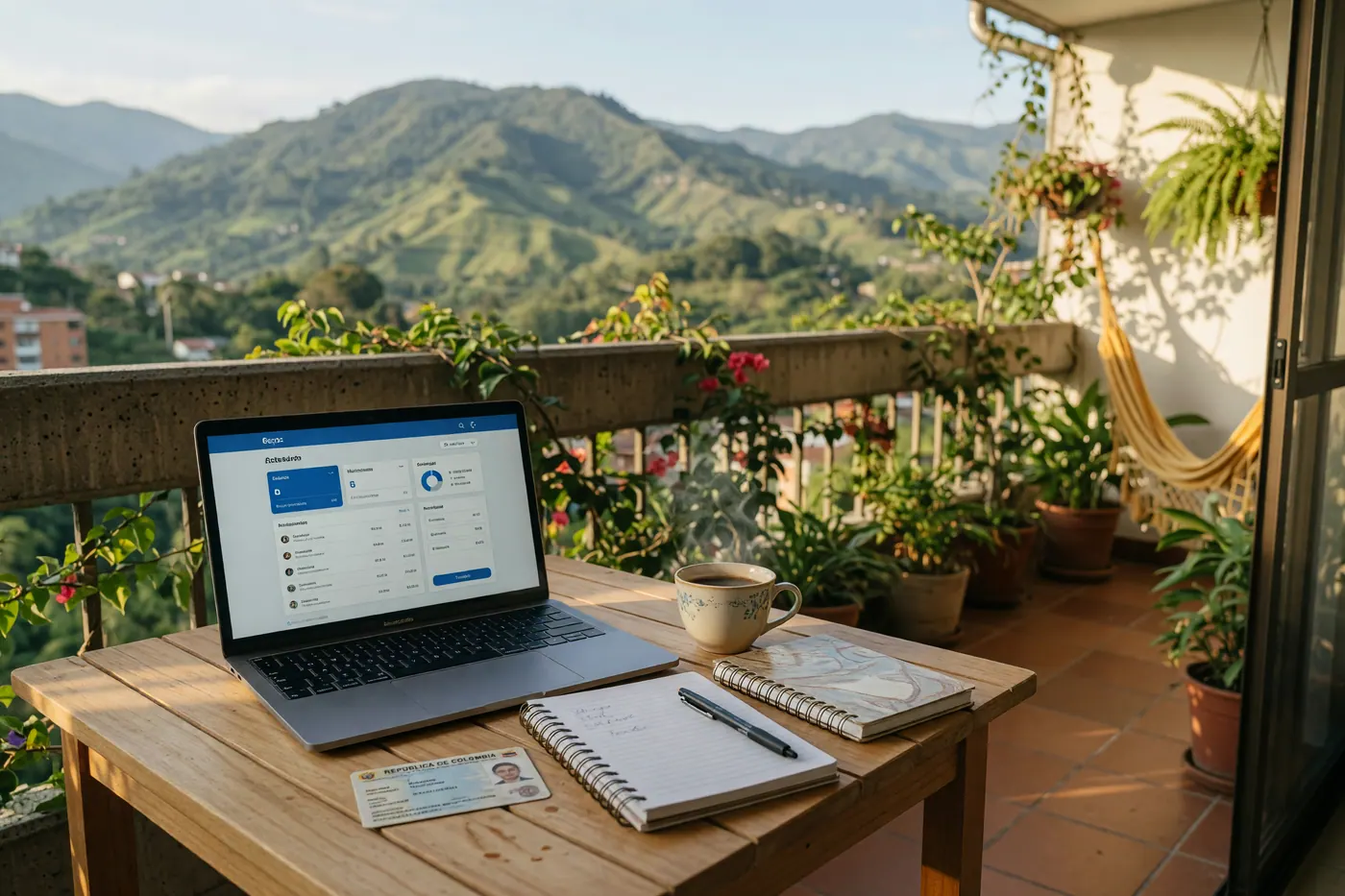
Davivienda manages incoming wires through its Mis Operaciones Internacionales portal, primarily accessible via desktop browser. Transfers up to $5,000 USD can clear by automatic consignment; larger wires need manual monetization. To clear funds, navigate to Realizar operaciones internacionales a través de bancos en el exterior > Recibir del exterior. You must review the transaction, input the sender's details, select the appropriate exchange reason, verify the live conversion rate, and authorize the deposit. This step serves as your digital signature on the required exchange declaration.
Scotiabank Colpatria
While digital banks like Nu Colombia do not currently accept direct international SWIFT wires into savings accounts, traditional institutions like Scotiabank Colpatria handle high-value wires via designated compliance officers. Large transfers often require sending signed exchange declarations and source-of-funds paperwork directly to the international operations branch before the funds are released into your local account.
The $10,000 USD Enhanced Due Diligence Trigger and SARLAFT Checklist
Regardless of the bank, transactions exceeding $10,000 USD (or cumulative deposits showing anomalous velocity) automatically trigger enhanced due diligence under Colombian AML/SARLAFT regulations. Automated clearing stops, and compliance teams will request supporting documentation. To prevent your funds from sitting in limbo, compile this documentary package before initiating the wire:
- Proof of Identity: A clear copy of your valid passport and Cédula de Extranjería.
- Source of Wealth Documentation: Recent tax returns from your country of origin (e.g., US IRS Form 1040, Canadian CRA Notice of Assessment) or pay stubs/consulting contracts verifying employment earnings.
- Bank Statements: The last three months of bank statements from the originating foreign account, showing your name and the gradual accumulation of the capital.
- Transaction Justification: For real estate, a signed copy of the notarized purchase promise (promesa de compraventa). For company capitalization, draft articles of incorporation or official SAS registry documents.
Tax Implications: When Do Wire Transfers Trigger Colombian Income Tax?
Transferring personal savings to Colombia does not inherently generate Colombian income tax. Moving post-tax capital between your own foreign and domestic bank accounts is not classified as income. However, DIAN's monitoring system operates on statutory thresholds.
Under Colombian tax rules, anyone whose cumulative annual bank consignments (consignaciones bancarias)—including domestic transfers and international SWIFT deposits—exceeds 1,400 UVT is legally required to file an annual income tax return using DIAN Formulario 210.
Meeting the 1,400 UVT threshold triggers the obligation to declare, but not necessarily to pay. Working with a qualified Colombian public accountant (contador público) allows you to properly classify inbound SWIFT wires as pre-existing capital on your balance sheet, preventing them from being mistakenly taxed as ordinary Colombian earnings.
As of the active listings on Colombia Move (September 2026), the apartment category has 61 active listings: 27 for sale and 34 for rent. After the wire is classified, those owner listings sit in the housing section.
Frequently Asked Questions
❓ What is DIAN Form 1060, and do I need to file it myself?
DIAN Formulario 1060 is an electronic exogenous XML report submitted by commercial banks and authorized exchange intermediaries, not a personal tax return filed by individuals. Your Colombian bank compiles and submits Formulario 1060 directly to DIAN based on the declarations of change (Declaraciones de Cambio) you complete when monetizing incoming wires. That exogenous format was still the reporting channel reviewed in September 2026.
❓ What is the difference between Banco de la República Formulario 4 and Formulario 5?
Formulario 4 officially registers foreign direct investment in real estate or corporate share capital, establishing visa eligibility and capital repatriation rights. Formulario 5 covers ordinary living expenses, digital nomad income, consulting fees, and personal family remittances, but offers no investment visa accreditation. Banco de la República still draws that split under Circular DCIP-83 as of September 2026.
❓ Why did my Colombian bank freeze my incoming SWIFT wire?
Colombian banks freeze international wires when compliance filters trigger anti-money laundering (SARLAFT) requirements, typically for transfers exceeding $10,000 USD. Providing your identity documents, tax returns, and proof of origin of funds resolves the hold. Bank desks were still applying that SARLAFT check in September 2026.
❓ Should I leave Bancolombia's "Abono Automático" turned on?
You should only keep Abono Automático turned on for routine personal living expenses under $10,000 USD. If you are wiring capital for real estate or company formation, disable it beforehand so the funds are not miscategorized under Formulario 5 instead of Formulario 4. Bancolombia's threshold was still described that way in September 2026.
❓ Does transferring personal money into Colombia create an automatic tax liability?
Transferring already-taxed personal savings is not considered taxable income, but exceeding DIAN's cumulative annual bank deposit threshold (1,400 UVT) requires you to file Formulario 210. A qualified Colombian accountant can document the funds as personal equity so the deposit is not treated as ordinary earnings. That filing trigger reflects DIAN rules reviewed in September 2026.
❓ What happens if I forget to register my property wire under Formulario 4?
Failing to canalize a real estate purchase through Formulario 4 blocks Cancillería Visa M qualification. It also makes later foreign-currency repatriation of the sale proceeds difficult. That registration rule under Banco de la República was current in September 2026.


Comments
Loading comments...
Checking sign-in status...