
How to Offer Air Conditioning Installation and Maintenance Services in Colombia
How to put together an air conditioning installation and maintenance offer that the client can compare: quote with site visit, electrical part, refrigerant, warranty, and a clear listing.
IDIOMA DEL ARTÍCULO
Showing original language
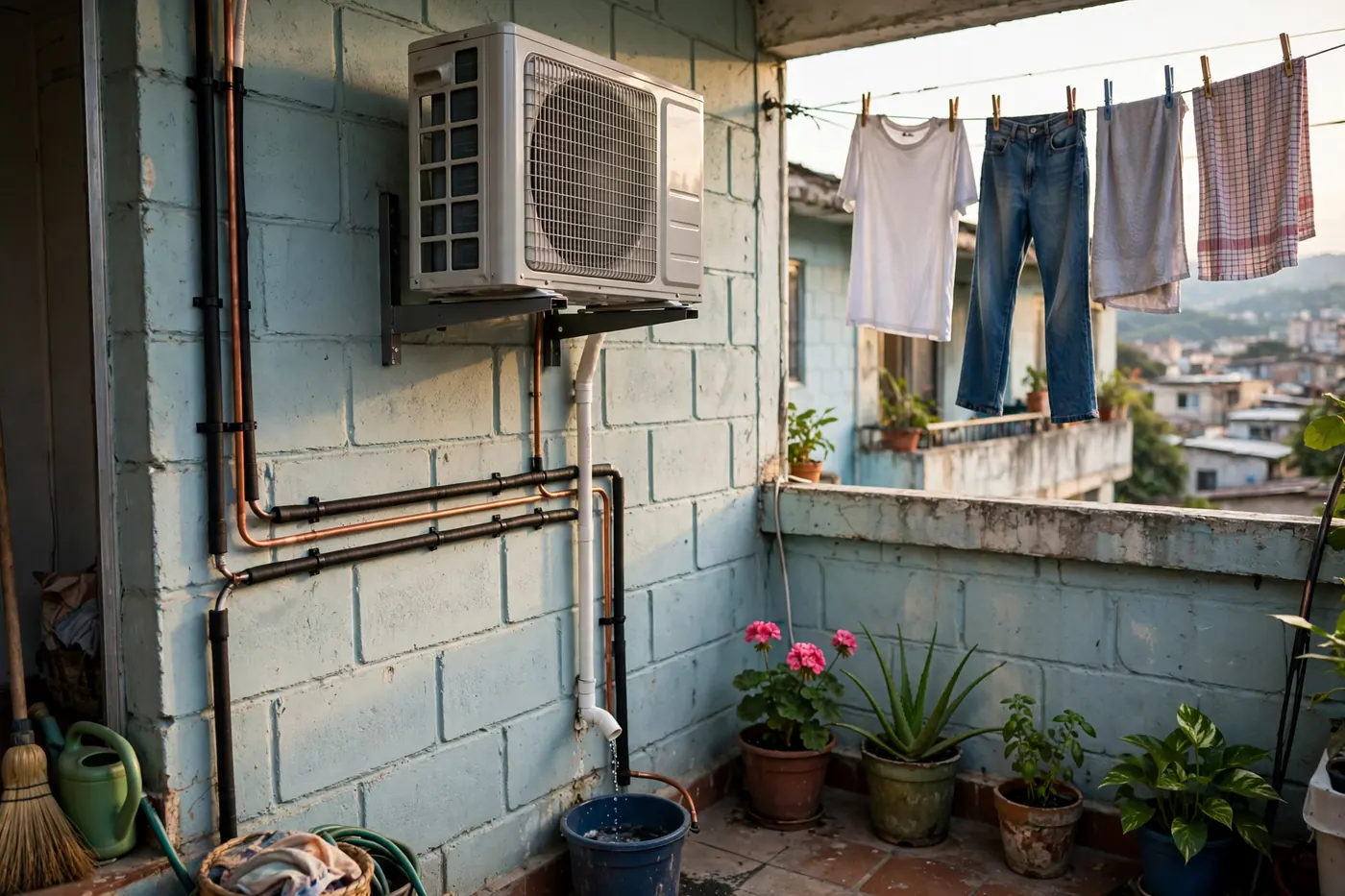
The customer writes: "I need to install a minisplit in the living room, how much does it cost?". Three technicians reply. One sends a price by WhatsApp without asking anything, another says "it depends" and disappears, and the third asks about the area, the height of the balcony, and where the drain would go. Guess who gets the job. In Barranquilla, where air conditioning is hardly a luxury, that difference in clarity decides who keeps the work.
This guide is for you, the technician or workshop owner, who wants to publish an installation and maintenance offer that can be compared, quoted, and trusted.
What service you offer and what you don't
First separate the three trades that customers mix up: the on-site installation, the preventive maintenance and the repair. Each one is quoted differently and has a different warranty. If your ad says "everything in air conditioning," the customer doesn't know what they will pay.
Also separate the workshop from the home visit. If the customer brings you the equipment to repair it, receipt and warranty rules apply. If you go to their home to install, send what was contracted. I explain the difference below. If your work is more general repair of refrigerators and washing machines, see the guide to home appliance repair. If you also offer the electrical side of the home, there is the guide to home electrical services. Whoever hires the maintenance, and not whoever offers it, has the other side in how to hire home maintenance and repairs.
How to quote without a national rate
There is no official per-BTU rate that works for the whole country, and the prices circulating on commercial blogs are private references. That is why you won't find a peso table here: your "starting price" is yours, the one that comes from your costs, and you give it after seeing the site.
A visit before quoting protects you and the customer. What you should check and list as separate items:
- The capacity the space really requires, not the one the customer has in mind.
- The meters of piping between the indoor and outdoor units.
- The height and access of the outdoor unit.
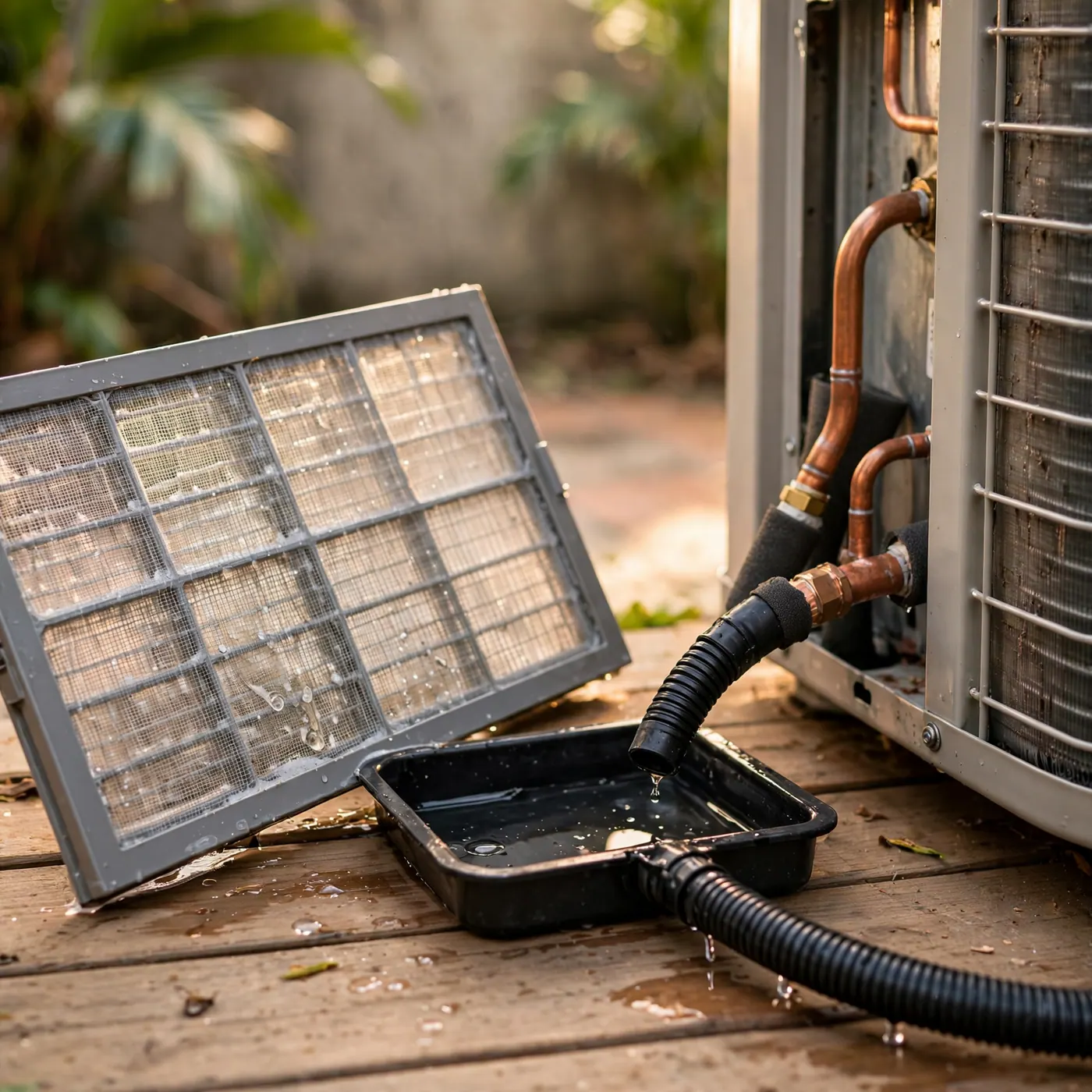
- The condensate drain and where it exits.
- The civil work, if a wall must be opened or a base built.
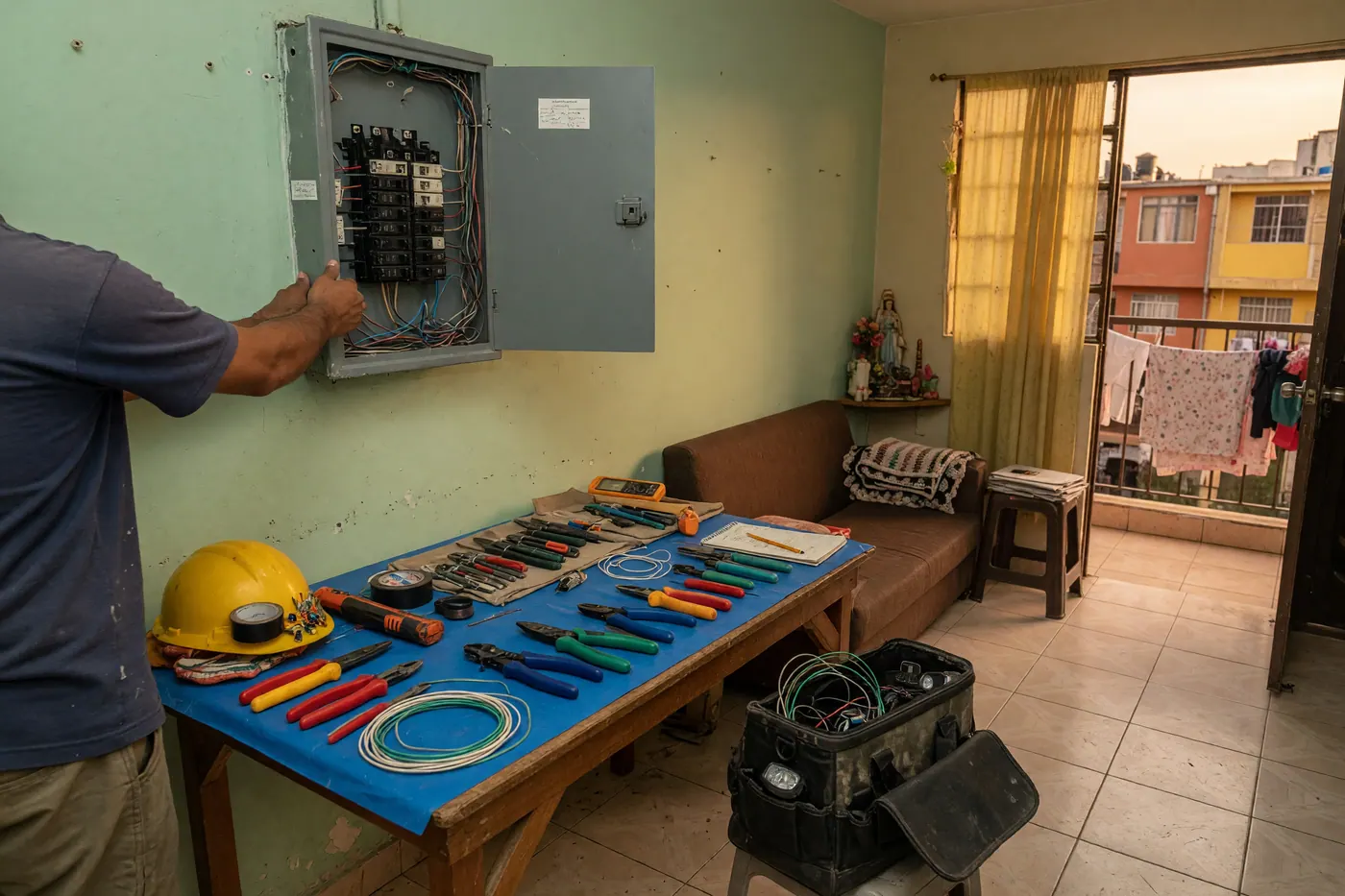
- The electrical work, always separate.
Honestly, quoting over the phone with only the BTUs is the most common source of arguments: you arrive, the piping is double what was imagined, and the customer feels you're ripping them off. A ten-minute visit avoids that conversation.
The electrical part: without overstating the standard
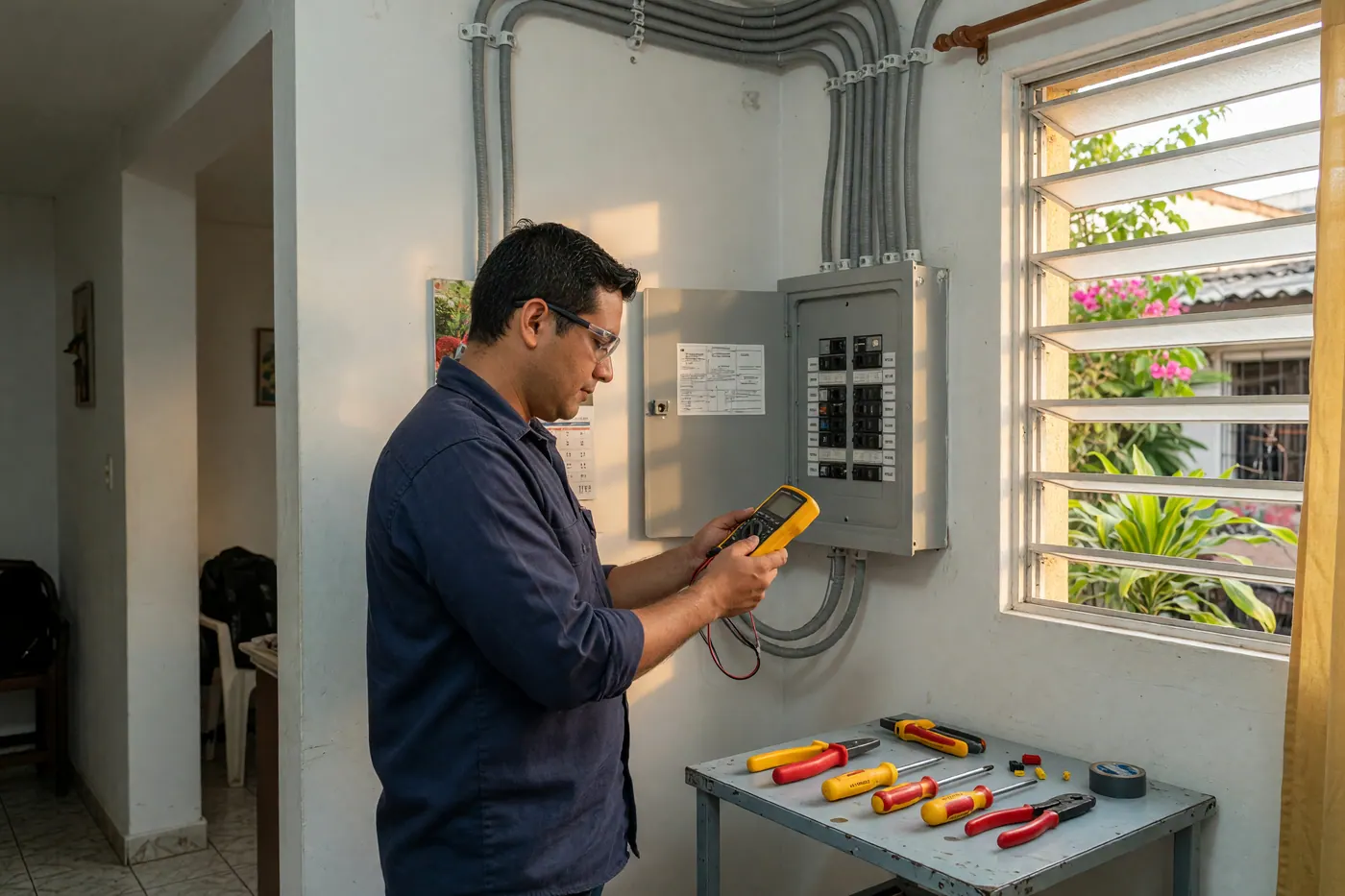
Many myths circulate here. Two you should stop repeating: that the RETIE requires a dedicated circuit for any air conditioner, and that you must comply with the entire NTC 2050. Resolution 40117 of 2024 did not make the entire NTC 2050 mandatory in its second update; the RETIE adapted some requirements from that standard. And the RETIE in force was modified by Resolution 40284 of June 23, 2026.
What you can say with confidence: the circuit, overcurrent protection, and grounding must correspond to the equipment's load and the manufacturer's instructions. And a new electrical installation, or the part that is expanded or remodeled, must demonstrate conformity with the RETIE through a declaration of compliance and, when that scope requires full certification, through the report of an accredited inspection body.
Don't invent kVA thresholds for a minisplit. To know when an inspection report is needed, the guide to RETIE certification and inspection explains it. And if you need an electrician partner, you can look for one in the electricity category of the marketplace.
Refrigerant and maintenance
In maintenance, the practice you can safely state is simple: control leaks and do not release refrigerant into the atmosphere. Do not teach (or publish as a tip) how to open the circuit or vent gas; that is work for those with the training and recovery equipment.
On June 19, 2025, the Ministry of Environment published guides on leak control and good practices for commercial refrigeration with R-290. Careful: that R-290 guide is for commercial refrigeration equipment that uses that gas, not a rule for all domestic minisplits. Don't assume a single refrigerant for all domestic minisplits.
Regarding certification in good refrigerant practices: there is a scheme promoted by the Technical Ozone Unit, SENA, and ACAIRE. It is a good backing to show in your ad, but do not present it as a mandatory permit to publish your service; it has not been shown to be one.
Warranty and receipts
Here the difference between workshop and site matters.
Installation or maintenance at the customer's site. According to Article 11 of Law 1480 of 2011, if the service fails to meet what was contracted, the consumer may choose between having you repeat the service or returning the price paid.
Equipment the customer leaves at your workshop. You must give the customer a receipt with your details and NIT, address and phone, who delivers the equipment, receipt number and date, the item, the noted defects, the type of service, the deadline, the value, and the payments made. If the customer does not accept in writing that the service is left without warranty, it is guaranteed for three months from delivery of the item. And if the SIC did not set another period, the repair to enforce the legal warranty must be completed within 30 business days from delivery of the item.
Always leave a written warranty for the service, even if it's a short sheet. If the direct claim is not resolved, the customer can go to the SIC; the guide to how to file a complaint with the SIC explains that path.
How to get your ad ready
A technical service ad works when it answers the questions before the customer asks them. Include:
- Coverage area: the neighborhoods where you do travel.
- What the visit includes and what is charged separately (extra piping, civil work, electrical work).
- Photos of real jobs: finished installations, neat piping, drainage. No catalog photos.
- Your starting price, if you decide to show it, clarifying that it is confirmed after the visit.
- Experience and backing: years in the trade and, if you have it, your good practices certification.
- Written warranty: state that you provide it in writing.
An ad with area, photos, and scope stands out.
To filter out curious people without losing the serious customer, ask for area, type of equipment, and photos of the place. Don't ask for opaque advance payments, and don't leave the cell phone as the only filter: an ad that explains the scope attracts fewer "how much does it cost" messages and more decided customers. To find the full directory, see the services section.
Formalize your activity
Check the activity name on your RUT. In the classification the DIAN adopted with Resolution 000114 of 2020, class 4322 is titled "Plumbing, heating and air conditioning installation," while 3530 is steam supply and air conditioning. The DANE note refers the installation of those systems to 4322, not to specialized machinery maintenance. Careful: DANE already lists CIIU Rev. 5 A.C. (Resolution 992 of 2026), so confirm with the DIAN or your accountant which code your RUT accepts today.
If you are already a merchant, keep your commercial registration up to date; deadlines and penalties are in the guide to commercial registration renewal.
Frequently asked questions
❓ How much should I charge to install an air conditioner?
There is no official national rate to use as a reference. Calculate your price after visiting the site, with piping, height, drainage, civil work, and electrical work as separate items, according to your real costs. (verify with the official source)
❓ Does the RETIE require a dedicated circuit for any air conditioner?
It has not been shown to be a universal rule. The circuit, protection, and grounding must correspond to the equipment's load and the manufacturer's instructions, and new or expanded electrical work must demonstrate conformity with the RETIE. (verify with the official source)
❓ What warranty do I give if the customer brings the equipment to my workshop?
Three months from delivery of the item, unless the customer accepts in writing that the service is left without warranty. Always give the receipt with the details the SIC requires: equipment, defects, service, deadline, value, and payments. (verify with the official source)
❓ What happens if the on-site installation does not work as contracted?
The consumer may choose to have you repeat the service or to have the price paid returned, according to Article 11 of Law 1480 of 2011. Putting the scope in writing helps both sides resolve it quickly. (verify with the official source)
❓ Which activity do I list on my RUT to install air conditioning?
Confirm on your RUT the class for plumbing, heating and air conditioning installation, and do not use the steam supply class or the industrial machinery class for that installation. Verify the current code with the DIAN or your accountant. (verify with the official source)
❓ Do I need a refrigerant card to publish my service?
It has not been shown to be a mandatory permit to publish. The good refrigerant practices certification, promoted by the UTO, SENA, and ACAIRE, serves as backing you can show your customers. (verify with the official source)
❓ How do I filter out curious people and avoid a scam without losing the serious customer?
Ask for area, type of equipment, and photos of the site before scheduling the visit. Then leave the scope, deadline, and warranty in writing. Someone who only asks "how much does it cost" without giving details is usually just curious. (verify with the official source)




Comments
Loading comments...
Checking sign-in status...