
Colombian Street Food Guide: Empanadas, Arepas, Food Carts & Night Market Etiquette
Navigating Colombia's street food cart scene requires knowing what to order, what things cost, and how to spot safe, high-turnover stalls. Here is your practical guide to empanadas, regional arepas, sauce etiquette, and night cart dining.
IDIOMA DEL ARTÍCULO
Showing original language
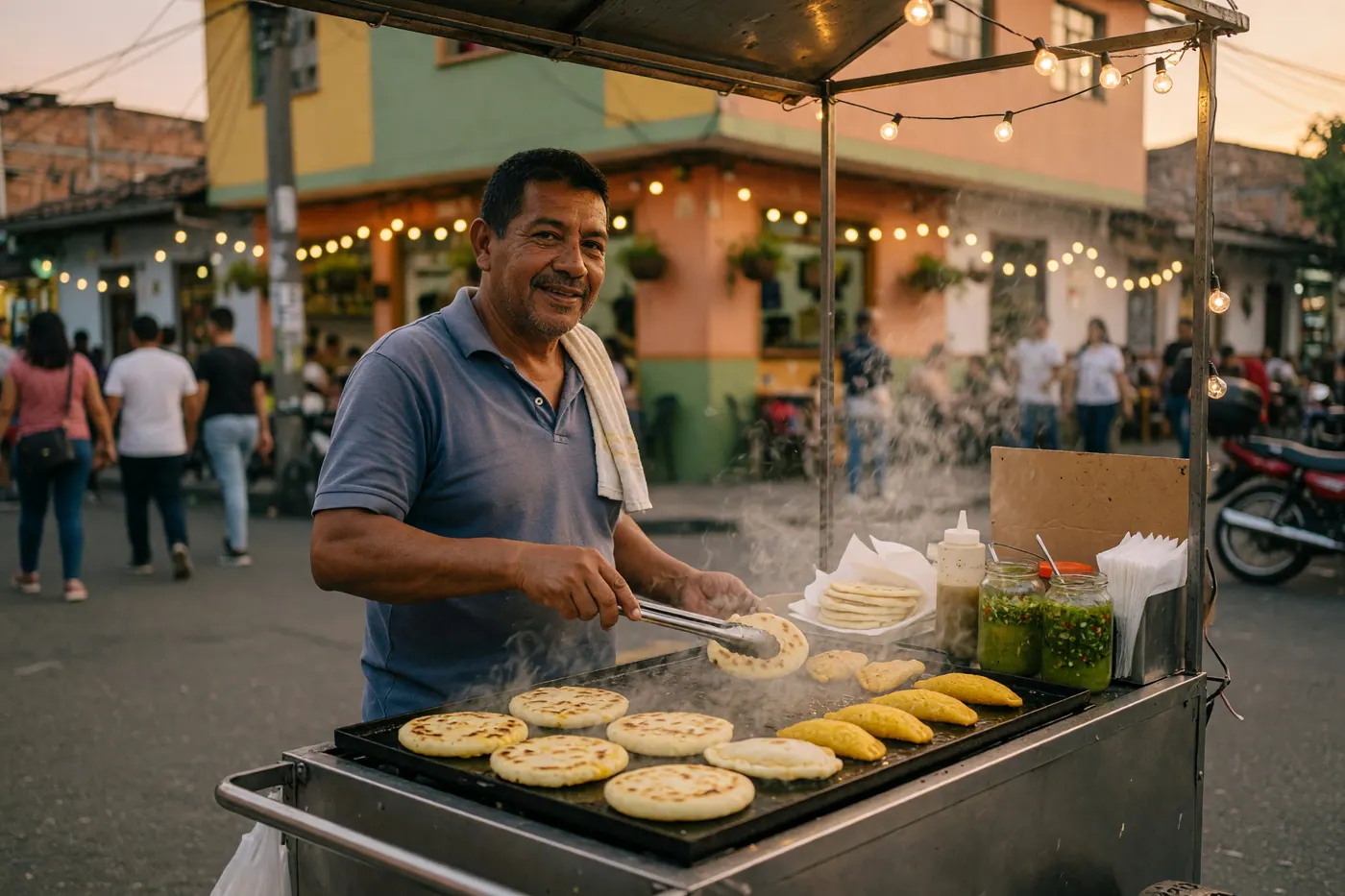
Walking through any Colombian city after dusk means following the aroma of sizzled cornmeal, fried potatoes, and grilled meats. Street food carts (chuzos de la esquina or ventas callejeras) form the culinary heartbeat of daily life in Medellín, Bogotá, Cali, and coastal towns alike. Whether you are grabbing a 7:00 AM buñuelo on your way to work or winding down a late night out with a hot salchipapa, street dining is cheap, delicious, and deeply ingrained in local culture.
Quick Answer: Typical street snacks cost between COP 1,500 and COP 18,000 in 2026. Empanadas run COP 1,500–3,000, filled arepas cost COP 3,000–7,000, and grilled meat skewers (chuzos) average COP 8,000–18,000. Always carry small cash bills (COP 2,000, 5,000, or 10,000 notes), choose busy stalls with high customer turnover, and spoon your condiments onto your plate rather than dipping directly into shared bowls.
Core Colombian Street Food Cart Dishes
While regional variations exist across every department, a few staple items appear on nearly every corner cart in the country. For a broader overview of sit-down restaurant meals, read our main Colombian Food Guide.
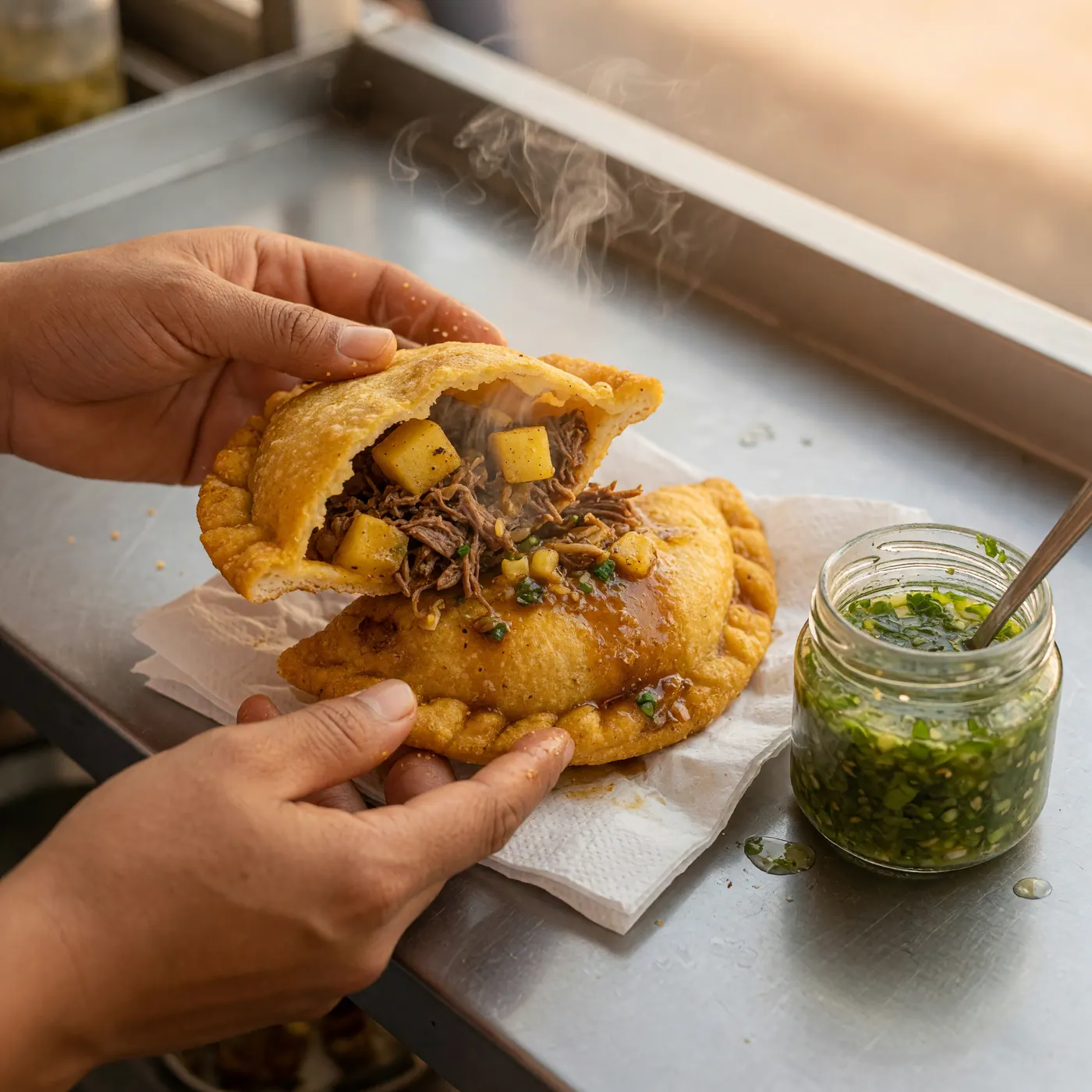
- Empanadas: Crispy fried corn-dough pockets stuffed with seasoned potato and shredded beef or chicken. They are small, savory, and usually enjoyed in pairs or triplets with fresh ají.
- Buñuelos: Deep-fried dough balls made from cassava starch and white cheese (queso costeño). Golden and crisp on the outside, airy and spongy inside, they are a staple morning or evening comfort food.
- Salchipapas: A classic late-night dish consisting of sliced hot dogs or sausages tossed over a generous bed of French fries, topped with pink sauce (mayonnaise and ketchup) and grated cheese.
- Chuzos / Pinchos: Skewers of marinated beef, pork, or chicken grilled over open coals, often capped with a small potato or a piece of arepa.
Regional Arepa Varieties Explained
The arepa is Colombia's most famous staple, but asking for “an arepa” yields vastly different meals depending on where you are. According to local food customs documented by official portals like Colombia.co, these four varieties dominate city carts:
| Arepa Type | Origin / Region | Description & Key Ingredients |
|---|---|---|
| Arepa Paisa | Antioquia / Coffee Zone | Unseasoned white corn dough, flat and charred on the griddle. Served simple as a neutral bread topped with butter and quesito. |
| Arepa de Choclo | Andean Highlands | Sweet yellow corn dough cooked on a plancha, folded over a slab of melting white cheese (cuajada or quesito). |
| Arepa de Huevo | Caribbean Coast | Yellow corn patty fried once, cut open to seal a raw egg inside, and double-fried until golden and crunchy. |
| Arepa Santandereana | Santander | Yellow corn dough kneaded with cassava starch and shredded chicharrón (pork crackling), giving it a rich, savory bite. |
2026 Street Food Price Guide & Cash Etiquette
Street carts in Colombia operate almost exclusively on cash. Credit cards and digital transfers are rarely accepted by mobile cart operators. In 2026, with Colombia's monthly minimum wage (SMMLV) set at COP 1,750,905, everyday street snacks remain accessible for local workers and travelers alike.
Here are typical price ranges observed on neighborhood carts in major cities:
- Empanada (single): COP 1,500–3,000
- Arepa de Queso or Choclo: COP 3,000–7,000
- Chuzo de Carne, Pollo, or Salchipapa: COP 8,000–18,000
Cash tip: Vendors rarely have change for COP 50,000 or COP 100,000 bills. Keep a supply of COP 2,000, COP 5,000, and COP 10,000 notes in your pocket specifically for street food stops.
Condiment Etiquette: Ají, Salsa de Ajo & Suero Costeño
Colombian street food is rarely spicy by default. Heat is added at the diner's discretion using side condiments set out on the cart counter. According to Colombia Move marketplace signals dated August 8, 2026, the alimentos section had 5 active listings, 3 recent listings, and 424 views—a small but concrete sign of reader interest in local food.
The three essential condiments you will encounter include:
- Ají Picante: A spoonable salsa made from finely chopped green onions, cilantro, vinegar, lime juice, and mild red chili peppers.
- Salsa de Ajo: A creamy garlic mayonnaise condiment perfect for empanadas, french fries, and chuzos.
- Suero Costeño: A tangy, slightly salted fermented sour cream originating from the Caribbean coast, often served with fried yucca or arepas de huevo.
The Golden Rule: Never double-dip an item into communal sauce jars or squeeze bottles. Use the spoon provided to drizzle salsa directly over your plate or into the bitten edge of your empanada.
Street Food Safety & Health Best Practices
Eating off street carts in Colombia is generally safe, provided you follow a few practical rules. High vendor turnover is your best quality indicator: a busy stall where food is cooked continuously in front of a line of customers is more likely to serve fresh, hot items instead of food that has sat out under heat lamps.
In Medellín, municipal water supplied by EPM is treated to potable standards, which reduces waterborne risk when vendors wash utensils or produce. However, when traveling in smaller coastal towns or rural areas, stick to cooked, fried, or grilled items over raw produce. If you need late-night grocery options or bottled drinks nearby, check out our guide on 24-Hour Grocery Stores in Colombia.
Frequently Asked Questions
❓ How much does typical street food cost in Colombia in 2026?
Most Colombian street-cart items cost COP 1,500 to COP 18,000 in 2026. The sourced ranges are COP 1,500–3,000 for single empanadas, COP 3,000–7,000 for stuffed or sweet corn arepas, and COP 8,000–18,000 for grilled meat skewers or salchipapas. Always pay with small bills.
❓ Is Colombian street food spicy?
No, Colombian food is not naturally spicy. Carts serve mild to moderately spicy ají salsa and garlic sauce on the side so each diner can customize their own heat level.
❓ Is street food safe to eat for foreigners in Medellín and Bogotá?
Yes, choose busy stalls where items are grilled or deep-fried fresh to order. According to the 2026 sources in this guide, high turnover and piping-hot preparation are useful safety indicators; Medellín's municipal EPM tap water is potable.
❓ What is the difference between an Arepa Paisa and an Arepa de Choclo?
An Arepa Paisa is made from neutral white corn flour, grilled dry, and served with butter and cheese. An Arepa de Choclo is made from sweet yellow corn and folded over melted white cheese.
❓ How do I order and pay at a Colombian food cart?
Order directly at the counter, eat standing nearby or on plastic stools, and pay the vendor after finishing. Carry small cash notes like COP 2,000, 5,000, or 10,000 as vendors rarely carry change for COP 50,000 bills.
❓ What sauces are served on street carts in Colombia?
The most common sauces are ají (cilantro, onion, vinegar salsa), salsa de ajo (creamy garlic sauce), and suero costeño (salted sour cream). Drizzle sauces onto your plate using provided spoons rather than dipping directly.



Comments
Loading comments...
Checking sign-in status...