
How to Find a Job in Colombia as a Foreigner (Even Without Fluent Spanish)
The Colombian job market is more accessible to foreigners than most people think — if you know which tracks exist, what they pay, and where to look.

IDIOMA DEL ARTÍCULO
Showing original language
When a friend of mine showed up to Medellín with a one-way ticket and $2,000 to her name, she had no job lined up, shaky Spanish, and zero Colombian contacts. Eighteen months later she was teaching at a bilingual school in El Poblado and picking up freelance curriculum work on the side. The path wasn't obvious at first — but it was there, and it's more accessible than most people landing here expect.
The Colombian job market for foreigners runs on a few distinct tracks. The options available to you depend mostly on two things: what currency you can earn in, and how much Spanish you actually have. Get those two variables clear and the rest of the decision-making becomes much easier.
One thing worth saying upfront: if you can keep a USD or EUR income stream — remote job, freelance clients, a business back home — Colombia's cost of living gives you a massive advantage. If you're earning in COP, you'll need to be more deliberate about which roles make financial sense. Both can work; they just require different strategies.
The Four Paths for Working Foreigners in Colombia
Most expats who figure out work in Colombia end up on one of these tracks — often two at once:
- Remote work for a foreign employer or clients — easiest path, no Spanish required, pays in hard currency
- English teaching — most accessible entry point, both online and local
- Freelancing — flexible, high ceiling if you have in-demand skills
- Local employment with a Colombian company — most Spanish required, but genuine opportunities in tech, marketing, and education
Let's break down each one with realistic expectations on pay and requirements.
Remote Work: The Cleanest Starting Point
If you already have a remote job or remote-friendly clients, Colombia is close to an ideal base. The time zone (UTC-5, no daylight saving changes) overlaps with both US coasts for most of the workday, which matters if your team does synchronous standups. Internet in Medellín, Bogotá, and Cartagena is reliable enough for video calls — though I'd still recommend a backup SIM with Claro or Tigo data for the inevitable apartment WiFi outage.
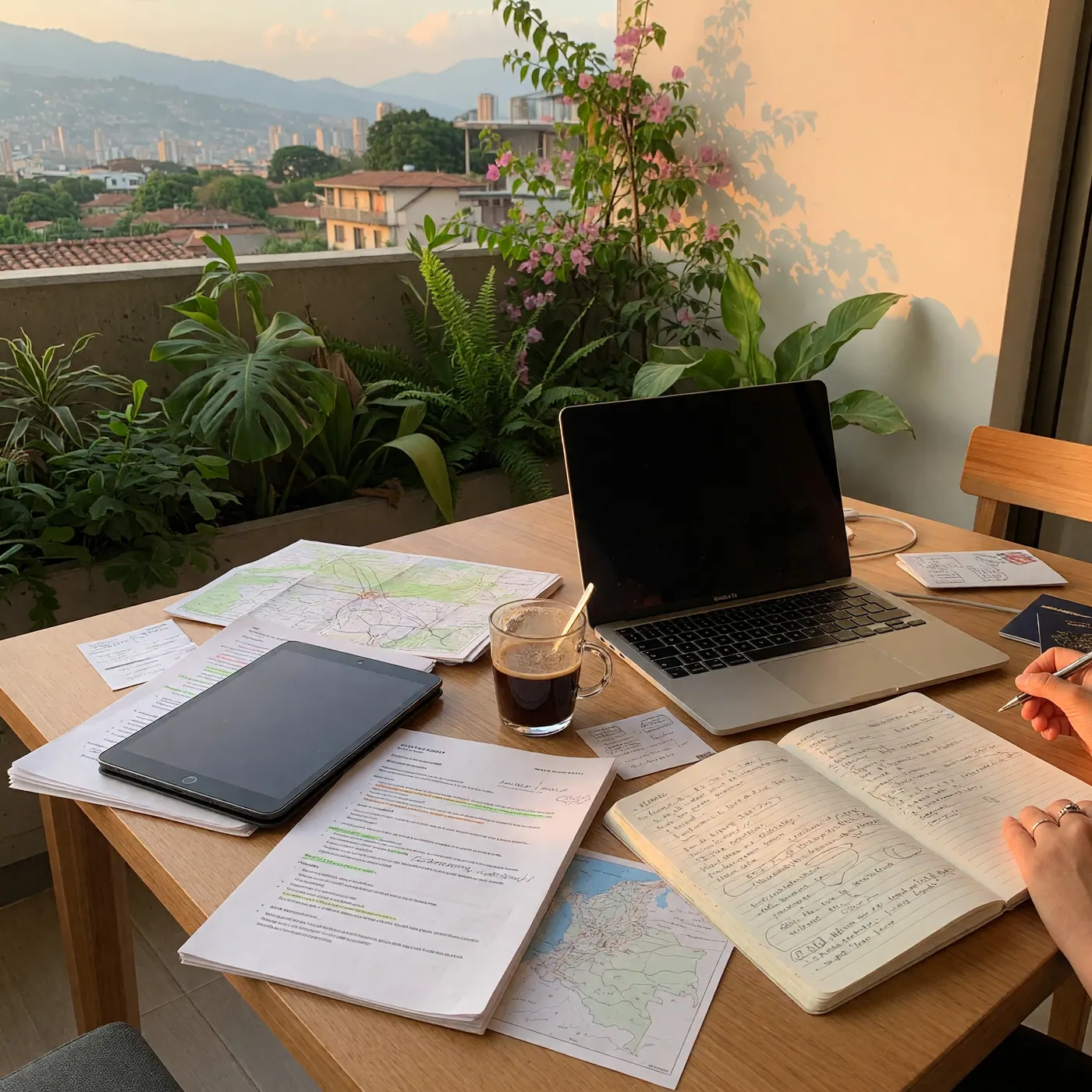
Visa reality check, as of June 2026: on a visitor entry (Permiso de Ingreso y Permanencia — PIP), Colombia allows up to 90 days, extendable once for an additional 90 days through Migración Colombia, for a maximum of 180 days per calendar year. That 90/180 rule governs how long you can stay in the country — it is not a work authorization. Visitor status does not permit earning Colombian-source income or working for a Colombian employer. For legitimate remote work tied to a foreign employer or foreign clients, the Digital Nomad Visa (Nómada Digital — Visa V) is the correct legal path if you plan to stay longer-term.
The income requirement for the Digital Nomad Visa is three Colombian monthly minimum wages (3 SMMLV) — as of 2026 that is approximately COP 5,252,715/month, or roughly USD 1,480–1,540 at the June 2026 exchange rate. The visa also requires documentation showing your income comes from a foreign employer or foreign clients (not Colombian-source), valid all-risk health insurance with nationwide coverage, and the official application through the Cancìllería portal (cancilleria.gov.co). Check the dedicated guide linked above for the full current requirements before applying.
English Teaching: Still the Best Entry Point for Many
Don't dismiss teaching just because it sounds like a fallback. Colombian demand for English instruction is genuinely huge, and bilingual teachers with native-level English command a real premium — especially as more Colombian parents push for international-standard education for their kids.
Online Teaching (Preply, iTalki, VIPKid)
No Colombian work authorization needed, paid in USD or EUR, fully flexible hours. You can set this up before you even land. Rates run $15–$35/hour depending on experience, platform, and how well you market yourself. Not glamorous income, but entirely stackable with other work.
Local Bilingual Schools
Most international and bilingual schools in Medellín, Bogotá, and Barranquilla actively recruit native English speakers. Typical salaries: 3,000,000–5,000,000 COP/month ($700–$1,200 USD). Some schools include housing stipends. You'll need a degree — most require a TEFL certification, though enforcement varies. Your employer will sponsor your work visa.
Corporate English Training
Language institutes like Wall Street English and Centro Colombo Americano pay significantly more for business English instruction — 60,000–150,000 COP per hour ($15–$35 USD). These are usually contract-based rather than salaried, which works well if you want flexibility alongside other income streams.
Local Employment: The Harder (but Real) Path
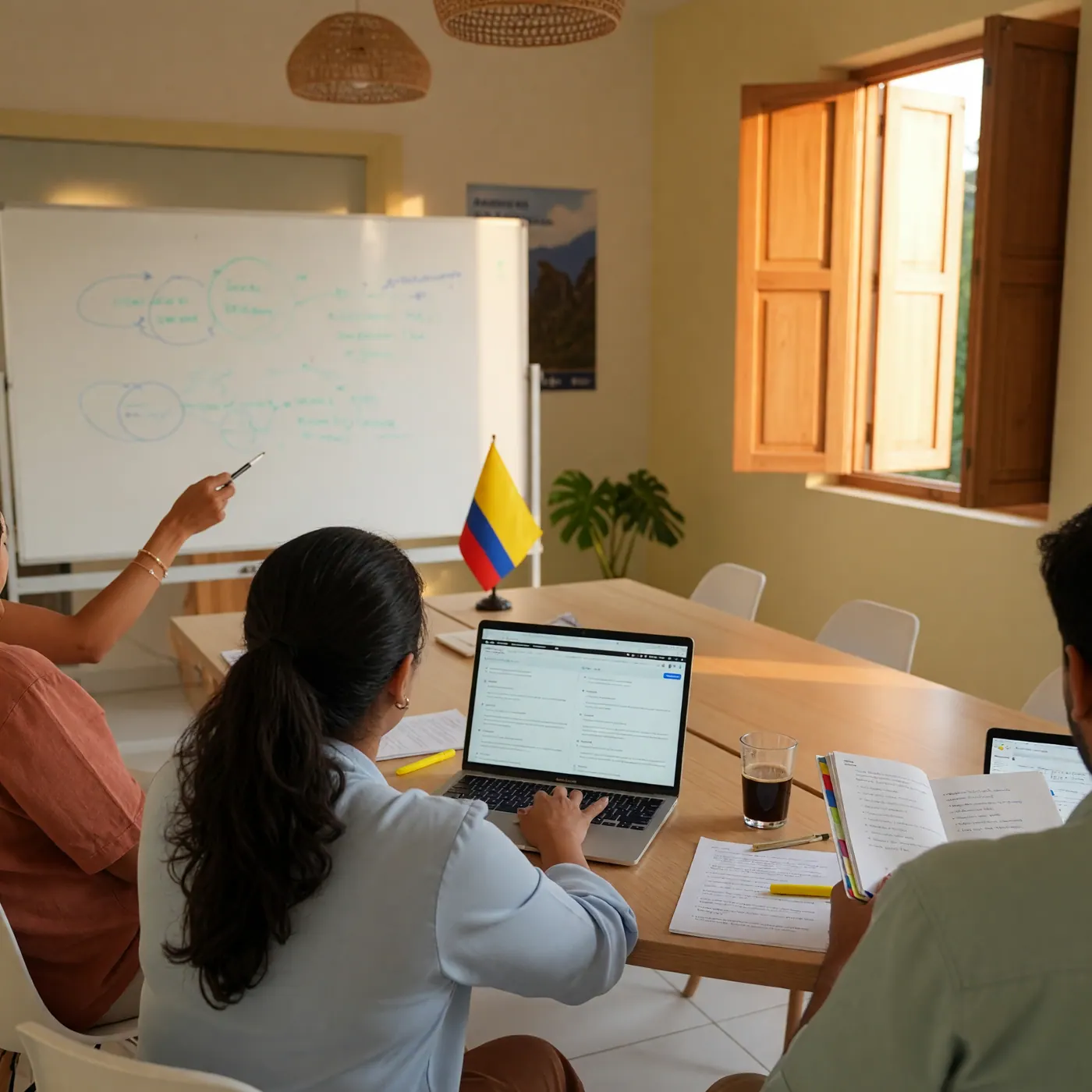
Local corporate jobs are the hardest track for foreigners, but opportunities genuinely exist in a few specific sectors. The honest prerequisite: you'll need at least intermediate Spanish (B1+) for most roles. Below that, you're mostly limited to companies that specifically need English speakers or international experience.
Technology
Medellín's tech ecosystem is real and growing. Rappi, Bancolombia, Grupo Éxito, and dozens of funded startups actively hire developers, data engineers, and product managers. Senior developer salaries: 8,000,000–15,000,000 COP/month ($1,900–$3,600 USD). International experience is a genuine differentiator — Colombian tech companies compete globally for talent and they know it.
Marketing and Content
English-language content, digital marketing strategy, and performance marketing are all in demand. Companies targeting international audiences specifically want bilingual marketers who understand both markets. Salaries: 3,500,000–7,000,000 COP/month, with senior roles exceeding that.
Tourism and Hospitality
Language skills are obviously valuable here. Hotels, tour operators, boutique experiences, and the growing luxury segment in Cartagena and Medellín hire multilingual staff regularly. Pay is lower than tech — but the lifestyle tradeoff can be worth it if you're just landing and need to build a local network first.
Where to Actually Find These Jobs
The platforms worth checking, in rough order of usefulness:
LinkedIn is still the top platform for professional roles. Filter by city (Bogotá, Medellín, Remote) and turn on Open to Work. Colombian companies are active here and international experience gets noticed.
Facebook groups are underrated. Expats in Medellín, Jobs in Colombia, and Remote Work Colombia all have active listings and community referrals. Some of the best local leads come through these rather than formal job boards.
Computrabajo is the biggest dedicated job board in Colombia — Spanish-language and comprehensive. Good for understanding what the market looks like even if you apply elsewhere.
Then there's Colombia Move — a free, bilingual job board built specifically for the Colombian market. It's more expat-friendly than the local-only boards, covers both professional roles and skilled trades, and lets employers post in both English and Spanish. Worth bookmarking whether you're a job seeker or a business looking to hire.
🇨🇴 Find English-Friendly Jobs in Colombia
Colombia Move is a free, bilingual job board built for the Colombian market. Browse tech, education, marketing roles — and post your own listing if you're hiring.
Browse Jobs → Tech Roles →Specific categories worth checking: Tecnología for software and IT roles,
Also check Educación for teaching and training positions, and Marketing for digital and content roles. The platform is bilingual, free to use, and specifically built for the Colombia context — which makes a difference compared to generic boards.
Freelancing: The Most Flexible Path
Freelancing sits between remote employment and local work — you control your rates, clients, and workload. For foreigners with in-demand skills, it's often the highest-ceiling option if you're willing to hustle on client acquisition.
The most bankable freelance skills in the Colombian market right now:
- Web development and software: 120,000–300,000 COP/hour ($28–$70 USD)
- Graphic and UX design: 80,000–200,000 COP/hour
- Translation (EN↔ES): 80,000–150,000 COP/hour, or 120–250 COP/word
- Digital marketing consulting: 1,500,000–4,000,000 COP/project
- English content writing: 50,000–120,000 COP/hour for quality work
Platforms: Upwork and Fiverr dominate for international clients. For Colombian clients specifically, Workana is active and worth a profile. The honest advantage of building your client base internationally — even while based in Colombia — is that you're earning dollars and spending pesos. The arbitrage is real.

Do You Actually Need to Speak Spanish?
The honest answer: it depends entirely on which path you're pursuing. Here's the real breakdown:
| Job Type | Spanish Needed? |
|---|---|
| Remote work for foreign employer | None |
| Online English teaching | None |
| Local bilingual school | Basic (helpful, not always required) |
| Tech roles at Colombian companies | Intermediate (B1+) |
| Most local corporate jobs | Fluent strongly preferred |
| Trades and hospitality | Essential |
If you're still at tourist-level Spanish, I'd focus on remote work and online teaching first — both work without Spanish and both give you time to improve while living here. Six months of daily life in Colombia will move your Spanish further than two years of classes ever did.
Work Permits and Visa Basics
Quick version since we cover this in depth elsewhere:
- Tourist visa: 90 days extendable to 180. Doesn't authorize local employment or earning Colombian-source income.
- Digital Nomad Visa (Visa V / Nómada Digital): Up to 2 years, for remote workers earning foreign-source income. Income requirement: 3 SMMLV/month (~COP 5.25M as of June 2026). Does not authorize working for a Colombian employer.
- Work visa (M-Trabajador): For local employment — your Colombian employer sponsors you and handles most of the process.
If you're planning to freelance for Colombian clients long-term, it's worth a conversation with a Colombian immigration lawyer to figure out the right structure. Getting legal clarity before committing to a long-term arrangement in Colombia is always a good investment.
❓ Frequently Asked Questions
❓ Can I work in Colombia without speaking Spanish?
Yes — if you're doing remote work for a foreign employer or teaching English online, you can work without any Spanish at all. For local Colombian companies, most roles require at least intermediate Spanish (B1+). Tech is the exception; some international-facing tech companies in Medellín and Bogotá hire English-dominant candidates.
❓ What jobs are easiest to get in Colombia as a foreigner?
Online English teaching is the most accessible starting point — setup is minimal and you can begin earning before you even arrive. Remote work for a foreign company is the easiest path if you already have it. For local employment, tech and bilingual education have the lowest Spanish barriers relative to pay.
❓ How much can I earn working locally in Colombia?
Local salaries vary widely, with bilingual call center or teaching roles starting around 2,500,000 to 4,000,000 COP per month (roughly $730–$1,170 USD), while executive or specialized tech roles can pay significantly more. Remote workers on the digital nomad visa typically retain their foreign salaries, which must meet the minimum requirement of 3 times the Colombian minimum wage — approximately COP 5,252,715 per month (roughly $1,530 USD at the June 2026 exchange rate) — from foreign sources, per Resolución 5477 de 2022.
❓ Do I need a work visa to work in Colombia?
Yes, if you are employed by a Colombian company, you must have a Visa M / Trabajador. If you work remotely for a foreign company, you should apply for the Visa V / Nómada Digital (established under Resolución 5477 de 2022). Working without proper visa authorization is not legally permitted — verify current requirements at cancilleria.gov.co.
❓ Can I work remotely from Colombia on tourist status?
Visitor/tourist status sets how long you can stay in Colombia — it is not a work permit. Colombia’s rules distinguish between physical stay and work authorization, and visitor entries do not legally authorize work, including remote work for foreign employers. Working without proper visa authorization exists in a legal gray area with real compliance risk. For long-term peace of mind, apply for the Visa V — Nómada Digital before basing yourself here as a remote worker. Consult a Colombian immigration attorney if your situation is complex.
❓ What is the Colombia Digital Nomad Visa income requirement in 2026?
As of June 2026, the income requirement is three Colombian monthly minimum wages (3 SMMLV) — approximately COP 5,252,715/month, or roughly USD 1,480–1,540 at current exchange rates. Income must come from a foreign employer or foreign clients. The Cancìllería portal (cancilleria.gov.co) is the authoritative source, since requirements are tied to the annual minimum wage and can update each year.
❓ Where's the best place to find jobs in Colombia as a foreigner?
LinkedIn is best for professional roles. Facebook groups (Expats in Medellín, Jobs in Colombia) are surprisingly active for both listings and referrals. Colombia Move (colombiamove.com) is a bilingual, free job board built for the Colombian market — worth checking for tech, education, and marketing roles specifically. Computrabajo covers the broader local market in Spanish.
What's your plan?
Bringing remote work with you, or hoping to find something local? Drop a comment below — this community is full of people who've figured out different paths, and the questions are often just as useful as the answers.






Comments
Loading comments...
Checking sign-in status...