
How to Legally Sell a Car or Motorcycle with a Lien or Embargo in Colombia
Selling a vehicle with a bank lien or a precautionary measure in Colombia is possible, but it requires a strict procedure to avoid fraud and ensure you are not held legally liable.

IDIOMA DEL ARTÍCULO
Showing original language
Selling a vehicle in Colombia when it has a limitation registered in the Single National Traffic Registry (RUNT) often creates fear and uncertainty. Many owners mistakenly believe that having an outstanding bank debt or a seizure order completely prevents them from selling their car or motorcycle, while others fall into the trap of handing over the vehicle through private notarial agreements or open transfers, keeping their legal and tax liability intact before the authorities.
The legal reality is definitive: in Colombia, the ownership of a motor vehicle is not transferred with the simple physical handover of the keys or with a private contract of sale signed before a notary. The change of ownership is only perfected when the formal transfer is registered with the competent traffic authority and updated on the RUNT platform. In this guide, we explain step by step the safe legal routes to clear liens, lift limitations, and finalize the transfer without assuming financial risks.
Quick answer: can a vehicle with a lien or seizure be sold?
In summary: A vehicle with a registered seizure cannot be transferred at any traffic office until the court or the coercive collection entity issues and registers the release of the seizure. Conversely, a vehicle with a financial lien can be negotiated if the debt is settled to obtain a release letter or if the financial institution formally authorizes a credit assignment before filing the transfer.

Vehicle lien vs. judicial seizure: essential legal differences
Before structuring any negotiation with a buyer, it is essential to check the vehicle's history certificate (certificado de tradición) in the RUNT and identify what type of encumbrance weighs on the vehicle. Although everyday language often refers to "mortgage liens," legally mortgages only apply to real estate. Cars and motorcycles are subject to security interests or precautionary measures:
- Security interest without possession or chattel mortgage: Regulated by Law 1676 of 2013, it corresponds to the voluntary lien that the owner constitutes in favor of a financial or commercial entity to back a vehicle loan. The owner retains physical use of the car or motorcycle but cannot transfer ownership without authorization or a release letter from the creditor.
- Judicial or coercive seizure: This is a precautionary measure decreed by a judicial authority (for example, in an executive proceeding for civil or commercial debts) or by an administrative authority in the exercise of coercive collection (such as the Bogotá District Mobility Secretariat for traffic fines or treasury secretariats for late vehicle taxes). As long as the seizure is in effect, the property is formally removed from legal commerce for registration purposes.
Route 1: How to legally sell a car or motorcycle with an active bank lien
Having an existing loan on your vehicle is a common situation in the used market. There are two legal and transparent methods to complete the sale:
Option A: Debt cancellation and simultaneous filing of the lien release
This is the most frequent alternative when the agreed sale price exceeds the balance owed to the lending institution. The safe procedure is structured as follows:
- Request for payoff quote: Ask the bank or finance company for the projected balance for total cancellation with a fixed cutoff date.
- Structuring the payment with the buyer: In the contract of sale, it is stipulated that the buyer will transfer or deposit directly to the creditor bank's account the exact amount of the remaining debt, giving the seller only the agreed surplus. Avoid receiving cash sums without traceability; use verified bank transfers and keep in mind the guidelines on how to deposit money from a vehicle sale into a bank in Colombia to substantiate the source of the funds.
- Issuance of release letter and authorization for lien cancellation: Once payment is credited, the financial institution issues the clearance certificate and the authorization letter for the release of the lien addressed to the traffic authority.
- Filing the release and transfer: The official application form, chassis and engine imprints, the bank clearance letter, and payment of local fees are presented to the traffic authority. Many authorities allow the filing of the lien release and the transfer in the same administrative act.
Option B: Credit assignment or debt subrogation
If the buyer prefers to assume the remaining installments of the loan, the operation must be processed directly with the financial institution. Subrogation does not operate by private agreement: the bank must evaluate the buyer's credit profile, require their income documentation, and expressly authorize the substitution of the debtor. If the bank does not approve the assignment, the sale under this modality is not legally viable.
Route 2: What to do if the vehicle has a seizure registered in the RUNT
If, when performing the public inquiry in the RUNT with the license plate and your ID number, you discover a precautionary seizure measure, no traffic authority will accept the filing of the ownership transfer. Attempting to sell the vehicle promising that "the buyer will take care of the problem" often leads to scams or criminal charges for asset stripping or procedural fraud.
To sell the vehicle according to the rules, you must complete the clearing stage:
- Identify the origin of the seizure: Verify in the RUNT history certificate which judicial office or secretariat issued the measure (official letter number, date, and case file).
- Settle the obligation: If it is coercive collection for tickets or taxes, you must pay the full debt or sign a formal payment agreement that includes express authorization for the seizure release. If it is a judicial executive process, the payment must be credited before the court so that the judge orders the termination of the process due to total payment.
- Obtaining the seizure release order: The authority that ordered the measure must formally issue the seizure release order directed to the traffic authority where the license plate is registered. In entities such as the Bogotá District Mobility Secretariat or the Single Service Window (VUS), this exchange is usually managed electronically or through physical filing.
- Verification of update in RUNT: Before signing any final contract of sale, enter the RUNT platform and ensure that the seizure notation has disappeared from the vehicle's history. Response times vary depending on the administrative load of the court or the local secretariat, commonly taking between 15 business days and several weeks.
Costs and requirements to file the lien release and transfer
Once the clearance documentation has been obtained, the procedure before the traffic authority requires compliance with the following regulatory requirements:
| Concept | Required requirement | Practical observations |
|---|---|---|
| Identification | Active registration in the RUNT | Both seller and buyer must be previously registered in the system. |
| Creditor | Clearance certificate and lien release letter | Original document issued by the entity holding the security interest. |
| Road safety | Valid SOAT and technical-mechanical inspection | They must appear valid and digitally uploaded to the central RUNT platform. |
| Fines | Clearance certificate from SIMIT | Neither party may have traffic fines pending payment. |
| Taxes | Vehicle tax clearance certificate | Proof of payment of the last taxable periods before the respective governor's office. |
| Physical | Imprint collection | Legible stickers with engine, serial, and chassis numbers on the official form. |
| Fees | Traffic rights | Indicative range of $140,000 to $320,000 COP depending on the municipal registration office. |
Keep in mind that the fees for property limitation removal and transfer are set annually by each municipal or district traffic secretariat. Always request the current official settlement at the service windows or authorized portals before making any payment.
Critical risks of open transfers or private contracts without registration
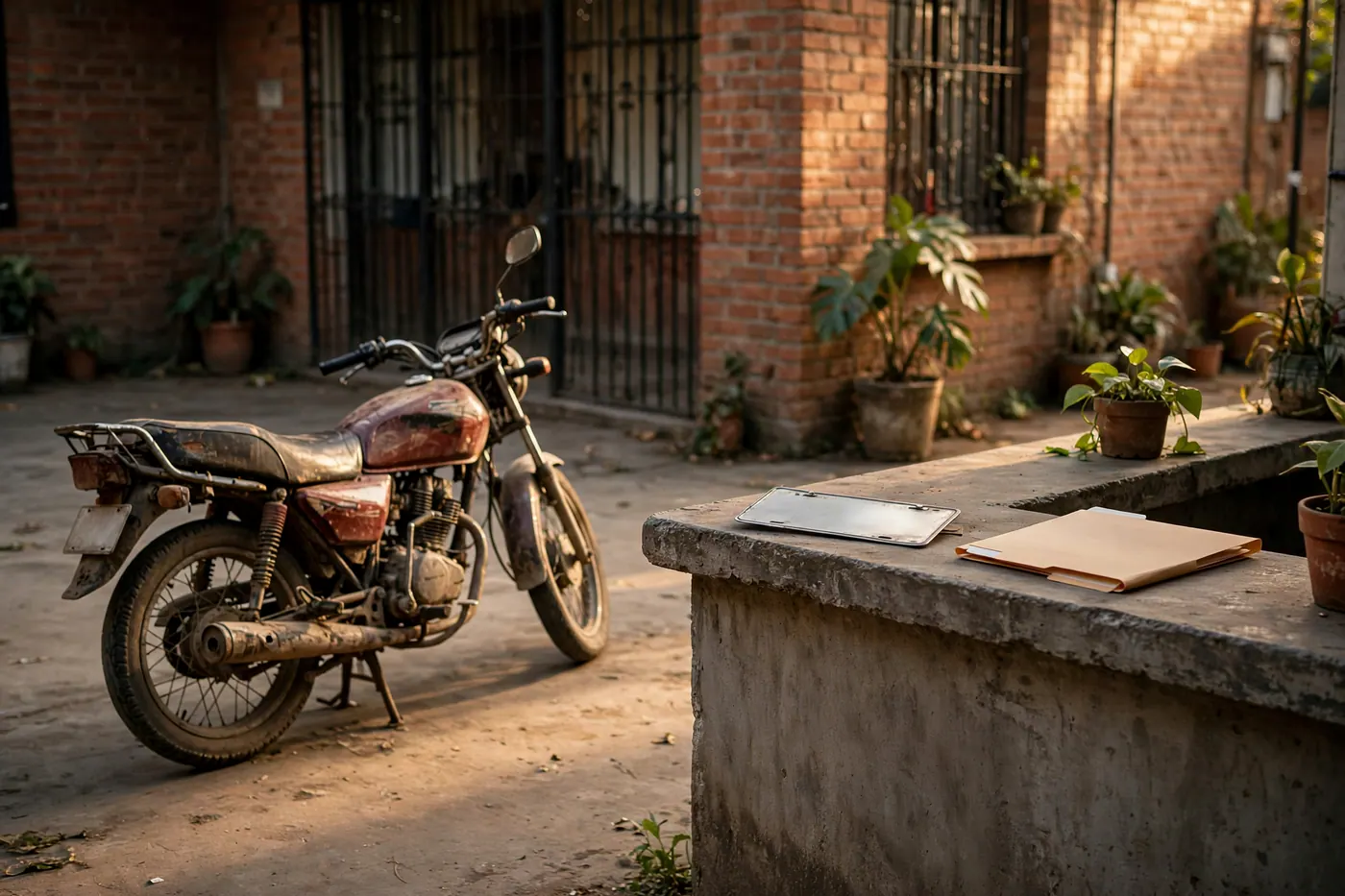
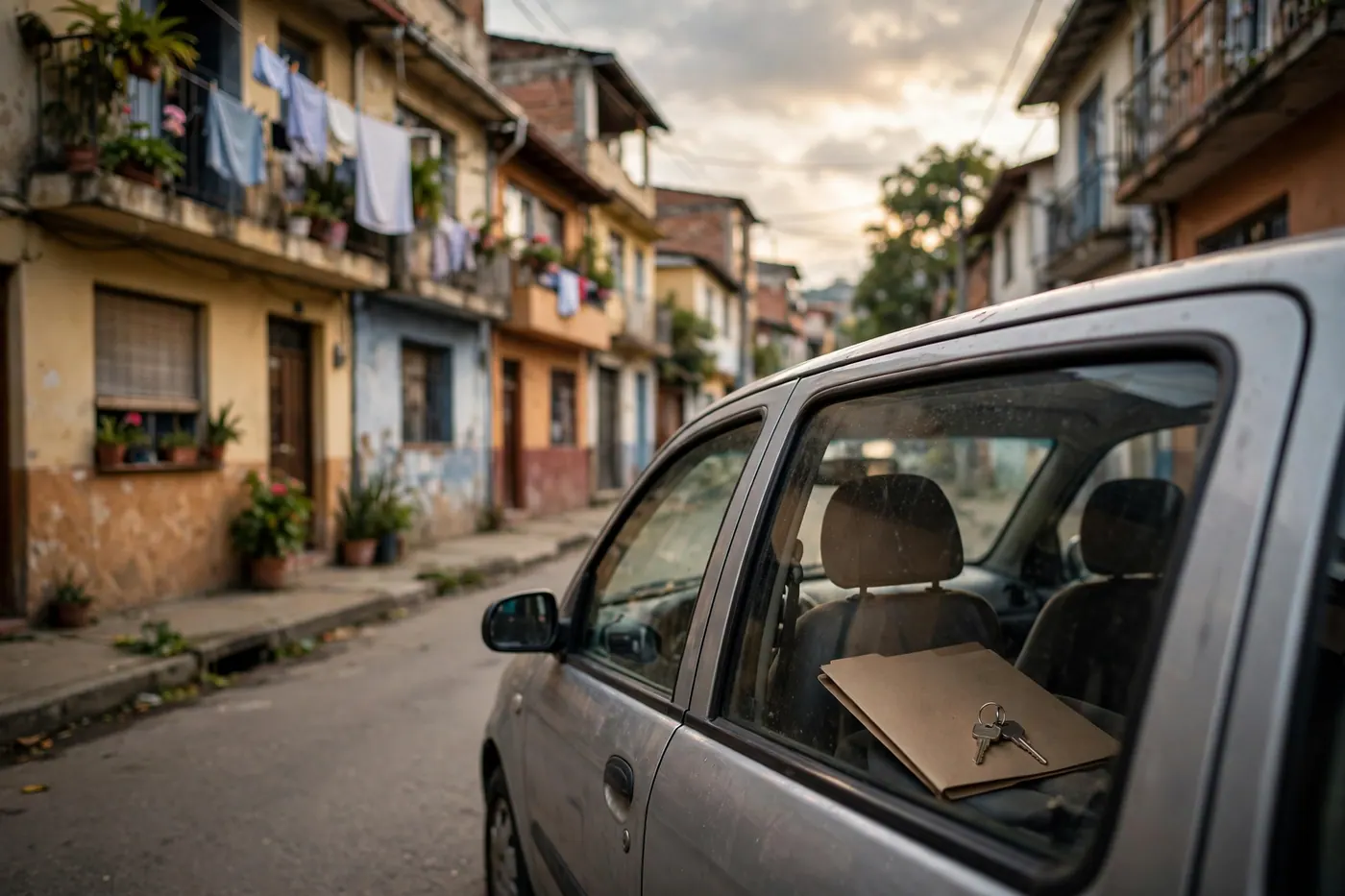
A frequent mistake among owners in need of liquidity is to hand over the car or motorcycle in exchange for a partial value, signing a document authenticated by a notary and leaving the official transfer pending until "the lien is paid off."
In Colombian practice, according to active listings on Colombia Move (September 2026), there is 1 car ad and 5 motorcycle ads (546 views on motorcycles compared to 36 for cars), and according to frequent queries in our community, handing over the vehicle without lifting the limitation is the main trigger for legal disputes. If the buyer defaults on bank installments, the financial institution will initiate executive collection and order the seizure not only of the vehicle, but of your bank accounts and wages. Likewise, if the vehicle commits traffic violations detected by automatic cameras, causes an accident with third-party damage, or is used in illicit activities, administrative and extra-contractual civil liability will continue to fall on the owner registered in the RUNT.
If you are also thinking about marketing a daily-use motorcycle, you can consult our specialized guide for selling low-displacement motorcycles in Colombia with all the necessary mechanical and documentary precautions, or check how to handle used accessories and parts under the regulatory framework in our article on sale of legal used spare parts and auto parts in Colombia.
Frequently asked questions
❓ Can I sell a car with a lien by just making a notarized sales contract document?
No: the notary does not transfer ownership or clear the lien from the RUNT. It only authenticates signatures; the change of owner is registered at the traffic office and the creditor must issue a clearance certificate (Ministry of Transport/RUNT, 2026).
❓ Is it possible to transfer a vehicle that has an active seizure order in the RUNT?
No: with a current seizure, the traffic office will reject the transfer. You must pay or agree on the collection and file the seizure release document until the annotation disappears (RUNT source, 2026).
❓ How is the secure payment of the bank debt made if the buyer is going to settle it?
The buyer will deposit the balance to the creditor bank. In the promise of sale, only the surplus is paid to the seller upon receipt of the official clearance certificate (Law 1676 of 2013, 2026 query).
❓ How much does it cost and how long does it take to lift a car or motorcycle lien in Colombia?
Rights usually range from $140,000 to $320,000 COP. The registration office calculates the current value and the RUNT usually updates in 3 to 10 business days (2026 query).
❓ What risks does the seller assume if they hand over the vehicle in their own name while the buyer pays the installments?
The seller remains the owner and principal debtor. They are responsible for camera fines, taxes, and civil lawsuits until the transfer is registered in the RUNT (Ministry of Transport, 2026).
❓ Where can I publish the sale of my used car or motorcycle without paying intermediation commissions?
In open classifieds and in the Colombia Move vehicle section. You post directly, without commission, and talk via WhatsApp with buyers (2026).


Comments
Loading comments...
Checking sign-in status...