
RFID-blocking wallets: How to protect your cards and euros when traveling
Buying euros is just the first step. Learn how to organize your cash and protect your contactless cards from unwanted charges during your next trip abroad.
IDIOMA DEL ARTÍCULO
Showing original language
Note: As Amazon Associates, we earn a commission from qualifying purchases at no extra cost to you.
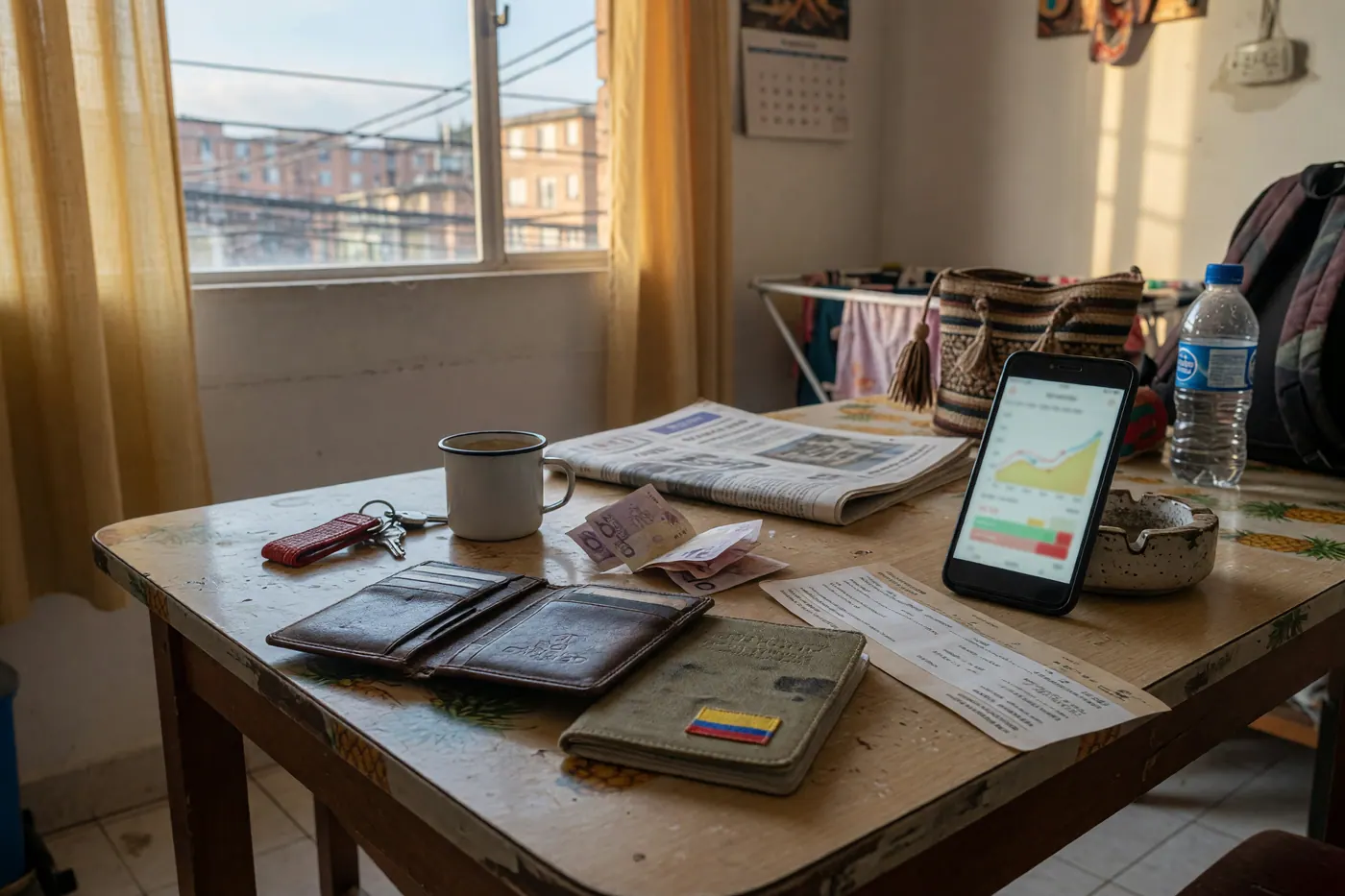
If you are planning a trip to Europe or abroad, it is very likely that you have been checking the "euro today" price for weeks. But according to discussions in the Colombia Move community (June 2026), one of the biggest frustrations for Colombian travelers is not just getting a good exchange rate, but how to safely distribute those physical euros and cards so as not to lose everything in a single moment of carelessness on the Madrid or Paris metro.
That is where the debate about security accessories comes in. Nowadays, almost all banks in Colombia issue cards contactless (contactless payment). To avoid unauthorized readings, many travelers opt for a RFID-blocking wallet like the Buffway Minimalist, a slim option that fits in your front pocket.
But do you really need one? Honestly, an RFID wallet isn't a magic suit of armor that will stop you from getting robbed if you 'dar papaya' (make yourself an easy target), but it does reduce a specific technical risk. Here, I explain what it actually protects, what is pure myth, and how you should organize your money when traveling.
Quick answer: What to know before traveling with euros and cards
- The RFID filter: Blocks short-range NFC signals so your cards cannot be scanned contactless without you even noticing.
- Cash: No digital wallet protects your cash. Never carry all your euros in the same place.
- The customs rule: If you enter or leave the European Union with EUR 10,000 or more in cash, you are required to declare it.
- The exchange rate: In Colombia, there is no official retail exchange rate set by the Banco de la República; you must compare rates between currency exchange offices.
What an RFID wallet really protects and what is just a myth
NFC (Near Field Communication) technology allows you to pay just by bringing your card close to the card reader. According to the NFC Forum, this connection is designed to work at very short distances (about 5 millimeters). The risk, although not the most common, is that someone with a wireless payment terminal could get very close to your pocket on crowded public transport and attempt to make a small charge that does not require a PIN.
An RFID-blocking wallet contains a metallic mesh that blocks these electromagnetic waves. If your cards are inside, the criminal's card reader won't be able to scan them. That's as far as the magic goes.
What it does NOT protect: Be careful not to believe this makes you immune. An RFID wallet doesn't protect your cash euros, your physical passport, or your cell phone. It also doesn't save you from the most common scams warned about by the FBI, such as skimmers (camouflaged devices) installed on ATMs or capturing your PIN when you pay at a restaurant. For that, your best defense remains covering the keypad with your hand and checking the notifications from your banking app.
How to organize your euros and cards for travel
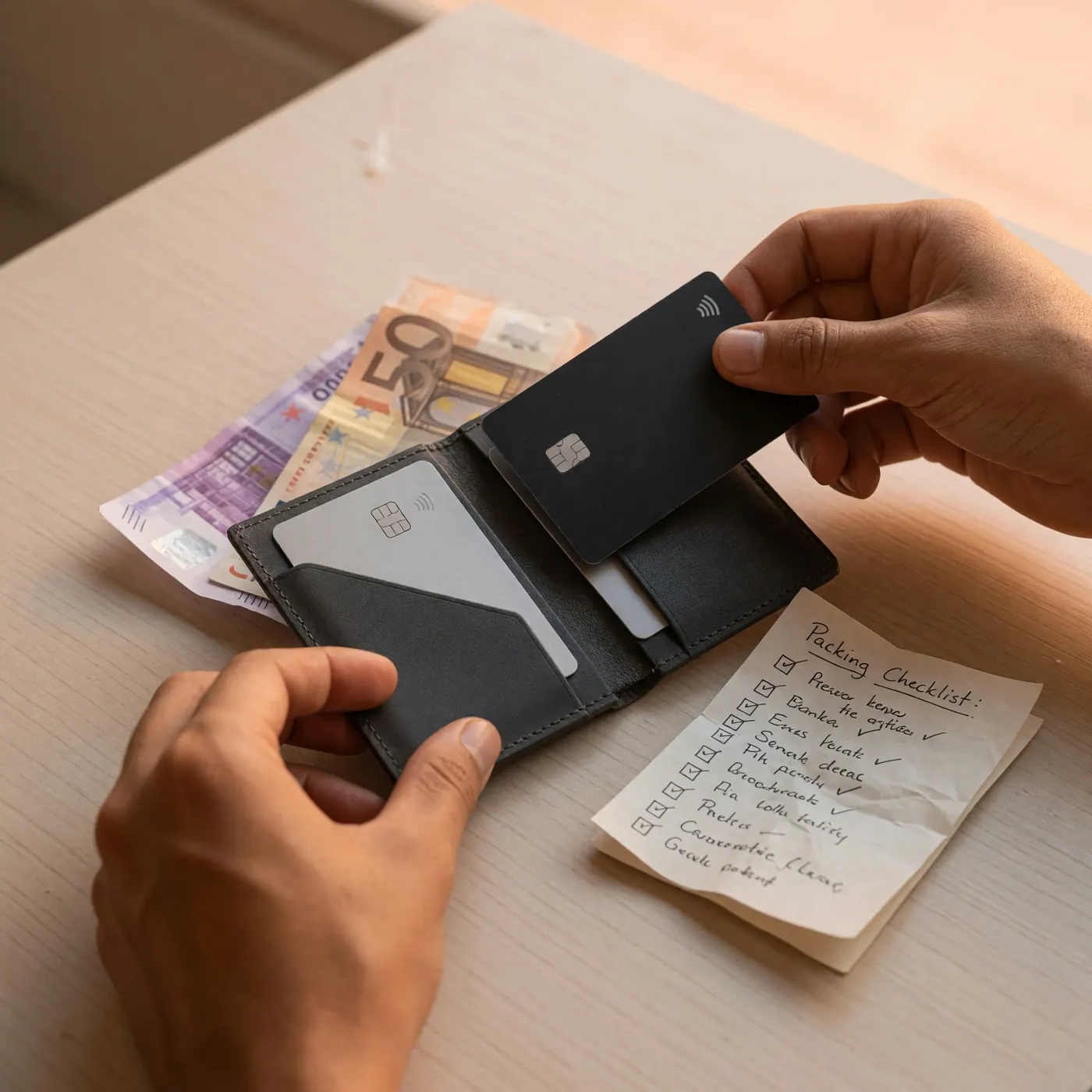
Buying euros at a good price requires patience. Remember that the Banco de la República is clear: in Colombia, there is no official exchange rate for buying foreign currency as an individual; rates are freely agreed upon in the market. Once you have your bills, the traveler's golden rule is diversification.
I would skip the idea of carrying a huge wad of 50 and 100 euro notes in a single wallet. The ideal approach is:
- Divide and conquer: Carry only the cash you'll need for the day (about 40 or 50 euros) and one main credit card in your front pocket wallet.
- The support: Keep the rest of your cash and a second card (preferably from a different network) in a hidden money belt or in the hotel safe.
- Turn on alerts: Make sure your bank notifies you of every transaction. If you use modern digital accounts, you can freeze your card from the app in seconds.
Featured product: Buffway Slim Minimalist RFID Blocking Wallet
If you are going to update your wallet for the trip, bulky traditional leather models are no longer practical. An excellent option that has become hugely popular is the Buffway Slim Minimalist Front Pocket Wallet.
This wallet is specifically designed to be carried in your front pants pocket, which in itself drastically reduces the chances of a pickpocket taking it without you noticing (something vital in very touristy cities). According to the technical specifications we consulted on Amazon (June 2026), it has a high rating and more than 112,000 user reviews that highlight its ultra-slim profile.
| Brand | Buffway |
| Material | Faux Leather (e.g., Carbon Fiber Black) |
| Capacity | 8 slots for cards and documents |
| Protection | Integrated RFID blocking filter |
| Style | Front pocket / Minimalist |
Pros and cons: Who it's for and who it's NOT for
Like any product, it has its ideal audience and its limitations. It is important to be realistic about what you are going to receive.
Who it's for: It is perfect for the modern traveler who relies primarily on digital payments, Apple Pay, or cards contactless. If you like to travel light, carrying your ID, a driver's license, a couple of cards, and a few folded bills for emergencies, the 8-slot design of the Buffway Slim You're going to love it because it doesn't show under your clothes.
Who it is NOT for: If you are one of those people who prefers to carry your entire travel budget in cash, this wallet will frustrate you. It doesn't have a large compartment for unfolded bills or a coin pocket (and in Europe, you're going to receive a lot of 1 and 2 euro coins). If you try to stuff 20 bills into it, it will lose its minimalist shape and it will be difficult to take out your cards.
Quick guide to ordering to Colombia (Customs and taxes)
If you decide to buy it on Amazon from Colombia, there is good news. As it is a low-cost accessory, its price is well below the $200 USD limit set by Colombian customs. This means it is exempt from the 19% VAT if you order it with direct shipping to Colombia (provided that your total shopping cart does not exceed that limit and meets the platform's conditions).
Remember that prices, inventory, and free shipping conditions to Colombia may change, so check directly on the website before completing your purchase.
Keep reading: Guide to shopping in the United States and receiving in Colombia without complications
At the end of the day, traveling safely is a mix of good tools and common sense. An RFID-blocking wallet is an extra layer of peace of mind for your cards, but keeping your euros safe will always depend on you being aware of your surroundings. Combine this wallet with good physical habits—like use secure backpacks on public transport— and focus on enjoying your trip.
Frequently asked questions
❓ Does an RFID wallet protect my cash euros?
No, the RFID filter only blocks wireless signals to protect cards with contactless technology. Your physical banknotes still depend on you taking care of your wallet and not exposing it in crowded places.
❓ Do I really need an RFID wallet for traveling?
It is not strictly mandatory, but it is useful as an extra layer of security if you carry several contactless cards. However, it does not replace the habit of checking your bank statements and protecting your PIN at ATMs. (Updated recommendation 2026, source: NFC Forum.)
❓ Which cards can be affected by NFC or RFID skimming?
Mainly credit and debit cards that have the contactless payment symbol, as well as some public transport cards or corporate access credentials.
❓ What is the biggest risk when paying or withdrawing money while traveling?
The most common risks are usually tampered ATMs or card readers (skimming), exposing your PIN while typing it, or the physical loss of your wallet due to carelessness in very touristy areas.
❓ How many euros in cash should I take on my trip?
It depends on your destination, but it is recommended to carry only what is necessary for initial expenses (transport and initial meals) and pay for the rest with a card. Never carry your entire budget in one pocket.
❓ Do I have to declare my euros when entering Europe?
Yes. Official European Union rules (source: European Commission, 2026) require declaring to customs any amount of EUR 10,000 or more in cash when entering or leaving the EU.
❓ Is the euro price in Colombia official?
There is no fixed official peso/euro rate for retail purchases. Exchange houses and banks freely agree on their rates, so you should always compare prices and commissions before buying. (Source: Banco de la República, consulted 2026.)




Comments
Loading comments...
Checking sign-in status...