
Own Delivery for Your Restaurant: How Much to Charge, How to Organize It, and What to Avoid (2026)
Set up your restaurant’s own delivery service without letting apps eat into your margins. Learn about the legal costs of ARL, zone-based fees, and payments via Bre-B.
IDIOMA DEL ARTÍCULO
Showing original language
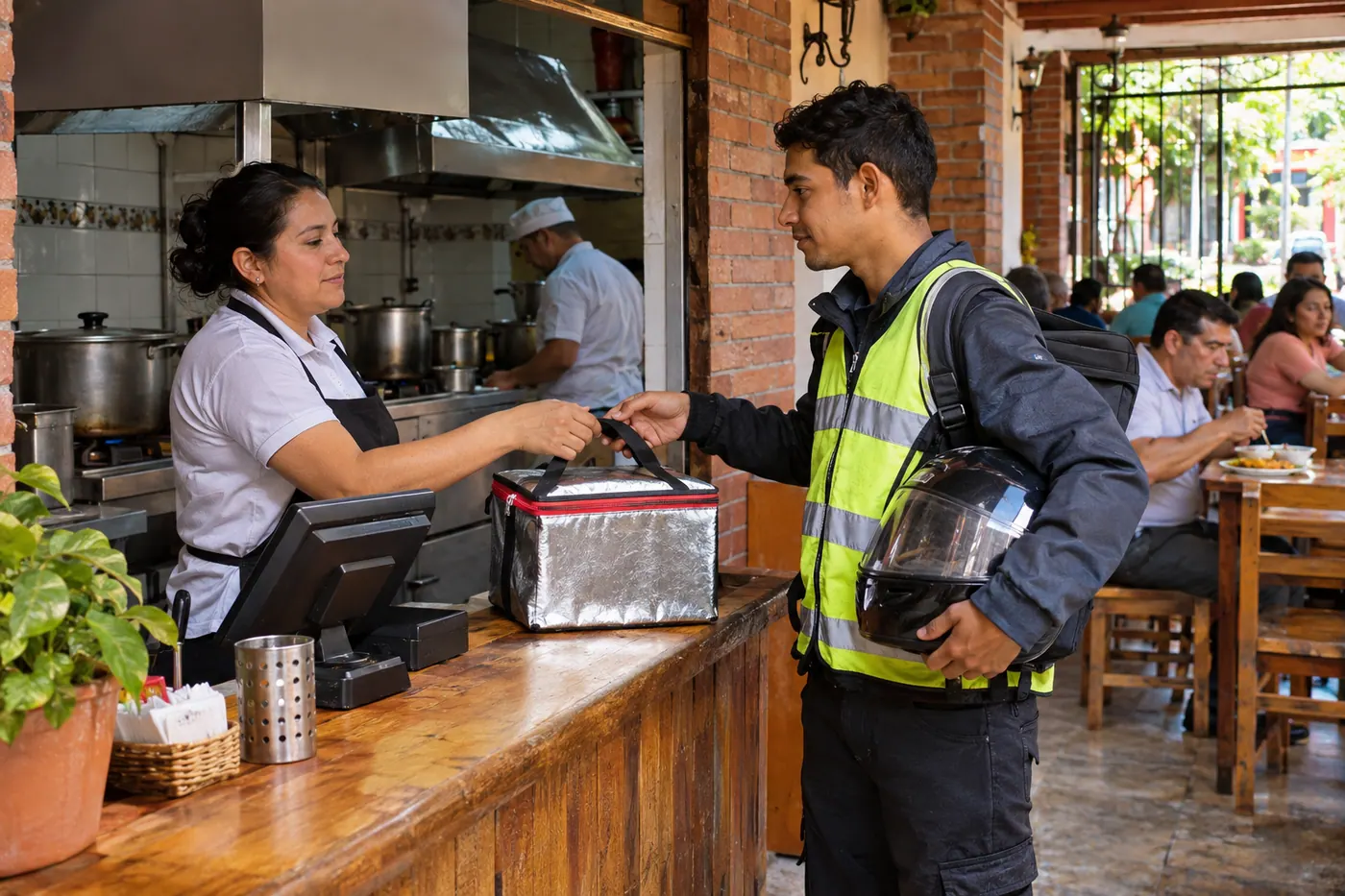
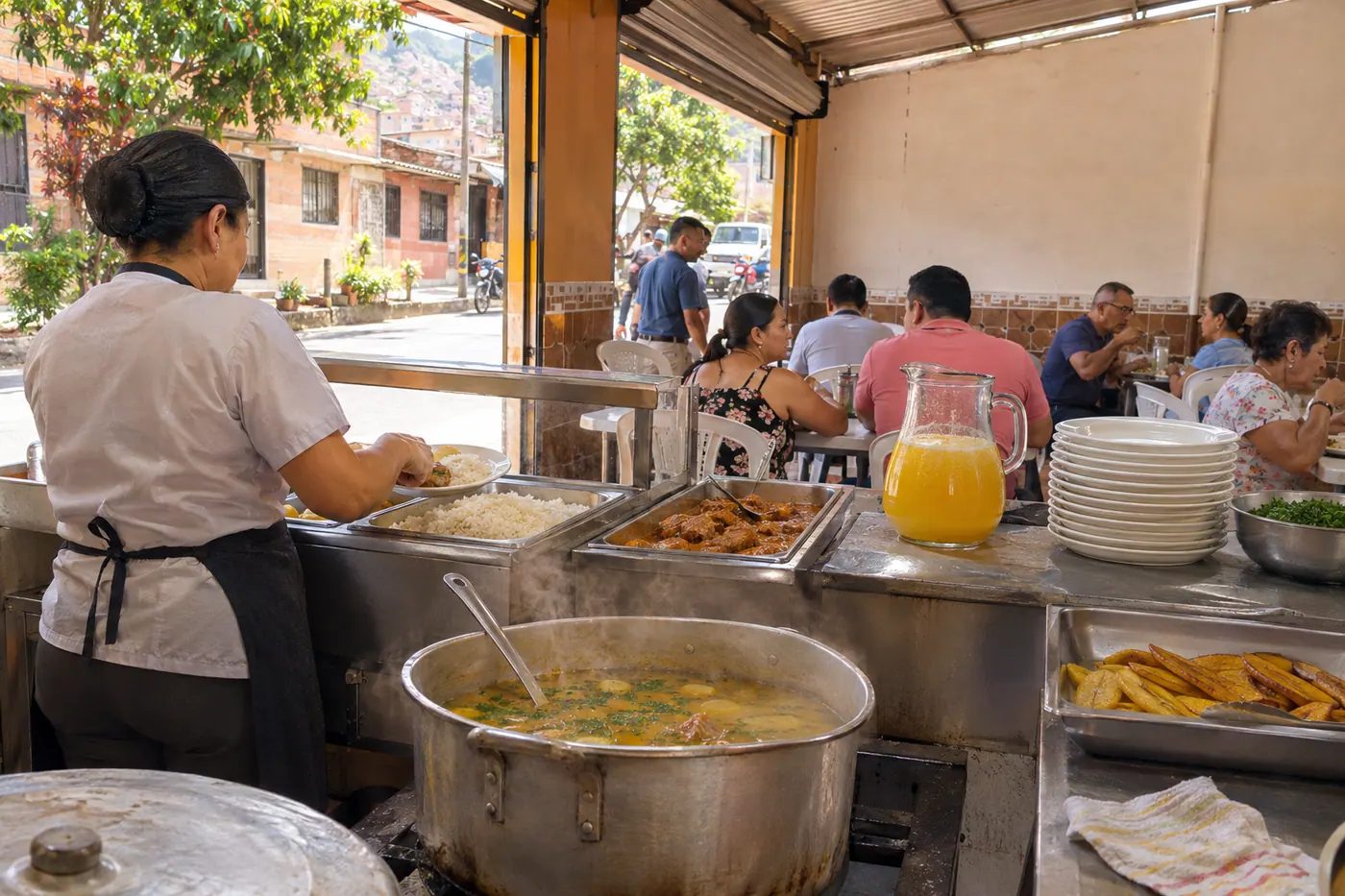
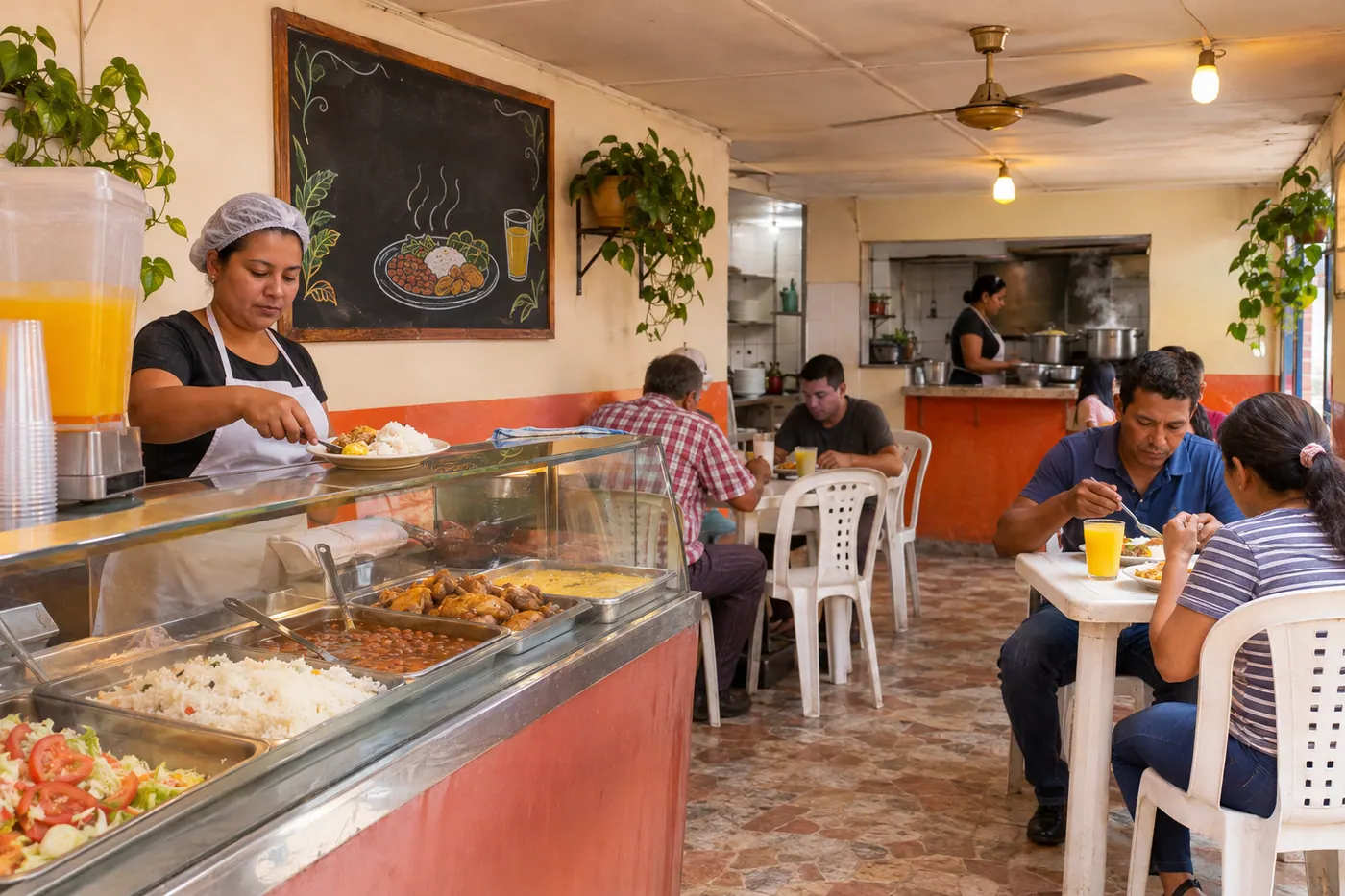
If you have a grill restaurant, a café, or sell lunch specials at midday, you know that the margin per dish is tight. When delivery apps charge you commercial commissions that usually hover between 20% and 30% of the total order value, you end up working to sustain the platform instead of growing your cash register. That is why many owners make the leap to their own delivery service in 2026, although doing so without clear numbers or legal protection can cost much more than an app's commission.
Quick answer: To set up a profitable own-delivery service, limit your radius to a maximum of 2.5 to 3.5 kilometers, decide whether it suits you to pay per trip (requiring a PILA form) or hire on payroll with ARL risk class IV (4.350%) or V (6.960%), charge a reference zone fee between $3,000 and $6,000 COP, and speed up your payments with an interoperable QR code from Bre-B.
The honest part that almost no one tells you is that operating direct deliveries requires discipline: on days of heavy rain in Bogotá or in the hills of Medellín, when couriers are scarce, you are the one who answers to the customer if the lunch arrives cold or late. However, when you organize the operation, you recover direct contact with the buyer and build loyalty among people in your area.
Fixed payroll vs. courier per trip: what suits you best based on your volume
The first mistake when becoming independent from apps is hiring an in-house courier when you are only dispatching eight or ten orders a day, or continuing to pay for individual trips when you already have thirty midday deliveries. The choice depends on your constant volume and how you comply with labor obligations in Colombia.
If you hire a courier under an employment contract (payroll), remember that the monthly minimum wage (SMMLV) is COP 1,750,905 plus the legal transport allowance of COP 249,095 for those earning up to two minimum wages. Additionally, according to the Substantive Labor Code and occupational risk regulations, the employer must cover 100% of the ARL, 12% for pension, 8.5% for health (subject to the exemption under Article 114-1 of the Tax Statute when applicable), social benefits, and personal protective equipment.
At this point, you must pay close attention to occupational risk enrollment: according to Decree 768 of 2022 and Decree 1772 of 1994, motorcycle delivery and messenger work must be classified according to their actual risk, which corresponds to Class IV (initial rate of 4.350% on the Contribution Base Income) or Class V (6.960%). Never enroll a motorcycle courier as counter administrative staff (Class I, 0.522%), because in the event of a traffic accident, coverage may be challenged.
| Operational criteria | Own courier (payroll) | Independent courier (per trip or day) |
|---|---|---|
| When it makes sense | From 20 to 25 stable daily orders | Small establishments or weekend peaks |
| Social security | Employer pays benefits, pension, health, and ARL (4.350% or 6.960%) | The courier contributes as an independent; you must demand a valid PILA form |
| Availability | Exclusive during peak hours and prep tasks | Subject to area availability or agreed shifts |
| Route control | High: you can group orders heading to the same sector | Medium: depends on the load from other establishments |
If you are just building your customer base, paying per trip or relying on messengers by shift is the most sensible option. That said, always demand a copy of the PILA form up to date to mitigate risks of joint labor and civil liability in case of an accident. If you need to reinforce specific shifts, you can review options at day jobs in Medellín or explore independent messengers in the services section of Colombia Move. In fact, according to active ads on Colombia Move, in the categories for deliveries, moving services, and drivers, there are only 3 active ads in each, showing a still-low supply compared to the real demand for local couriers.
How much to charge for delivery without scaring off your customers
Many restaurants make the mistake of copying the minimum rate they see from competitors without calculating how much it costs to move a motorcycle or how long it takes to climb a hill. For the delivery not to eat into your daily menu's profit, you first need to define your action radius.
An efficient radius for hot food and soups should not exceed 2.5 to 3.5 kilometers (between 15 and 20 minutes of travel). Accepting an order six kilometers away just because you don't want to say no usually ends up with a cold lunch, a spilled container, and a courier stuck in traffic who has stopped making two nearby deliveries.
In the Colombian neighborhood food market, the usual rate for short distances of 1 to 3 kilometers is usually between $3,000 and $6,000 COP, depending on the zone, fuel, and topography. A very effective strategy to increase the average ticket is to offer free shipping when the customer orders three or more dishes, or when they exceed a agreed minimum consumption: this way, the transport cost is covered by the joint margin of the order. Always remember to clearly and previously inform the exact value of the dish and the additional delivery cost before confirming the order.
Agile operation: order taking via WhatsApp and payments with Bre-B
Losing five minutes chatting with each customer at 12:15 p.m. paralyzes the kitchen. Order taking via WhatsApp works very well when you have a fixed and direct format. Set up quick messages with the daily menu in a single image or short text, and always ask for four pieces of information in one message: chosen dishes, exact address with a reference point, payment method, and if change is required.
It is in payments where the most time and money is lost when everything is handled in cash. Today you can use the Bre-B immediate payment system from the Bank of the Republic (External Regulatory Circular DSP-465), which allows interoperable transfers 24/7 in a maximum of 20 seconds between more than 200 financial entities and wallets like Nequi or Daviplata via keys or a single interoperable QR code.
- QR at the counter and in the bag: print the interoperable Bre-B QR code and place it laminated on the lid of the courier's bag for quick cash-on-delivery payments.
- No haggling or delays with cash: by charging via direct real-time transfer, you avoid the courier carrying large sums of money or losing time looking for change in nearby stores.
- Verification before dispatch: if the customer pays in advance, confirm the deposit directly in your banking app and not just with the screenshot.
Packaging and presentation: how to avoid soup arriving spilled
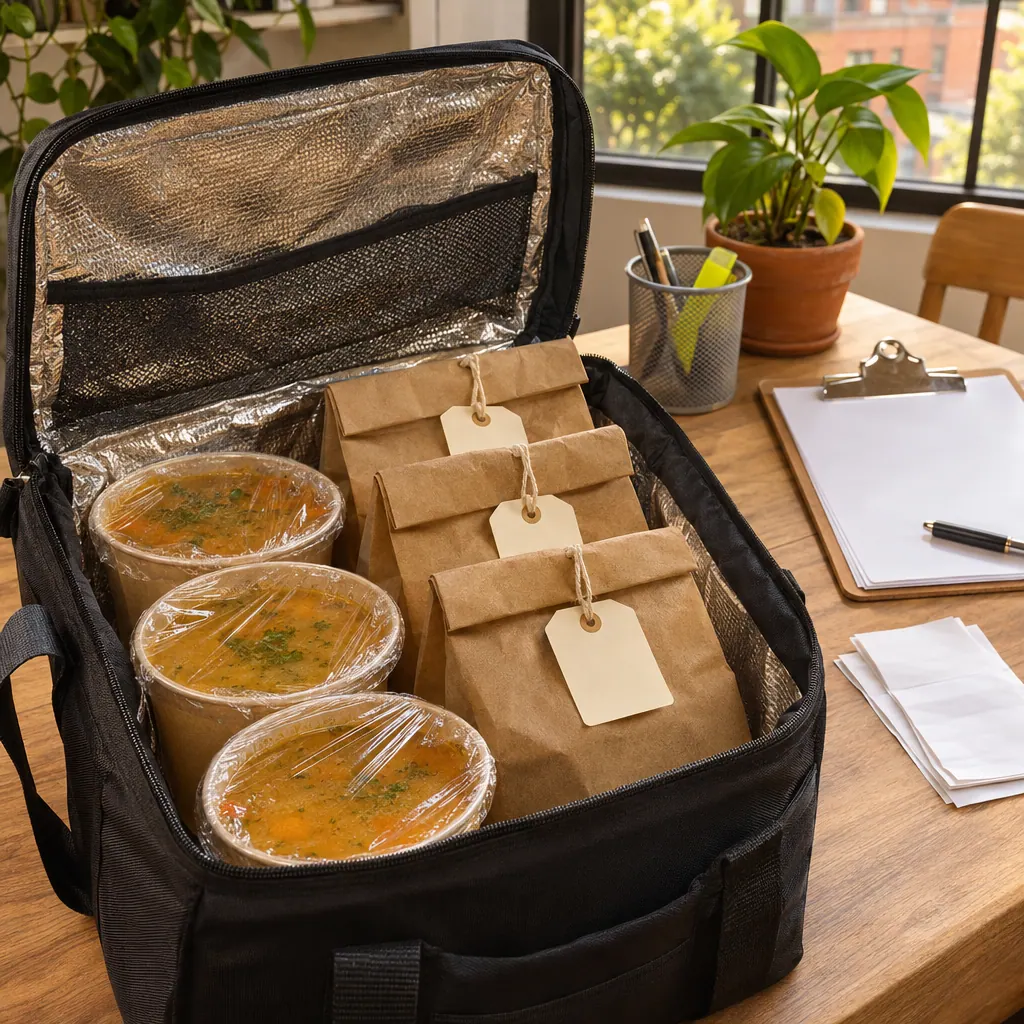
It is no use having the best flavor in the neighborhood if the bag arrives leaking juice or with the soup mixed with the rice. Investing in hermetic thermal packaging, compartmentalized lunch boxes, and plastic wrap (cling film) to seal lids reduces spills by up to 90%, avoiding replacements that destroy your daily profit.
Follow this quick dispatch checklist before handing the bag to the courier:
- Always separate hot foods from cold drinks or salads so the texture is not ruined.
- Wrap soup or bean containers with plastic wrap under the lid and place them in a separate tightly tied bag.
- Label each kraft paper bag with the buyer's name, address, and whether the order is paid or cash on delivery.
- Use a rigid thermal bag with internal dividers so containers do not tip over when braking.
The most costly mistakes you must avoid when operating your delivery
Even restaurants with excellent food lose money on the street due to predictable operational failures. Avoid these three common stumbles:
1. Sending couriers without valid ARL or SOAT: if a traffic accident occurs during work hours and the payroll courier does not have ARL, or the independent does not have up-to-date social security, the restaurant may end up assuming medical expenses, surgeries, and million-dollar indemnities.
2. Writing down addresses from memory: during peak hours, a copied number wrong means a dish going around for half an hour and an annoyed customer who won't order again. Use a notebook or digital order pad with phone number and mandatory reference point.
3. Falling for fake transfer receipts: there are applications that simulate screenshots of money transfers. Never deliver the order based solely on an image sent via chat; always validate the real balance in your account or activate income notifications.
If you have a restaurant and want to show your daily menu along with your delivery rate without intermediaries, you can also register your offer directly at Colombia Move's Daily Menu page. And if you are a courier or handle local logistics and look to connect with new food businesses, this is the best time to offer your service commission-free.
Frequently asked questions
❓ How much does a restaurant normally charge for delivery in Colombia?
For short trips of 1 to 3 kilometers, the reference rate is usually between $3,000 and $6,000 COP depending on the zone and topography. Many lunch-special establishments opt to offer free shipping starting from three dishes or an agreed minimum consumption so that the delivery cost is diluted in the order's margin (verify in the official source).
❓ How to charge for deliveries with confidence and avoid fraud with receipts?
The golden rule is to verify the actual deposit of money in your bank app before dispatching the order, never relying only on a screenshot sent via WhatsApp. Using an interoperable Bre-B QR code facilitates validating the transfer in seconds and provides greater peace of mind for both the restaurant and the customer (verify in the official source).
❓ Where to publish your delivery service or your restaurant's daily menu?
You can make your offer visible directly in the services section of Colombia Move or register your daily menu in the platform's daily menu directory. This way, you connect directly with diners and nearby businesses via WhatsApp, without intermediaries holding back your sales.
❓ In what ARL risk class should a motorcycle courier be enrolled?
Messenger and motorized delivery work must be enrolled in risk class IV (4.350%) or V (6.960%) on the Contribution Base Income. This is established by Decree 768 of 2022 and Decree 1772 of 1994, so you should never enroll the courier in risk class I as counter staff (verify in the official source).
❓ What happens if a courier gets injured working without ARL?
If the payroll courier suffers a traffic accident without active ARL enrollment, the restaurant responds directly with its assets for medical care, surgeries, disabilities, and indemnities. Even when hiring per trip or shift, you must demand an active PILA form as an independent to mitigate joint liability risks (verify in the official source).
❓ What is better for a restaurant: a fixed courier or pay per trip?
Pay per trip makes sense when you are starting out or managing specific midday peaks, because you only pay for delivered orders. In contrast, a fixed payroll courier is more profitable when you exceed a stable volume of 20 to 25 daily orders, as the unit cost per delivery drops compared to the per-trip rate (verify in the official source).


Comments
Loading comments...
Checking sign-in status...