
How to Sell Your Used Car Without an Intermediary and Without Scams
Everything you need to know to sell your used car in Colombia directly, without intermediaries and without falling for the most common scams.
IDIOMA DEL ARTÍCULO
Showing original language
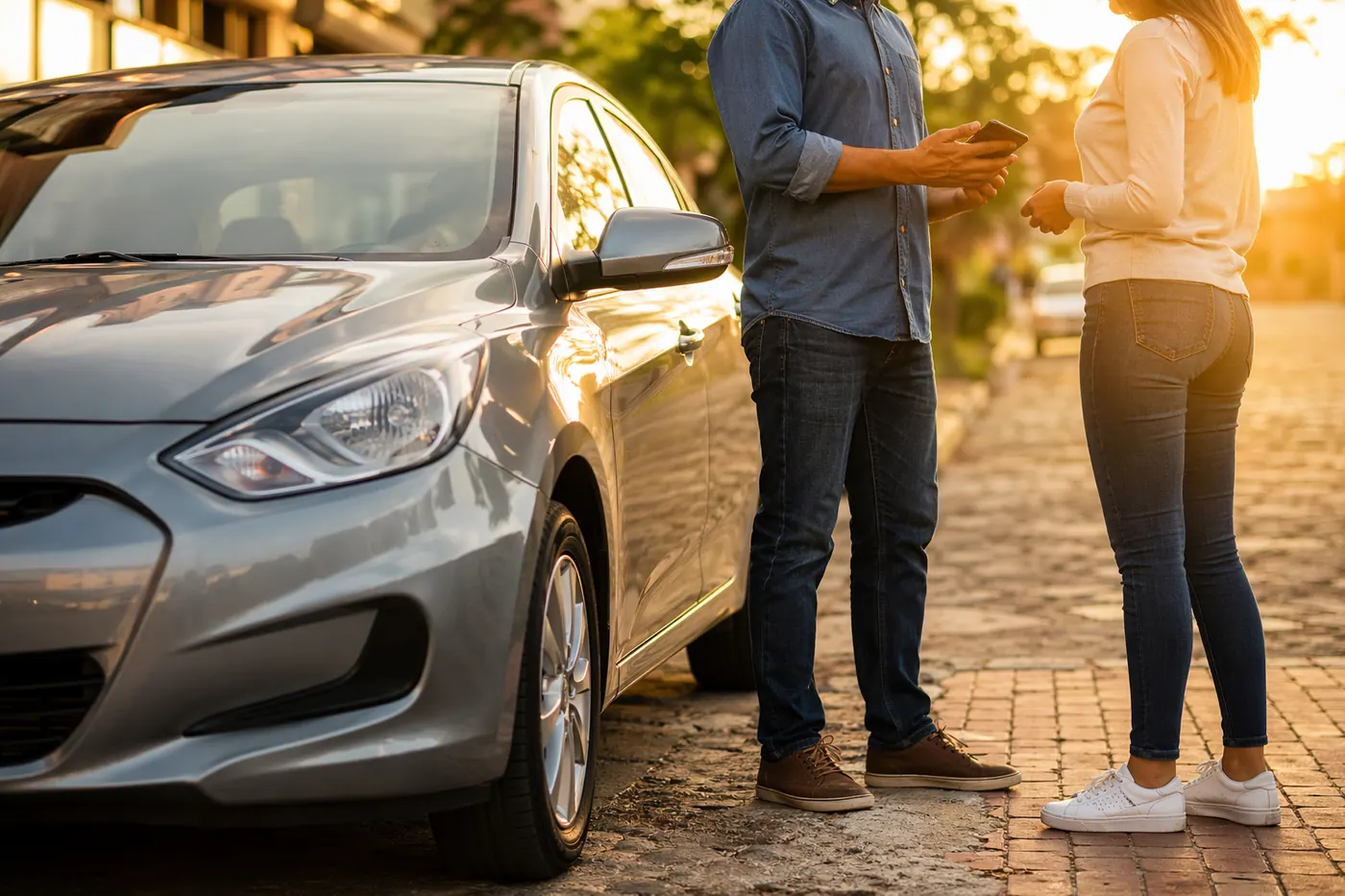
A neighbor in the building sold his Chevrolet Spark last month. It took exactly 12 days, he didn't pay a single peso to any intermediary, and he did it all from his cell phone. The secret wasn't any trick — it was that he had the documents ready, knew how much the car was worth, and knew how to filter serious contacts from those who only call to waste time.
Selling a used car directly between private individuals is the most common way to buy and sell vehicles in Colombia. The problem is that many people improvise: they post the ad without having the paperwork in order, set the price by guesswork, or don't know how to handle the test drive without taking risks. Result: the car takes months to sell, or worse, falls into the hands of someone who has no intention of paying. If you want to see real options right now, you can view available cars and motorcycles at Colombia Move — publishing is completely free.
This guide covers everything you need to know before posting your first ad: what documents to prepare, how to set a realistic price, where to post, how to conduct a safe test drive, the title transfer at the transit office, and the most common scams they will try to pull on you.
The documents you must have ready before publishing
This is the first step and there's no way around it. Any serious buyer will ask to see them — and if you don't have them ready from the first point of contact, you lose credibility right away.
Ownership card: The main document. If the vehicle has any limitations (lien, seizure, pending fines), the RUNT system shows it. Before listing, go to runt.gov.co and verify that the car appears free of encumbrances. If there is anything pending, resolve it first.
Valid SOAT: If the SOAT is expired, the vehicle cannot legally circulate. Renew it before listing. Depending on the model and engine size, it costs between $300,000 and $600,000 COP. It's worth having it up to date — many buyers ask for it as a condition.
Current techno-mechanical inspection: For vehicles older than 6 years, it is mandatory annually. If it is expired, some buyers will ask for a discount greater than the cost of renewing it. Do it yourself and keep that difference.
Vehicle tax clearance (Paz y salvo): It is obtained at the municipal Secretaría de Hacienda or online. In Medellín, through the Tránsito Medellín portal; in Bogotá, at Bogotá Recauda. Without this document, the transfer in transit does not apply.
Having all of this ready before listing not only speeds up the process — it also positions you as a serious seller to buyers who have already had bad experiences.
How to set the price with FASECOLDA (not by guesswork)
The most common mistake when selling: setting the price you think it's worth. Or worse, the price you paid four years ago when you bought it.
FASECOLDA (fasecolda.com) publishes the vehicle reference prices for insurance companies in Colombia on a monthly basis. It is not the exact market price, but it is the technical floor — the minimum value recognized nationwide. Enter the portal, search for your brand, model, and year, and look at the commercial value. That is your starting point.
If the car is in good condition with up-to-date maintenance, it can be worth 5–10% more than the reference price. If it has visible dents, high mileage (more than 180,000 km), or needs mechanical work, discount accordingly. Be honest with yourself — buyers are going to negotiate anyway.
After consulting FASECOLDA, compare in the real market. Look for vehicles similar to yours on TuCarro, OLX, and in the vehicles section of Colombia Move to see what prices the same model and year are going for. That gives you the real market range.
Heads up: if you set the price too high, the ad gets burned — in Colombia, people compare references before calling and simply ignore what doesn't add up. If you set it too low, you attract resellers looking for arbitrage, not final buyers.
How to take photos that actually generate leads
Photos are the first filter. An ad without photos, or with dark and messy photos, creates automatic distrust. You don't need a professional camera — using your cell phone correctly is enough.
Wash the car on the same day as the photos. Interior without trash or scattered clothes. Take at least 10–12 photos: full exterior (front, both sides, rear), open engine, wheels, interior (dashboard, front seats, rear seats, trunk), and a photo of the ownership card with the license plate number visible.
Use natural morning or afternoon light. Avoid photos at noon with harsh shadows or at night with a flash. And this is key: don't hide the defects. If there is a scratch or a minor dent, document it in the photos. The buyer is going to see it in person anyway — if it wasn't in the ad, they will doubt everything else.
📖 Keep reading
Did you buy this car before selling it? Read our buyer's guide:
Buying a Used Car or Motorcycle in Colombia: Where to Look and What to Check →Where to publish to reach real buyers
The used car market in Colombia has several platforms. Each one has its own buyer profile:
TuCarro.com and CarroYa.com are the largest portals, with significant organic traffic. They have paid plans to highlight ads, but the basic ad is free. Facebook Marketplace and local buy-and-sell groups have high exposure but also many window shoppers, messages from intermediaries proposing trades, or buyers who want to pay in installments.
Colombia Move is a free bilingual platform focused on Colombia, where you can post without registering or paying. It works especially well for vehicles in the $20M–$80M COP range and has visibility with both local buyers and foreigners living in the country.
🇨🇴 Post your Car for Free on Colombia Move
Colombia Move is a free bilingual platform where you can list your car or motorcycle in minutes — without paying to advertise and with visibility for both local buyers and foreigners living in Colombia.
See available cars →The recommendation is to post on two or three platforms simultaneously with the same description, the same price, and the same photos. Do not list different prices on each site — if a buyer compares and sees discrepancies, they lose trust in the seller.
The test drive: how to do it without risking anything
You have to be careful here. Never, under any circumstances, lend the car for the buyer to test drive it alone. If they crash it or take it somewhere else, the vehicle remains in your name, and so does the responsibility.
The basic rules: always accompany the buyer. You drive first to show the car's condition, then they do. Define a short and familiar route of 15–20 minutes, during the day. Ask for a copy of their ID before handing over the steering wheel — if they don't want to show it, that's your answer. If they come with a mechanic to check the engine, good, that's a sign of a serious buyer. Let them check it calmly.
The transit transfer: step by step
Once a price agreement is reached, the most important part comes: do not hand over the car without having completed the transfer. Or at least not without a notarized sales contract specifying that the transfer is the buyer's responsibility within a maximum period of X days.
The basic process: both parties go to the transit office with IDs, ownership card, tax clearance certificate, and valid SOAT. The Formulario Único Nacional de Transacciones (FUNT) is filled out. The processing fee is paid — between $150,000 and $250,000 COP depending on the department. The license plate is registered in the buyer's name that same day.
The most frequent mistake: handing over the car 'in good faith' before the transfer because the buyer says they will 'do it tomorrow'. If the buyer crashes the car before formalizing the transfer, it is legally still yours. No amount of trust is worth that risk.
The most common scams when selling a private car
There are patterns that repeat. By recognizing them in time, you will detect them before it's too late:
The buyer who wants to pay in installments: There is no such thing as 'I'll give you a million today and the rest in 15 days' for private cars. Payment is in full and all at once — cash or verified bank transfer. Period.
The cashier's check: It seems safe, but well-made forgeries circulate. If the buyer proposes a cashier's check, verify directly with the issuing bank before handing over anything.
The 'intermediary' who charges the seller: Someone contacts you saying they have a buyer ready and charges an upfront 'closing commission'. That doesn't exist in a direct sale. No one charges for connecting you with a buyer you found through your own ad.
The buyer who wants to take the car 'to check it with the mechanic': No. The mechanic comes to where the car is, not the other way around.
Contact from abroad: Especially WhatsApp with a foreign number. They propose buying from outside the country and 'someone trustworthy will pick it up for you'. Always ignore them — it's the oldest pattern of buying and selling scams on social networks.
Frequently asked questions about selling a car in Colombia
❓ Can I sell my car if it has a bank lien?
Yes, but first the lien must be lifted. The financial institution issues a release letter once you cancel the debt. Some buyers agree to pay the bank directly to cancel the outstanding balance — coordinate it in writing and with the bank present.
❓ How long does a transit transfer take?
In in-person offices, the process is done the same day if there is availability. The update in the RUNT takes 24–48 business hours. Several cities already allow parts of the process online through district transit portals.
❓ What happens if the buyer doesn't complete the transfer after taking the car?
The vehicle legally remains in your name. You can file a sale report with transit using the notarized sales contract to waive civil liabilities — but that doesn't solve the problem if the car is gone. The real solution is not to hand it over without the transfer or a solid guarantee.
❓ Do I have to declare taxes for selling my car?
The occasional sale of a personal use item between individuals is not subject to VAT. If it exceeds certain annual amounts, it may affect your income tax return as an occasional gain. If you have doubts, consult with an accountant — it's not a complex process but it does depend on your specific tax situation.
❓ Is it worth using a car consignor?
If the car has been unsold for more than 60 days and you've already tried everything in this guide, it might be worth looking at a trusted consignor. They charge between 5% and 10% of the sale price, but they handle visits, test drives, and the transfer. The only real disadvantage is that commission — which comes directly out of your pocket.
Do you have any questions left about the sales process? Ask in the Colombia Move community — there are people who have already gone through this and can guide you.
Have you already sold a car and have a tip that isn't in this guide? Leave it in the comments — those kinds of first-hand experiences are what help other sellers the most.



Comments
Loading comments...
Checking sign-in status...