
How to Buy Property in Colombia as a Foreigner
Foreigners can buy property in Colombia, but the safe process is all about title checks, clean funds, contracts, taxes, and proper registration.
IDIOMA DEL ARTÍCULO
Showing original language
Foreigners can buy real estate in Colombia. The harder question is not whether you are allowed to buy. The harder question is whether you understand what you are buying, how the money should enter the country, what the certificate says, who actually owns the property, and what problems will follow you after closing.
This guide is the practical version. It is not legal advice, and it does not replace a Colombian real estate attorney. But if you are considering an apartment in Medellín, a finca outside Rionegro, a beach property in Santa Marta, or a Bogotá investment unit, this is the order I would use before wiring serious money.
The core idea: in Colombia, the pretty listing is the least important part of the transaction. The important parts are the certificado de tradición y libertad, the seller’s authority to sell, tax and HOA status, the foreign exchange registration, and the closing paperwork. Get those right and the process can be straightforward. Skip them and a cheap property can become expensive fast.
Colombia Move
Compare real properties before you buy
Use Colombia Move to compare listings, seller storefronts, neighborhood context, and Casa Clara housing transparency before starting due diligence.
Can foreigners buy property in Colombia?
Yes. Colombia generally allows foreigners to own real estate. You do not need Colombian citizenship to buy an apartment, house, lote, or finca. The practical requirements are identity, clean funds, correct paperwork, and proper registration. The Colombian Constitution also says foreigners enjoy civil rights, subject to law, which is the broad legal principle behind foreign ownership.
The restrictions show up less in the right to own and more in the details: rural land due diligence, protected areas, unclear boundaries, inheritance issues, informal construction, financing limits, and whether your foreign funds are properly registered as foreign investment.
The buying sequence I would follow
Do not start with a deposit. Start with verification. Here is the clean sequence.
- 1. Define the use case: primary home, rental investment, retirement base, land banking, finca, Airbnb, or future visa strategy.
- 2. Compare the market: check similar properties by neighborhood, size, building age, administración, parking, and furnished status.
- 3. Request documents: certificate of tradition, property tax receipt, HOA/admin certificate, utility status, seller ID, and any power of attorney.
- 4. Hire independent help: use your own attorney, not only the seller’s agent or notary.
- 5. Sign only after due diligence: the promesa de compraventa should reflect conditions, deadlines, penalties, and what happens if title problems appear.
- 6. Move money correctly: use the foreign exchange channel and keep records.
- 7. Close at notary and register: the public deed matters, but the registration is what completes the ownership record.
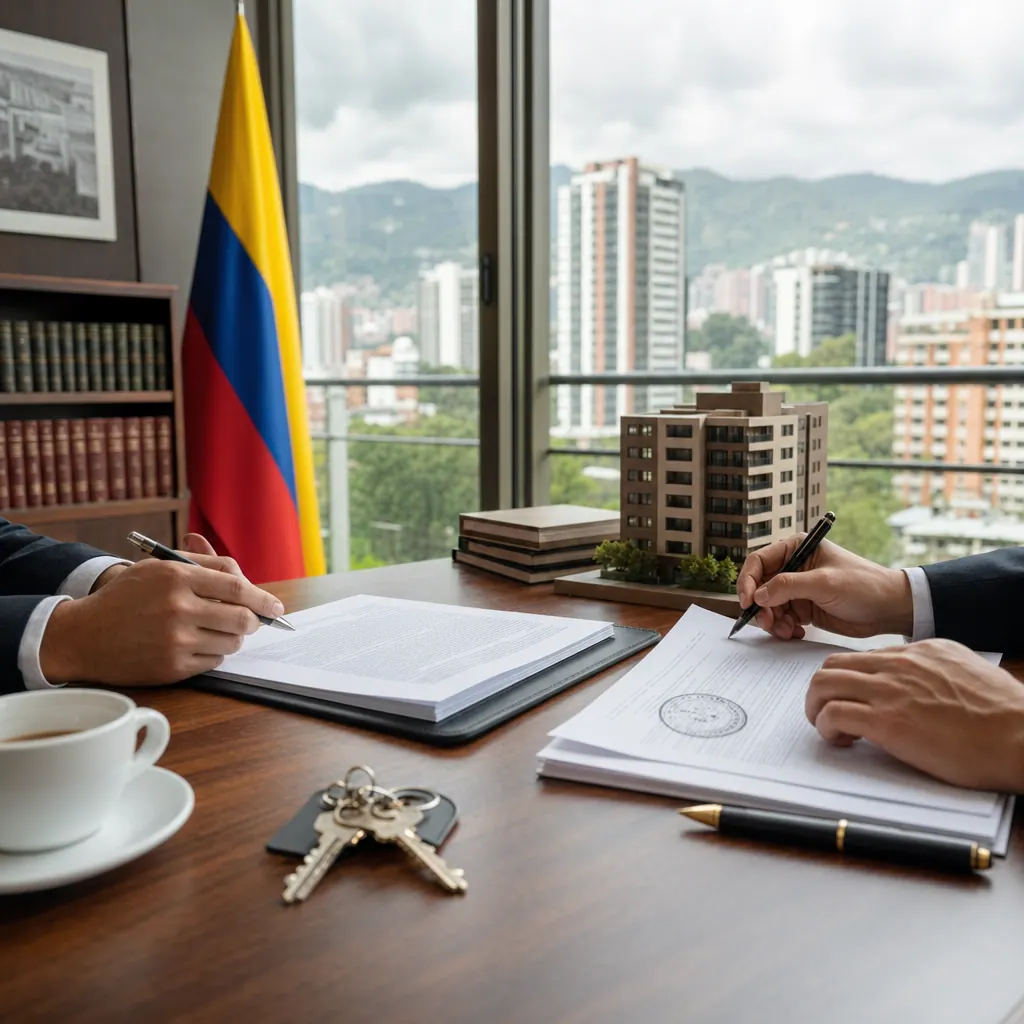
The document that matters most: certificado de tradición y libertad
Before you negotiate seriously, ask for the matrícula inmobiliaria and pull the certificado de tradición y libertad. The official Supernotariado portal describes the certificate process as a secure online flow where you consult, pay, and download the certificate. Their site also lists the certificate as a core online service.
This certificate is the legal history of the property. You want to confirm the current owner, prior transfers, mortgages, liens, embargoes, usufructs, affectation to family housing, horizontal property status, and anything else limiting ownership. If you cannot read it confidently, pay an attorney who can. Do not let anyone summarize it for you verbally and call that due diligence.
The promesa de compraventa is not a casual reservation
In many Colombian transactions, the buyer and seller sign a promesa de compraventa before the final deed. Treat this document seriously. It should say who is buying, who is selling, the exact property, price, payment schedule, closing date, documents required, penalties, and what happens if the title, taxes, or financing fail.
This is where a lot of foreigners get too relaxed. They think the promesa is a light deposit agreement. It is not. If you sign a weak promise with vague conditions, you can lose leverage quickly. Your attorney should review it before you sign, not after.
Keep reading
How to bring money into Colombia correctly
If you bring money from abroad to buy property, do not treat it like an ordinary transfer without paperwork. Banco de la República explains that non-residents making foreign capital investments in Colombia must channel foreign currency through the exchange market and provide the minimum required exchange-operation information. Their international investments page also points to the declarations and forms used for these operations.
The classic document people mention is Formulario No. 4, the declaration of exchange for international investments. The exact process depends on your bank, intermediary, and transaction structure, so get advice before sending the funds. The practical point is simple: if you want your investment recognized properly, and later want to sell and repatriate funds, keep the exchange paperwork clean from day one.
Ask your bank or exchange intermediary exactly how they will code the transfer. Keep copies of the wire, exchange declaration, purchase agreement, deed, and registration. Future-you will thank present-you when selling, reporting taxes, or explaining the source of funds.
Closing costs: budget more than the sticker price
The buyer and seller usually negotiate how to split notary, registration, and related closing costs, but do not assume the listing price is your all-in number. You may also face legal fees, bank transfer/exchange costs, appraisal costs if financing, property tax adjustments, HOA/admin balances, and document fees.
As a rough planning buffer, I would keep several percentage points of the purchase price available beyond the agreed price. The exact number depends on the property, city, transaction value, and negotiation. Your attorney or notary can calculate the current official fees before closing.
Taxes and ongoing costs after you buy
After closing, the boring bills become important. You need to track property tax, administración, utilities, insurance if you choose it, maintenance, and income tax issues if you rent the property. If the property is high-value, wealth tax may also become relevant. We already have a dedicated guide here: Colombia Wealth Tax for Foreign Property Owners.
Also pay attention to cadastral updates. Colombia has been modernizing cadastral values, and that can affect property tax over time. Read: Colombia’s Cadastral Modernization.
Apartment, house, finca, or lote: different risks
Apartments are usually the cleanest first purchase because horizontal property buildings have administration records, defined units, and comparable sales. Still, check HOA debt, building reserves, short-term rental rules, structural issues, and whether parking/storage are separate matrícula numbers.
Houses add more maintenance and neighborhood-level risk. Fincas and rural land are a different world: access roads, water source, boundaries, land use, environmental restrictions, informal construction, easements, and whether the seller’s idea of the boundary matches the legal boundary. A finca can be amazing, but it needs deeper due diligence.
If rural land is your goal, read both Cómo Comprar Finca en Colombia and Buying Rural Land in Colombia as a Foreigner. Do not buy rural property using apartment-level diligence.
Can buying property help with a Colombian visa?
Possibly, but do not buy a property only because someone promised you an easy visa. Visa rules change, thresholds change, and approvals are discretionary. Check current Cancillería rules before making an investment decision. If your visa strategy depends on the purchase, talk to a visa professional before signing the promesa.
A property can support a long-term Colombia plan. It should not be the only pillar of the plan. You still need legal stay, tax clarity, healthcare, banking, and a realistic exit strategy if life changes.
How Colombia Move and Casa Clara help before you buy
Colombia does not have the kind of centralized MLS many foreigners expect. That is exactly why we built Casa Clara, our housing transparency layer. It is not a substitute for legal due diligence, but it helps with the earlier question: “Does this price make sense compared with what else is active?” Read the background here: Casa Clara: Colombia Move’s Real Estate Transparency Layer.
On Colombia Move, you can compare listings by city and neighborhood, review seller storefronts, see direct contact methods, and use the marketplace as a discovery layer before you spend money on formal diligence. A polished listing does not prove title is clean, but better context helps you ask better questions.
Colombia Move
Search before you wire money
Compare active apartments, houses, fincas, and seller profiles. Then verify the documents before paying a deposit.
My buyer checklist
- Get the matrícula inmobiliaria and pull the certificate yourself.
- Confirm the seller is the owner or has a valid power of attorney.
- Check mortgages, liens, embargoes, usufructs, family housing affectations, and horizontal property status.
- Confirm property tax and administración are paid or accounted for at closing.
- Check building rules if you plan Airbnb or short-term rentals.
- Use an independent attorney for the promesa and title review.
- Register foreign funds correctly through the exchange market.
- Keep every document: wire proof, exchange declaration, promesa, deed, registration, tax receipts, HOA certificates.
- Do not trust pressure. A real seller can wait for proper verification.
FAQ
❓ Can a foreigner buy property in Colombia without residency?
Yes. Residency is not generally required to buy property. You can buy with a passport, but practical steps like banking, tax registration, and long-term management may be easier with Colombian identification.
❓ Do I need a Colombian bank account to buy real estate?
Not always, but you need a clean way to bring funds into Colombia and document the exchange operation. Many foreign buyers work through banks or exchange intermediaries. The key is keeping the foreign investment paperwork clean.
❓ Should I use the seller’s real estate agent or my own attorney?
Use your own attorney. The seller’s agent is there to close the sale. A notary formalizes documents but does not replace independent due diligence. Your attorney should review title, the promesa, tax/admin status, and closing conditions.
❓ Is buying property in Medellín still worth it?
It can be, but the easy bargain era in the most popular neighborhoods is mostly gone. The better question is whether the specific property makes sense against comparable listings, rent potential, monthly costs, and your personal use case.
❓ What is the biggest mistake foreigners make when buying in Colombia?
They fall in love with photos and negotiate price before verifying title, seller authority, building rules, and money registration. In Colombia, the document trail matters more than the listing presentation.
If you are actively looking, leave a comment with the city and property type you are considering. The more real buyer questions we see, the better we can make Colombia Move and Casa Clara for everyone trying to buy safely.
Comments
Loading comments...
Checking sign-in status...