
Selling your used car in Colombia without falling for scams (or losing money)
Realistic price, up-to-date documents, 6 photos that close sales, 6 common scams, and the step-by-step transfer. How to sell your used car well in Colombia without agencies, without commissions, and without losing money.
IDIOMA DEL ARTÍCULO
Showing original language
Selling a used car in Colombia is one of those things that seem simple until you actually do it. You post it, receive 40 WhatsApp messages in a week, discover that only 3 are real buyers, two want to pay you with a cashier's check, and the last one offers you $5 million below the value without even seeing it. That’s when you understand why people end up selling it cheaply to a dealership just to finish the process.
This guide is for selling well — without paying a month's commission to an agency, without falling for the scams that rotate through these platforms, and without losing $3 or $5 million for not having the documents up to date the day the serious buyer arrives. It is written assuming you already have the car and just need the method. If you want to see real options right now, you can see cars and motorcycles available on Colombia Move — posting is completely free.
What you need to know
- Your car is worth less than you think. Compare against Tucarro / Carmuv for your exact model, same year, same mileage.
- Documents up to date = faster sale. SOAT valid, tecnicomecánica valid, taxes up to date, free of liens.
- 6 photos close sales. Front, side profile, rear, interior, engine, mileage. Takes 5 minutes.
- Most common scam: buyer "direct from Bogotá / United States" who insists on an advance transfer. Always.
- The transfer is paid for by whoever you agree upon — but put it in writing before receiving the first peso.
Step 1: Find out how much your car is actually worth
The #1 mistake is posting a price based on what the car is worth to you. Your car is worth what the market pays today for the same model, year, mileage, and condition. Five minutes of research on Tucarro looking for your exact model gives you a realistic range.
For the reference price: filter Tucarro by your model, same year, same mileage range (±10,000 km), same city. Ignore extreme prices (the most expensive are usually forgotten ads that have been on the market for 6 months; the cheapest are crashed cars or cars with problems). The median price of the top 10-15 results is your reference. Carmuv gives you an automated value, but it is usually 10-15% below the real market because they buy to resell.
Adjust downward if: you have one previous owner but you are NOT that sole owner (the second owner is automatically discounted by 5-10%), the car has recorded major repairs (engine, transmission, clutch), or you have delayed the tecnicomecánica by more than a month.
Adjust upward if: you have the car up to date with SOAT and tecnicomecánica valid for more than 6 months ahead, you have original manuals, spare key, original purchase invoice, maintenance record at a dealership.
Step 2: Documents you need to have ready before posting
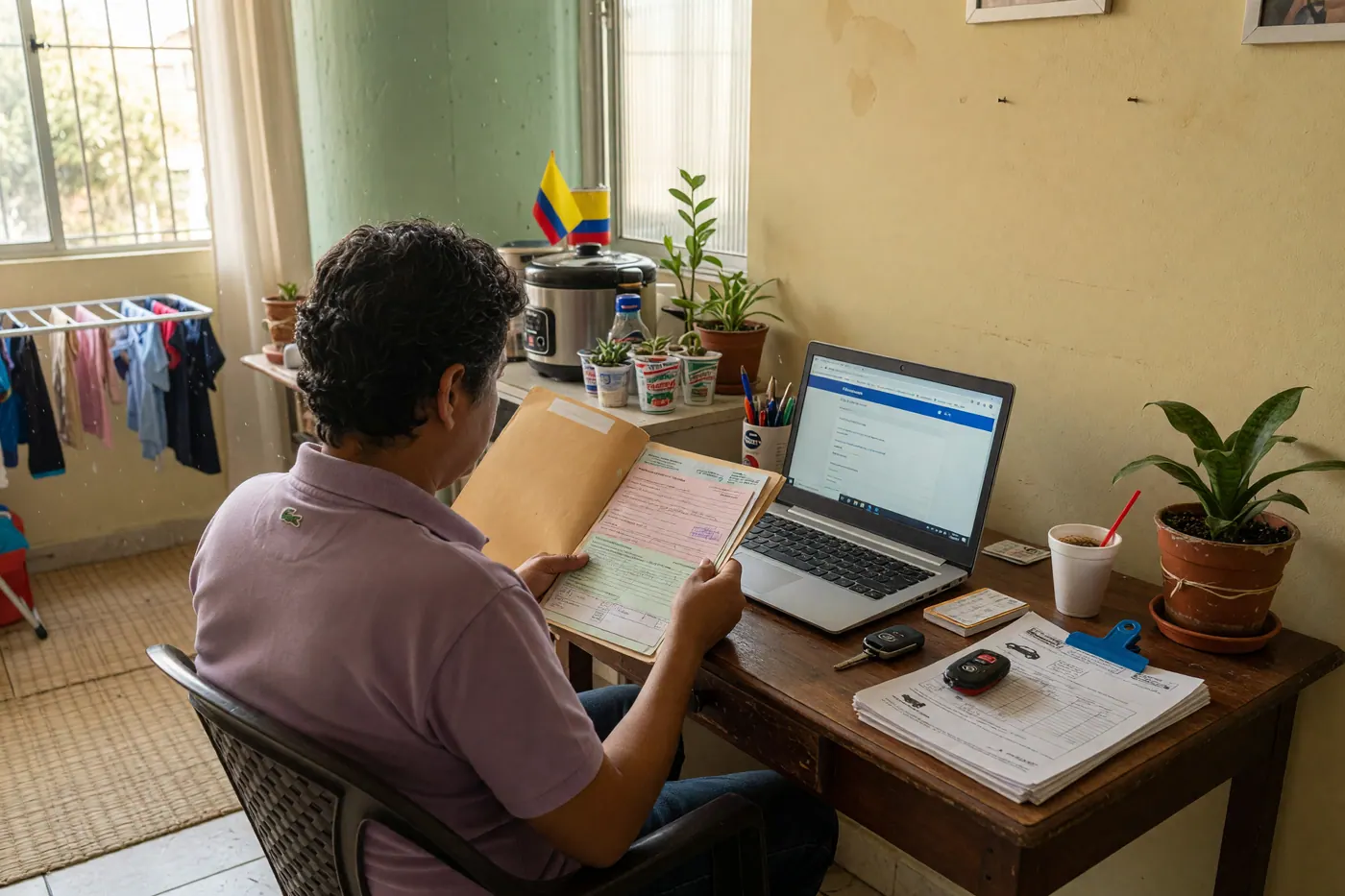
If your serious buyer appears on Wednesday and you can't show all the papers on the same Wednesday, you lose them. This is the list you must have photographed and ready to send via WhatsApp the same day someone asks:
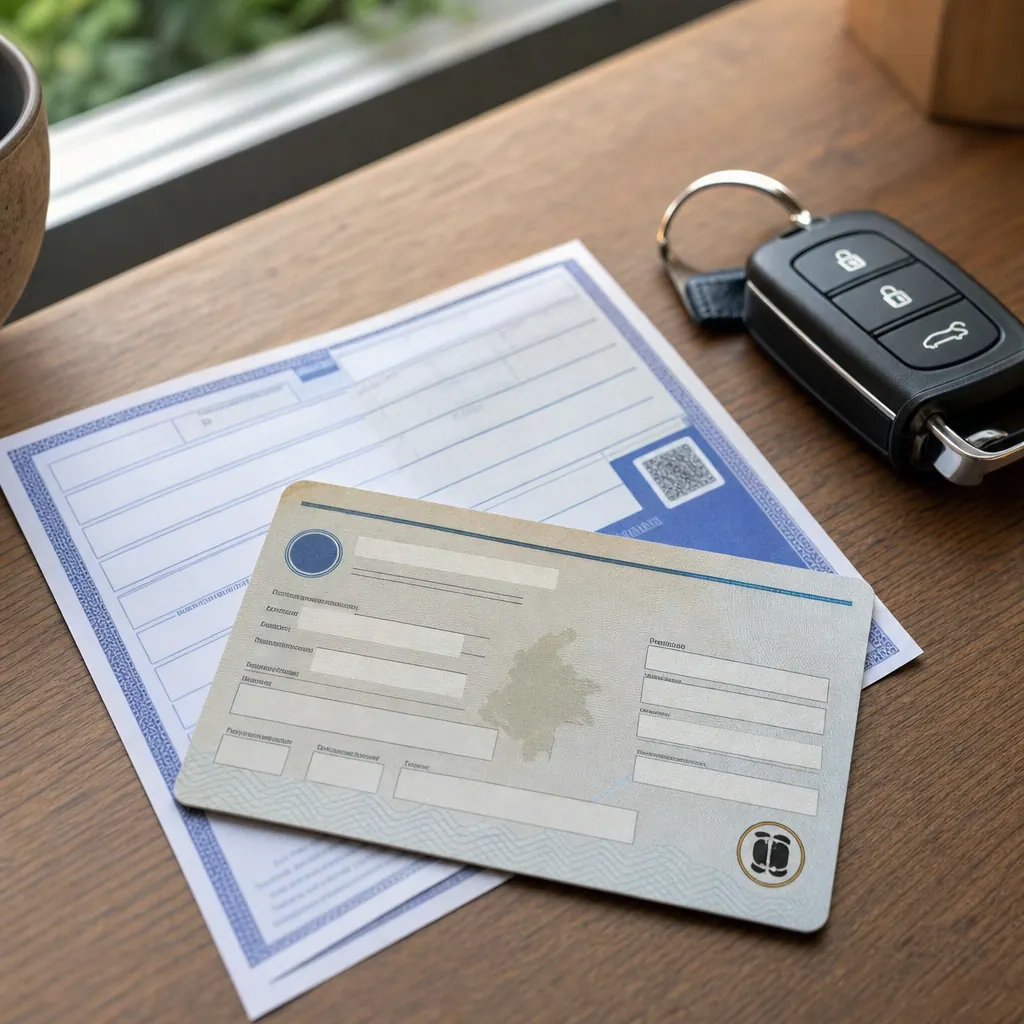
Vehicle registration card (Traffic License). Original, not a photocopy. Verify that the model, color, engine serial, and chassis serial match the physical car. This is the first thing a serious buyer compares.
Valid SOAT. It must last at least 30 days after the probable sale date. If it is about to expire, renew it before posting — it is ~$500,000 that you recover in the price.
Valid tecnicomecánica. Same as the SOAT. If it is about to expire in less than 60 days, get it done. It costs between $140,000 and $200,000 depending on the engine size and speeds up the sale.
Tax clearance certificate. Vehicle tax and traffic fines. Download it online from your city's traffic authority (Tránsito). If you have unpaid traffic fines, the buyer cannot perform the transfer — the person who wants to get out of the problem pays them first.
Vehicle title certificate (Certificado de Tradición). Request it from the RUNT or the transit authority. It shows the history, liens, seizures, and key information that the buyer verifies before paying. It is ~$15,000 and takes minutes.
Free of liens. If you bought with a loan and haven't finished paying it off, the car has a lien in favor of the bank. Until you pay it off and the bank issues the release of the lien, you CANNOT sell. Start here — the release of the lien takes between 5 and 15 business days.
Step 3: The 6 photos that close sales
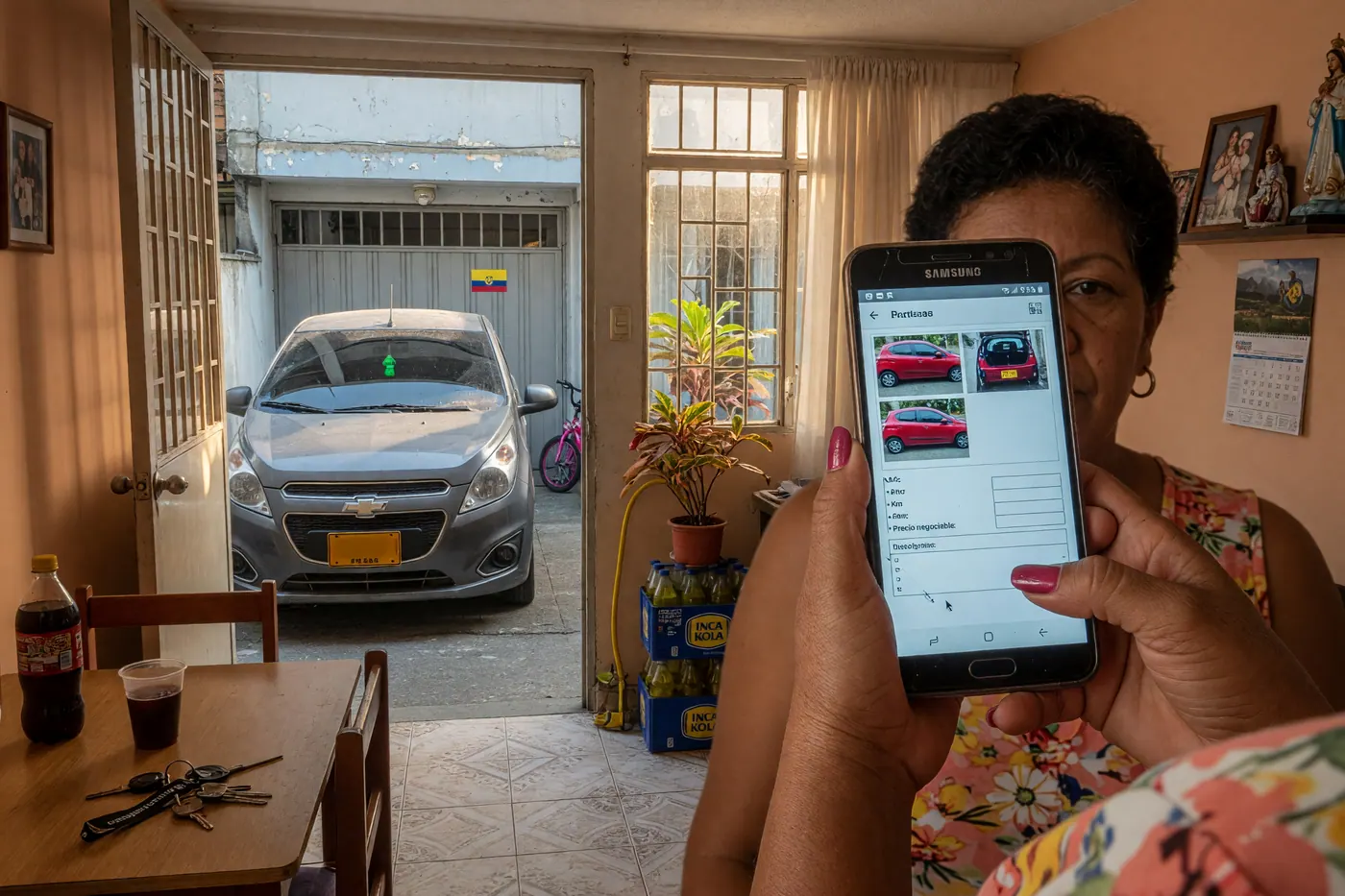
80% of used car ads in Colombia have terrible photos — just one photo, poorly lit, from a strange angle, with a dirty car. If you take 6 good photos, you move into the top 20% of quality on the marketplace and serious buyers contact you first. The essential photos:
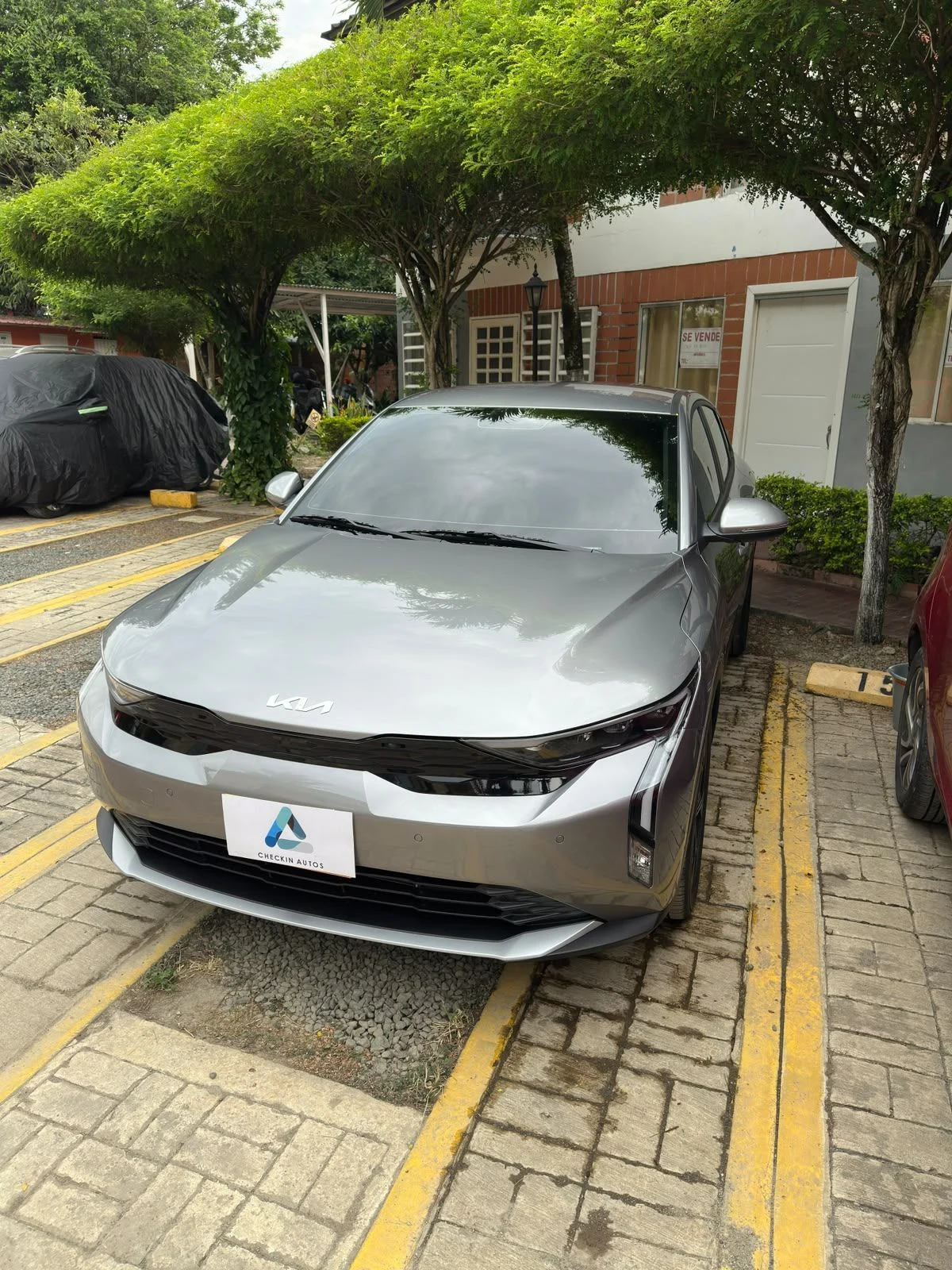
1. Complete front, with the car washed and at a 45° angle (so that both sides are visible at once).
2. Complete side profile (the right side — the driver's side — because it is what is seen from the street when parking).
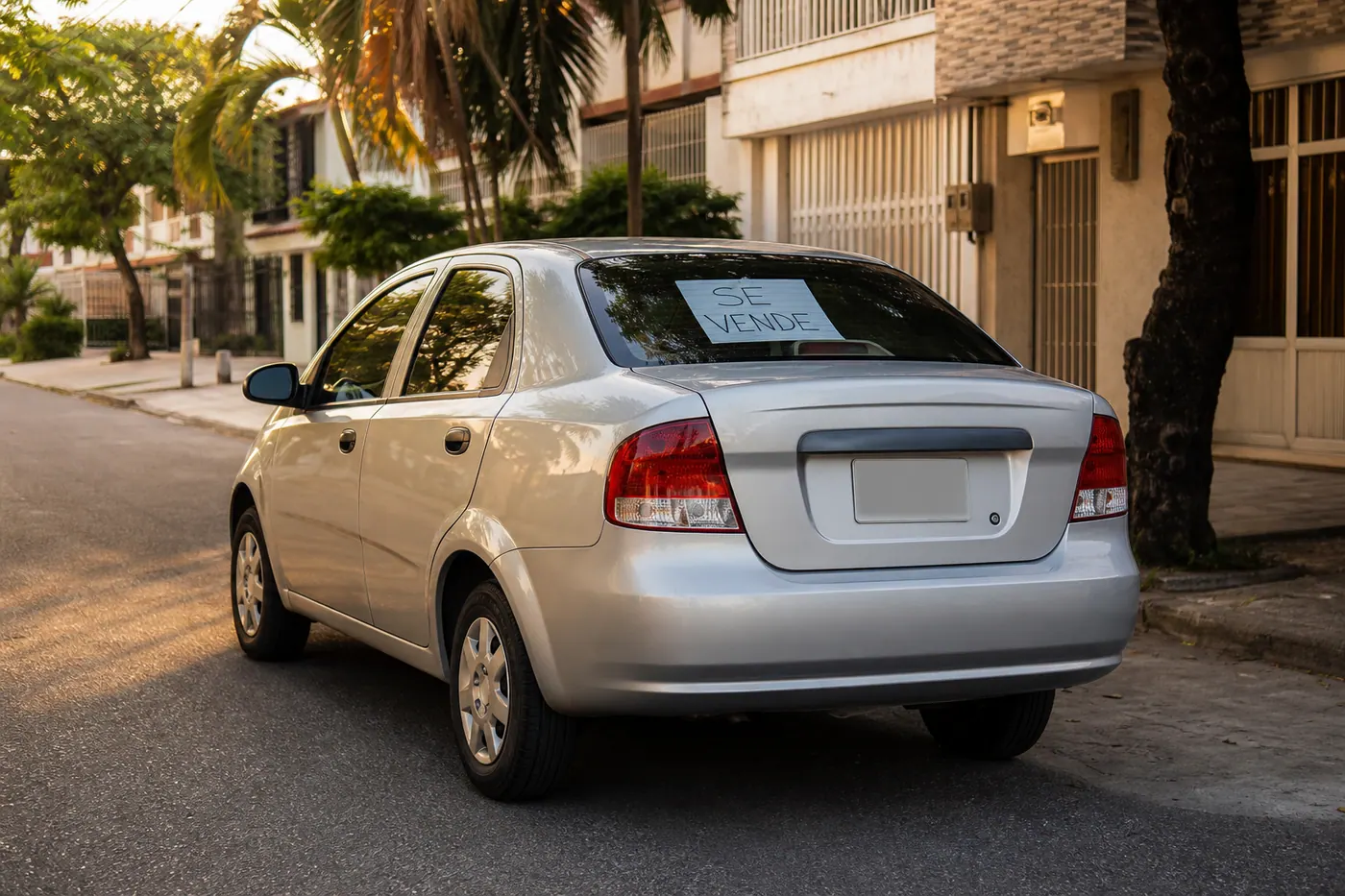
3. Complete rear with the trunk closed (makes the model and year clear).
4. Interior — take from the driver's door showing the dashboard, the steering wheel, and the front seats.
5. Engine — open the hood in natural light, make sure it's clean (an engine wash for $50,000 is worth it before photographing).
6. Dashboard with the car turned on showing exact mileage and no error lights on. This is the photo that generates the most trust.
Take them all in one day, ideally in the morning or at sunset when the light is soft. If you have patience, take the car to a park or an area where the background isn't full of wires and poles — the car looks 30% more expensive against a clean background.
Step 4: How to write the description
The description is not a declaration. It is a filter. You want serious buyers to contact you and curious people / scammers to lose interest. The structure that works:
First line: model, year, transmission, fuel, mileage. No frills. Second line: general condition in an honest sentence. "Sole owner since new. Well cared for, no accidents." Or: "Second owner. Maintenance up to date at the dealership. Some paint details on the front bumper." List of what it includes: SOAT valid until X month, tecnicomecánica until Y month, tax clearance, original manual, spare key, etc. Recent maintenance: anything done in the last 12 months, with mileage and price. This shows that you have taken care of the car and eliminates negotiation based on alleged wear and tear. Reason for sale: an honest sentence. "Selling because I am moving to another city for work." "I need a bigger car because of the arrival of a child." Do not lie — the buyer can smell it.
What should NOT be included: emojis ("🚗🔥💎"), excessive capitalization, marketing phrases ("unique opportunity," "bargain," "it will fly away"), phone number (the platform handles it). That scares off the serious buyer and attracts the aggressive haggler.
Step 5: The 6 most common scams and how to detect them
If you post on any platform in Colombia, you will receive these types of messages. Recognizing them saves you hours and, in some cases, saves you the entire car.
Scam 1: The "direct from Bogotá / United States" buyer
Typical message: "Hello, I'm very interested in your car. I'm traveling in the United States / Bogotá, but I'll buy it right now. I'll pay you by international transfer / Western Union and my cousin will arrive tomorrow to pick it up." The cousin never arrives; the transfer is fake, and it comes with a confirmation email that looks like it's from Bancolombia but isn't. If they insist on payment before seeing the car and handing over the keys, it's a scam 100% of the time. Close the conversation.
Scam 2: The manager's check
An apparently serious buyer sees the car, takes a test drive, offers a reasonable price, and pays with a manager's check "so there's no problem with a transfer." The check is a photocopy or a legitimate check but from an account that closes an hour after the deposit. By the time the bank informs you that the check bounced, the car and the supposed buyer have been missing for two days. Absolute rule: NEVER receive payment by check. Only confirmed immediate transfer or verified cash.
Scam 3: The fake serious buyer who demands your RUT
Before seeing the car, they ask for a photo of your ID, ownership card, certificate of tradition, and photos of the engine and chassis serial numbers. With that information, they conduct a parallel sale on another platform using your car as bait. You never see them again, but you discover that someone tried to carry out a fraudulent ownership transfer. Only send documents when the buyer has already seen the car in person and is ready to do the ownership transfer that same day.
Scam 4: The "I buy cars in any condition" buyer
It's not exactly a scam — but it's an intermediary who pays you 30-40% below market value to resell it. If you're in a hurry, it can be a legitimate option. But if you have 2 weeks of patience, don't sell to them. The difference is ~$5-10 million on an average car.
Scam 5: The test drive that ends in theft
An apparently serious buyer asks to take the test drive alone ("to get a better feel for it"), drives onto a busy avenue, and doesn't return. It sounds obvious, but it happens more often than you think. Always accompany the test drive. Always verify identity documents before the drive. Do it during daylight hours and on familiar routes.
Scam 6: The blank signed ownership transfer
A buyer offers to pay you in two parts — half now and the other half in a week — and in exchange asks you to sign the ownership transfer document. Once signed, the car legally is no longer yours, and the second half never arrives. Ownership transfer is signed AFTER having 100% of the payment confirmed in your account. Period. No exceptions, no matter how convincing the buyer is.
⚠️ Golden rule
Never hand over the keys before having the money confirmed in your account (not just "transferred" — confirmed, by checking the balance). Never accept checks (manager's checks, company checks, whatever). Never sign an ownership transfer before payment. If the buyer is in a rush and pushes these rules, it's a scam.
Step 6: Where to post — an honest comparison
Each platform has its own logic. The table shows what to expect from each one. The general rule: post on 2-3 at a time to maximize exposure, but respond quickly on all of them — a serious buyer writes to 5 cars simultaneously and buys the first one that responds well.
2026 commissions. Large platforms charge you to appear at the top; free ones get filled with scammers. The difference is the verification that the site requires from buyers.
Colombia Move is the zero-commission option with no ghost-buyers — the contact is direct between you and the buyer, and the ad appears indexed on Google with the photos and price you set. Posting your car takes five minutes and you can keep the ad active in parallel with Tucarro and Facebook Marketplace without paying anything.
Step 7: Handling the visit and the test drive
When a serious buyer wants to see the car in person, you are close to closing the deal. Handle the appointment like this:
Coordinate in a public place during the day. Ideally an area with cameras (shopping malls, large gas stations, monitored parking lots). Never at your house at first.
Ask for their ID and a photo. Before the test drive. If the buyer is annoyed by this, it's because they have something to hide. Serious buyers understand the precaution.
Accompany the test drive. Always. Decide the route yourself, on avenues you know. 20 minutes are enough for the buyer to get a feel for the car.
Allow them to take the car to their trusted mechanic. But accompany them. It's the strongest proof of a serious buyer. If they ask to take it alone "to the shop," don't accept — that's the sophisticated version of the test-drive-that-ends-in-theft.
Negotiate the price in front of the car. Not by message. It's easier to maintain your price when you are face-to-face, showing the details that justify the value (maintenance records, before photos, up-to-date documents).
Step 8: The ownership transfer step-by-step
The ownership transfer is where most people get tangled up. It's bureaucracy, but it's manageable if you follow the order:
1. Negotiate and sign a promissory note (downloadable from the internet) that specifies price, payment date, and who pays for what regarding the transfer. This is optional but protects both parties. 2. The buyer pays the agreed price via transfer or cash. Verify directly in your banking app. DO NOT sign any paper until you see the balance. 3. You go to your city's traffic authority with: ownership card, payment clearances, certificate of tradition, and the buyer with their ID. You sign the transfer form. 4. The buyer pays the transfer fees (~$200,000-400,000 depending on the value of the car). If you agreed that you pay, deduct it from the sale price. 5. The new owner appears in the RUNT within 24-48 hours. You deliver the car and keys the day the RUNT confirms the change. Some buyers prefer that you handle the process and hand over the car with everything ready in their name. In that case, negotiate that the money stays in an escrow account (notarial agreement) until the process is finished.
❓ Frequently Asked Questions
❓ How long does it take to sell a car in Colombia?
If the price is right, the photos are good, and the documents are up to date: it takes between 2 and 6 weeks to make a real sale. If you expect to sell in 3 days, you will have to discount 20-30% off the market price. Patience is what protects your profit.
❓ Should I lower the price if I don't get any messages in a week?
A week without serious messages means: price 10-15% above market, poor photos, or a poorly written description. Before lowering the price, check the photos and the description. If they are good, lower it by 5% to 8% and reactivate the listing. Do not make large discounts all at once — it attracts bargain hunters and scares off serious buyers who wonder what is wrong with it.
❓ Is it legal to sell my car without paying an agency or intermediary?
100% legal. The ownership transfer (traspaso) can be done by any natural person at the transit authority in their city, without needing an agency. The agency is just a convenience that charges between $300,000 and $700,000 to wait in line for you. If you have 2-3 hours available, you save that money.
❓ Who pays for the transfer, seller or buyer?
By custom, the buyer pays, but it is 100% negotiable. The important thing is that it is made clear IN WRITING before receiving the first peso — because if you get to the transit authority and it still hasn't been agreed upon, the sale can fall through right there and everyone loses time.
❓ What do I do if the buyer asks for a check or an international transfer?
End the conversation and block them. It is a scam in 99.9% of cases. Real buyers pay with immediate transfer (PSE, Bancolombia, Davivienda, Nequi for smaller amounts) or verified cash. Any other method is a red flag. If you want to know more about the scams circulating in the Colombian used car market, complete guide to scams on marketplaces.
In summary
Selling a used car well in Colombia comes down to three things: a realistic price based on market data, documents up to date from the day you post, and a strong filter to identify the serious buyer in the first three messages. If you do those three things well, in 2-6 weeks you will be closing the sale at a reasonable price, without agencies, without commissions, and without scams.
The most economical way to start is to post on a platform that does not charge you to appear. Posting your car on Colombia Move is free forever. You upload 6 photos, write the description with the structure above, and the buyer contacts you directly via WhatsApp. No commission, no intermediaries, no exclusive contract. If you want to see what posted cars look like, the used car category has the current inventory.
Comments
Loading comments...
Checking sign-in status...