
Why reviews matter in a Colombian marketplace
Reviews in a Colombian marketplace are not decoration — they are the only way to build (and read) trust between strangers. Here we explain how they work and how to get the most out of them.
IDIOMA DEL ARTÍCULO
Showing original language
Imagine someone offers you an apartment in Laureles at a good price via WhatsApp. The photos look good, the price is reasonable, the message sounds friendly. But you don't know anything about that seller. How do you decide if it's worth meeting with them? That's exactly the question that reviews should answer — and often they don't.
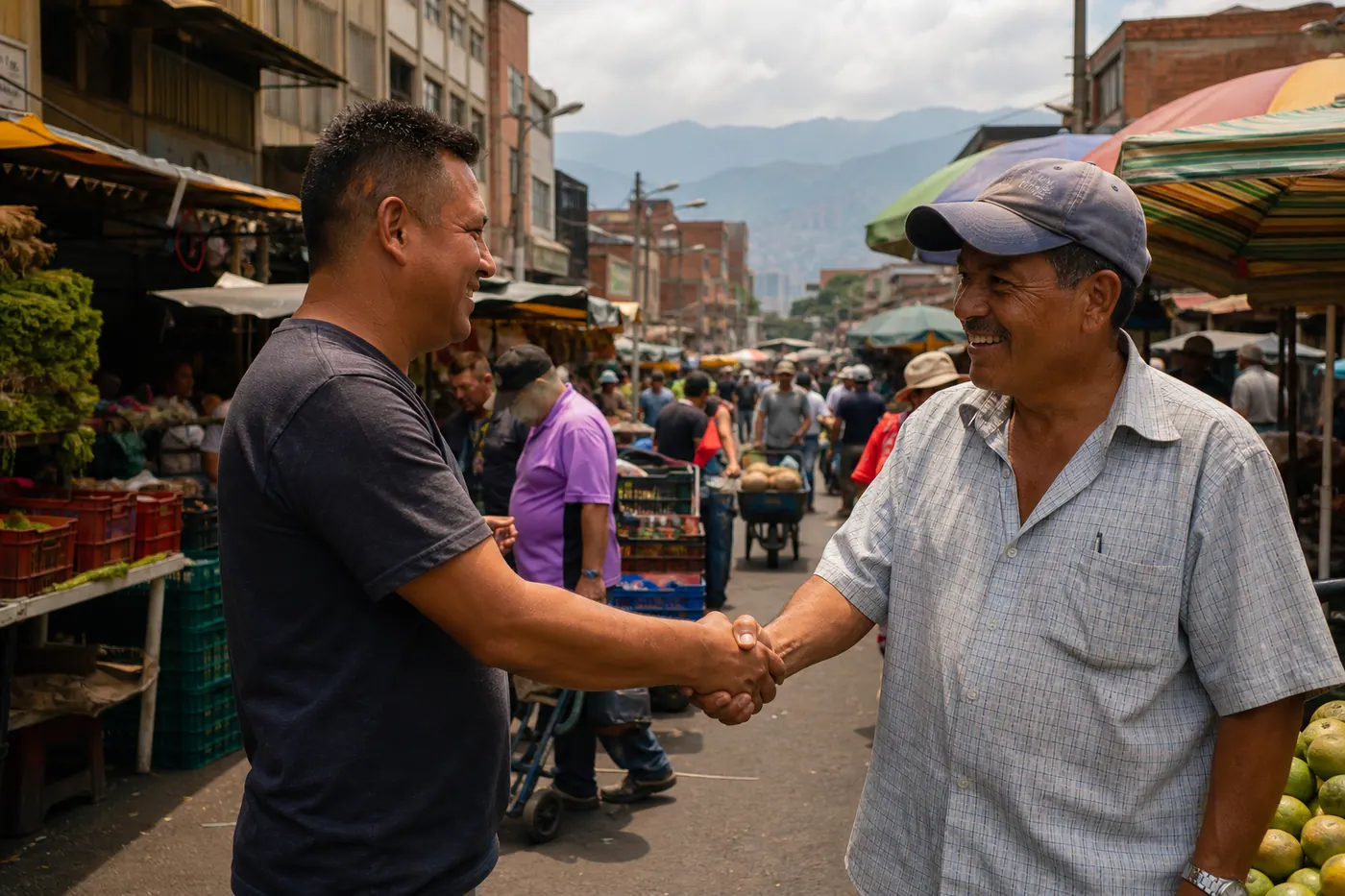
In a physical market, trust builds itself. The corner vendor who's been in the same spot for ten years, the mechanic your brother-in-law sent you to, the bakery lady who always gives you the correct change. That history exists because people see each other's faces. In the Colombian digital marketplace, that doesn't happen — unless someone builds it deliberately. If you want to see real options right now, you can see apartments and houses on Colombia Move — posting is completely free.
Reviews are the attempt to recreate that history. When they work, they save you time, money, and headaches. When they're empty or fake, they leave you exactly where you started: guessing. Understanding the difference between a review that's useful and one that tells you nothing is more helpful than it seems.
Why digital trust is built differently in Colombia
Colombia has one of the highest rates of digital distrust in Latin America. It's not a stereotype — it's the result of years of Facebook scams, advance payments that disappear, and items that arrive different from the photos. People learned to distrust from their own experience, or from someone they know.
That makes reviews carry different weight here than in other countries. In markets with high institutional trust, people assume good faith and use reviews to compare similar options. In Colombia, reviews are sometimes the only thing that separates "yes, I'll take the risk" from "no thanks, I'll look elsewhere".
The problem is that not all review systems are the same. A star rating without context is not the same as a review written by someone who actually bought, used the service, or lived in the apartment. And learning to distinguish between the two is what makes the difference when you're about to make a decision.
What a good review says (and what a bad one ignores)
A five-star review with no text tells you nothing. It could be a relative of the seller, someone who got a discount in exchange, or simply someone who rated out of habit without ever meeting. The number by itself is just decoration.
A useful review has at least three elements: what was bought or rented, how the negotiation and delivery process went, and whether the item or service matched what the listing said. That third point is the most critical in Colombia — the gap between "as in the photo" and reality is the number one complaint from buyers on local marketplaces.
Volume and distribution also matter. A seller with 35 reviews between 3.5 and 5 stars, with varied texts, is more trustworthy than one with exactly 12 perfect reviews that all sound the same tone. Watch out for patterns that are too uniform — that usually indicates something.
Frequency also counts. Reviews from two years ago with nothing recent can indicate that the seller lowered quality, changed products, or simply stopped selling actively. Recent history weighs more than old history.

The problem of bought or exchanged reviews
In Colombia, review trading is more common than it seems. Two sellers agree: "I'll leave you a 5-star review, you leave me one too". There was no real transaction, but the profile looks better. It's not massive or organized fraud — it's simply people looking for shortcuts, and it hurts everyone who builds reputation honestly.
The way to detect it is to look for variety. Legitimate reviews have spelling errors, different styles, and sometimes minor negative comments — "took a day to respond but the product arrived in good condition". Fake ones tend to sound very formal, without concrete details, and all in the same tone.
Another signal: a seller with many positive reviews but little history of active listings. Real reputation is built with time and constant activity. If someone has been on the platform for three months and already has 20 flawless reviews without a single observation, it's worth asking how they got there so fast.
How to read reviews before closing a deal
Before confirming any purchase or rental, this process takes three minutes and can save you an afternoon of trouble:
Read the texts, not just the numbers. Filter out reviews that have less than two lines — if someone took the time to write something concrete, it's usually more honest. A review that says "excellent seller, recommended" doesn't teach you anything. One that says "I went to see the apartment and it had moisture in the bathroom that didn't show in the photos, but the seller was honest about it" tells you a lot.
Look for whether there are negative or medium reviews. A profile with no 3-star or lower reviews in years of activity is suspicious. Real buyers have minor complaints from time to time — something that took longer than promised, a description a bit exaggerated, a detail that didn't add up. The total absence of imperfections is sometimes a sign that not everything is organic.
Pay attention to when the reviews arrived. If a seller has 18 reviews and 14 appeared in the same month, that deserves a closer look. Natural reputation growth is gradual, not in waves.
Read how the seller responds to negative reviews. A seller who acknowledges the mistake, explains what happened, and offers a solution deserves more trust than one who ignores criticism or attacks the buyer. That attitude toward conflict tells you how they're going to treat you if something goes wrong in your own transaction.
Reviews and seller store: the reputation that accumulates
There's a real difference between a seller who appears and disappears with individual listings, and one who has an active seller store with visible history. Individual listings don't tell a story — a store does.
A seller store on Colombia Move brings together all listings, reviews, and profile information in one place. As a buyer, you can see how long they've been active, what else they sell, and whether their review history is consistent over time. As a seller, it's your best digital business card — and it's free.
If you're evaluating someone, look for their store. If the seller doesn't have one, it means they've been around for a short time or haven't built active presence. It's not automatically a bad sign — everyone starts from zero — but it does mean you have less information to decide. In those cases, the first contact and the additional photos you request have to do the work that reviews can't do yet.
❓ Frequently asked questions about reviews in Colombian marketplaces
❓ How do I know if a review on a Colombian marketplace is real?
Look for specific texts with concrete details — what was bought, how the delivery went, whether it matched the description. Real reviews usually have some minor imperfection. If they're all perfect praise without any details, that's a red flag. Also pay attention to the time distribution: reviews accumulated in a short period are suspicious.
❓ Can I leave a negative review without retaliation?
On serious platforms, negative reviews written honestly and based on a real transaction should be able to be published without consequences. If a seller pressures you to remove a review or threatens to rate you poorly in exchange, that itself is a clear enough signal for other buyers to know they should be careful.
❓ What do I do if a seller offers me a discount in exchange for a positive review?
That exchange contaminates the review system. If you decide to take advantage of the discount, at least write an honest review — not a made-up one. And if the product or service turned out to be bad despite the discount, say so anyway. The purpose of reviews is to help other buyers, not to build an image that doesn't match reality.
❓ Is it worth buying from someone without reviews?
Yes, with extra precautions. Every seller starts without a history. In those cases, compensate with more diligence: ask for additional photos with proof of life of the item, propose a meeting in a public place, use cash payment at the time of delivery, and verify the contact details before closing. The risk isn't greater, but the margin for error is smaller.
❓ Where do I find a seller's reviews on Colombia Move?
In each active user's seller store. If the seller has a store set up, you'll see their profile with a history of listings and, if they've accumulated reviews, they'll appear there. You can also ask directly in the chat — a trustworthy seller won't have a problem showing you their reviews or references from previous buyers.
Did you have an experience with reviews in Colombia?
Whether good or bad — a review that saved you from a bad purchase, or one that turned out to be completely fake — collective experience is what makes these systems improve. If you have questions about how to evaluate a seller or want to share your story, the Colombia Move community is open at colombiamove.com/comunidad.
And if you're a seller and want to build your reputation from scratch, the best thing you can do is post consistently, respond quickly, and let honest reviews speak for themselves. There's no shortcut that replaces that.




Comments
Loading comments...
Checking sign-in status...