
How to Build Trust as a Seller in Colombia
Most buyers in Colombian online classifieds default to skepticism. Here's what actually builds trust as a seller — profile, listing quality, communication, and your first review.

IDIOMA DEL ARTÍCULO
Showing original language
Selling anything online in Colombia requires something a good listing photo and a fair price can't buy on their own: trust. You could have the most accurate description, the clearest photos, and the most reasonable ask in Medellín, and buyers will still hesitate if your profile looks like it was created ten minutes ago.
This isn't a Colombian quirk — it's a logical response to a marketplace that's still relatively young. Most people here have a story, or know someone with a story, about an online sale that went sideways. The buyer who showed up with less cash than agreed. The seller who vanished after the upfront transfer. The "like new" phone with a cracked screen inside the box. When those experiences are common enough that everyone's heard one, skepticism becomes the default.
The good news: most sellers put almost zero effort into building trust, which means the bar is genuinely low. If you do a few things consistently, you'll notice the difference quickly — faster replies, more serious inquiries, fewer people ghosting you after the first message.
What to know first
- A complete profile — real photo, real name, short bio — is more convincing than any description you write
- Honest, specific condition notes build trust faster than glowing ones
- Responding within 30 minutes signals you're a real person worth dealing with
- Consistent storefront history over time reads as reliable, not suspicious
- The first review is the hardest — make the transaction easy, then ask politely
Why Trust Is the Real Barrier in Colombian Classifieds
In a physical market — a tienda, a weekend mercado, a hardware district like Guayaquil in Medellín — trust builds naturally. You see the vendor every week. Other buyers walk past. There's a face attached to the transaction. If something goes wrong, you know where to find them.
Online, none of that exists. Buyers land on your listing with zero context. They have no way to know if you're a reliable person selling a couch you no longer need, or someone running five identical listings from a fake account. Their first instinct, reasonably, is suspicion. Everything you do as a seller is either feeding that suspicion or actively reducing it. Trust isn't just about whether the item is genuine — it's about whether the transaction feels safe and predictable. That's a higher bar than it sounds, and most sellers never think about it explicitly.
Build Your Profile Like a Real Person
The single biggest differentiator between sellers who get inquiries and sellers who don't isn't the listing itself — it's the profile behind it.
Profile photo
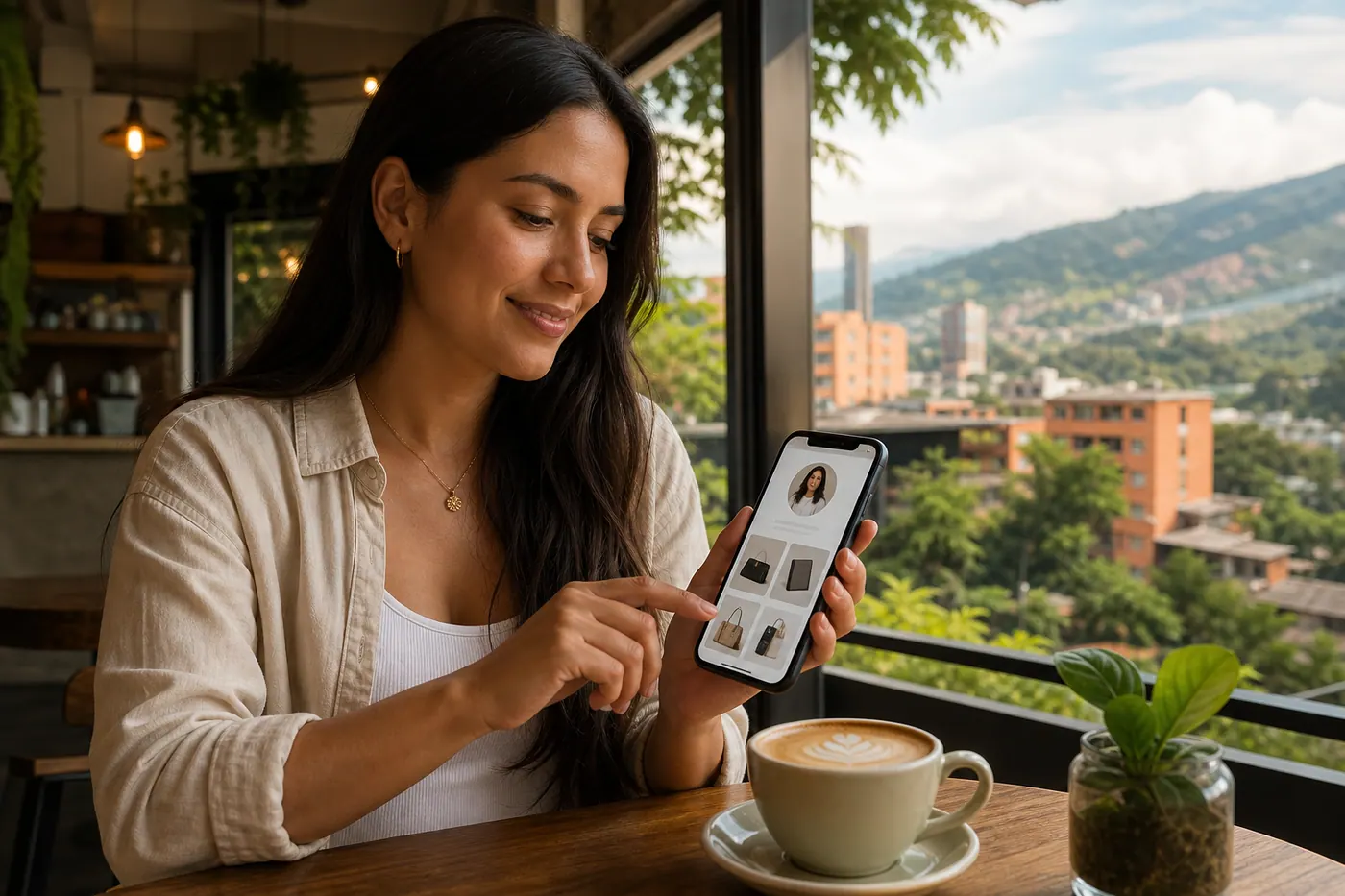
A real face photo changes things immediately. Buyers make snap judgments, and a blank silhouette avatar reads as: nobody's home. It doesn't need to be a professional headshot. A clear, recent photo where your face is visible is enough. If you'd rather not use a personal photo, use a business logo or a shot of your actual space. Anything beats the default gray circle.
Name and bio
Use your real first name, at minimum. "Juan" or "Maria" is infinitely more convincing than "Seller2024" or a username that looks auto-generated. If you're a small business or freelancer, say that clearly.
The bio doesn't need to be long. Two or three sentences: who you are, what you typically sell, something that makes you feel like a real person. "Vivo en Laureles, vendo ropa y electrodomésticos que ya no uso" is perfect. It's specific, honest, and tells a buyer exactly what to expect from your storefront.
Your Listing IS Your Trust Signal
Buyers read your listing looking for reasons to trust you — not reasons to buy. The photos might convince them they want the item. The description convinces them to actually reach out.
Be honest about condition — specifically
"Good condition" is the three most useless words in online classifieds. Every seller uses them. They communicate nothing. What builds trust is specificity that includes the imperfections. "Screen has a very minor scratch on the bottom-right corner — visible only in certain light, doesn't affect the display" is a sentence that gets replies. It says you're not hiding anything. It says the buyer won't be surprised when they arrive. The counterintuitive truth: admitting a flaw makes buyers more likely to trust everything else you say, not less.
Explain why you're selling
This gets skipped constantly. Buyers who don't know why you're selling will invent a reason — and it won't be flattering. "Moving to Bogotá," "bought a new model," "no longer fits our space" — one honest sentence eliminates a lot of silent suspicion. It doesn't need to be a long explanation. It just needs to be there.
How You Communicate Matters More Than What You Say
Your first response to a buyer message is the moment trust either happens or it doesn't. Reply within 30 minutes during the day if you can — not because buyers are impatient (some are, most aren't), but because a fast response signals that you're real, organized, and worth dealing with. If you can't reply immediately, even "Hi — I'll confirm the details in an hour" buys you goodwill.
Be direct with information. When a buyer asks "Is the price negotiable?", answer it. When someone asks "Is administration included?", give the number. Vague answers — "we can discuss," "depends" — feel evasive even when that's not the intent. Specific answers feel confident. And confidence reads as legitimacy.
Don't oversell. One of the fastest ways to destroy a buyer's confidence is to respond to every question with "Yes, of course!" and "It's in perfect condition!" Real sellers are willing to say "actually, you should know that..." Buyers who sense someone is withholding information tend to walk away, even if the item is exactly as described.
Your Storefront Is Your Reputation Over Time
Your storefront at colombiamove.com/tienda/[username] isn't just a list of your current listings — it's the closest thing you have to a track record. Read more about what buyers actually look for in How to Spot a Good Seller Storefront in Colombia — the buyer's perspective is worth understanding from the inside.
A storefront with listings posted consistently over several months reads very differently from one that appeared this week with five items listed in a 20-minute window. The first looks like a real person who uses the platform regularly. The second triggers the bulk-scammer alarm in most buyers' heads, even if everything is legitimate.
- Keep listings updated — mark things as sold instead of deleting them. Sold listings show buyers your history.
- Don't post and disappear. Log in, respond to inquiries, update the price if something changes.
- Be consistent in how you write listings — format, tone, and response style. Buyers notice patterns.
The goal isn't to look like you have the biggest storefront. It's to look like someone who takes this seriously.
Getting Your First Review Without Gaming the System
The first review is the hardest because it requires completing a transaction before you have any reputation — and some buyers won't engage until you have at least one. The temptation is to ask a friend or family member to leave a review as a favor. I'd skip that. Buyers who look carefully can tell the difference between a review left by a genuine stranger and one that reads like a warm favor, and in a marketplace where reviews are supposed to mean something, gaming the system undermines the thing you're trying to build.
The actual answer: make one transaction so smooth that asking for a review feels natural. Be clear about pickup logistics before the buyer arrives. Have the item exactly as described, ready to go. Follow up with a quick "Thanks for coming — I'd appreciate a review if the experience was good" when the deal is done. Most people will. The first one tends to unlock a few more without any additional prompting.
For context on how the review system works from a structural standpoint, How Reviews Should Work in a Colombian Marketplace breaks down what verified reviews actually look like versus the gamed versions.
Seller Trust Checklist — Before You Publish
| What to check | Why it matters |
|---|---|
| Profile photo uploaded? | Blank avatars lose buyers before they read a word |
| Real name or business name? | Usernames that look fake make listings look fake |
| Bio filled out? | Even two sentences give buyers context |
| Specific condition noted? | Vague = suspicious; specific = transparent |
| Selling reason included? | Buyers who don't know why assume the worst |
| Price clarified (what's included)? | Ambiguity kills inquiries before they start |
| Responding to messages promptly? | Response time is itself a trust signal |
| Sold items marked as sold? | History shows you're a real seller, not a ghost |
Mistakes That Kill Buyer Confidence
A few patterns consistently drive buyers away before they've even sent a message:
Asking for advance payment before showing the item. This is such a common scam structure that even legitimate sellers who ask for a deposit upfront look suspicious. Offer to do the exchange in person, or video-call to show the item is real before anyone sends anything.
Using someone else's listing photos. If your couch photo is also the cover of three other listings on the platform, buyers notice. Take your own photos — even mediocre originals are more convincing than obviously copied images.
Changing the price after a buyer has committed. Even with a legitimate reason, this immediately signals unreliability. If the price is firm, say so from the start. "Precio fijo" is two words that prevent hours of wasted back-and-forth.
Not updating sold listings. A sold item that's still showing as available wastes buyers' time and signals you're not paying attention. This damages credibility for your future listings, not just the stale one.
📖 Keep Reading
Still working on the listing itself? How to Write a Listing Description That Gets Messages — a practical framework for descriptions that actually get replies.
Frequently Asked Questions
❓ Do I need to verify my identity to sell on Colombia Move?
No — Colombia Move doesn't require government ID verification to post. But a completed profile with a real photo and name works as informal verification. Buyers are far more likely to message a seller who looks like a real person than an anonymous account with a blank profile.
❓ How many reviews do I need before buyers trust me?
One is enough to break the ice. Two or three and most buyers stop counting. Focus on making the first transaction smooth rather than trying to accumulate reviews quickly. Quality matters more than volume here.
❓ Should I include my WhatsApp number directly in the listing?
You don't need to — Colombia Move connects buyers to sellers via WhatsApp natively through the listing contact button. Adding it directly to the text can attract spam inquiries. Let the platform handle contact routing and focus your energy on the profile and description instead.
❓ Can I build trust without any reviews at all?
Yes. A complete profile, honest descriptions, fast responses, and a storefront with some listing history compensate for an empty review section. Reviews help, but they're not the only signal buyers look at — and a strong profile often matters more to first-time buyers than a handful of five-star ratings.
❓ What if a buyer lowballs me and I want to hold firm on price?
Say it directly: "The price is firm" or "Precio fijo, lo siento." Buyers respect directness more than a long back-and-forth. If you're genuinely open to offers, say that instead — "open to reasonable offers" invites the right conversations without attracting absurd ones.

Comments
Loading comments...
Checking sign-in status...