
How to Spot a Good Seller Storefront in Colombia
Before messaging any seller in Colombia, their storefront tells you more than you'd think — if you know what to look at.
IDIOMA DEL ARTÍCULO
Showing original language
The first time I bought something from a seller in Colombia without checking their storefront first, it didn't go well. We'd agreed on a price for a second-hand fridge — decent photos, WhatsApp number in the listing, reasonable ask. I showed up. The fridge was technically functional if you define functional as "making a sound," and the seller had already gone back inside by the time I realized the compressor sounded like a dying motorcycle.
The frustrating part? There were signs. Not obvious scam signals — the listing wasn't fake. But the seller had no review history, two listings posted the same week, and no other context I could check. I assumed the photos were enough. If you want to see real-world options right now, you can browse cars and motorcycles on Colombia Move — posting is completely free.
They weren't. Thirty seconds on their storefront would have told me more. Here's what to actually look at before you send that first WhatsApp message.
What a Seller Storefront Actually Shows You
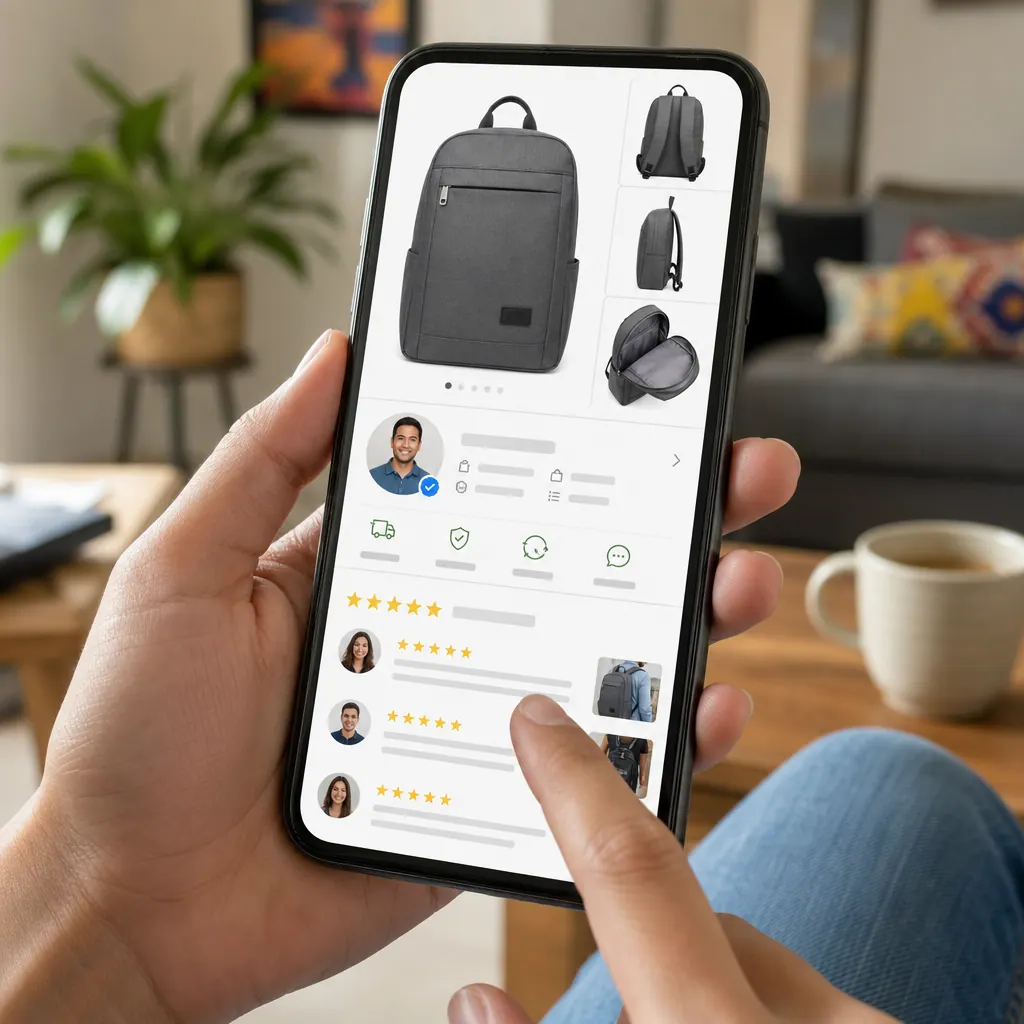
Every seller on Colombia Move has a public storefront at colombiamove.com/tienda/[username]. Unlike a single listing — which only shows you one item — a storefront gives you the full picture: all active listings, past listings, any reviews left by buyers, and trust badges the seller has earned.
Think of it as the difference between meeting someone at a one-off garage sale versus walking into their actual shop. The shop tells you whether they take this seriously.
A storefront link appears directly on every listing. Click through from the listing to the seller's profile. It takes 30 seconds and can save you a frustrating afternoon — especially if you're checking out on Search by Neighborhood, where the map shows storefronts alongside listings by area.
The Signals That Matter Most
Not every storefront looks alike, and the differences are worth understanding.
How long they've been active
A seller who joined last week and posted five listings all on the same day is a different risk profile from someone who's been active for eight months with a consistent posting history. Check the listing dates. Are they spread out over time? Or did everything appear in a single burst?
New accounts aren't automatically suspicious — everyone starts somewhere. But a new account selling a high-value item (a car, jewelry, an expensive phone) with zero history should put you on alert. Ask more questions before committing.
Listing quality across the board
Look at the seller's other listings, not just the one you found. Do they write real descriptions? Do the photos look like they were taken with the actual item — real backgrounds, real lighting — or are they clearly copied from somewhere else?
Sellers who put effort into every listing tend to put effort into the transaction. The reverse is also true: a storefront full of three-sentence listings with obviously stock photos is a sign they're not particularly invested in the interaction going well.
Reviews and response badges
If the seller has received reviews, read them. Not just the star count — read the actual text. A "great seller, responded fast, item as described" review carries real weight when it comes from someone who completed an actual transaction.
A total absence of reviews isn't disqualifying. Most happy buyers don't circle back to leave one. But a seller who's been active for months with no reviews at all is worth scrutinizing a little more closely.
The Red Flags Worth Taking Seriously
These aren't automatic "this is a scam" signals, but they're worth pausing on before you send any money or commit to a meetup:
- Only one listing, posted recently. A seller with a single listing and no history could be legitimate — or could be testing the water before disappearing. Especially concerning for expensive items.
- No contact info visible. Legitimate sellers want to be reached. Sellers who make contact unnecessarily difficult usually have a reason.
- Price is significantly below market. Colombia's second-hand market does produce real bargains, but if the price on a recent iPhone is 40% below anything comparable, someone is going to end up holding the bag — and it usually isn't the seller.
- Generic or mismatched photos. If you can right-click the image and find it on a retailer's website, stop right there.
- Listings that disappear fast, repeatedly. A pattern of listings posted and marked sold within hours — over and over — can signal fictitious urgency being used to rush buyers.
For a broader look at what to watch out for across Colombian classifieds, the scams targeting foreigners in Colombia post and
For a broader look at what to watch for across Colombian classifieds, see Scams in Colombia Targeting Foreigners and Cómo Evitar Estafas al Comprar por Facebook Marketplace — both cover patterns that show up across platforms, not just Colombia Move.
How to Use the Storefront to Negotiate Better
Here's something most buyers don't think about: a well-filled storefront gives you negotiating information, not just trust signals.
If a seller has had the same item listed for six weeks with no movement, they're probably open to a lower offer. The storefront shows how long each listing has been active. Someone who just posted yesterday has no urgency. Someone whose listing has been sitting there since March is likely more flexible.
Conversely, if a seller is clearly active — new listings going up regularly, reviews coming in, fast response badges — they probably move inventory consistently and have less reason to discount. Either way, you're negotiating from information rather than guessing.
📖 Keep Reading
Colombia Move's review system is designed to make unearned reviews structurally harder — not just flagged after the fact. Here's how it works:
How Reviews Should Work in a Colombian Marketplace →When There's No Storefront to Evaluate
Not every seller in Colombia uses Colombia Move. If you're buying through WhatsApp groups, Facebook Marketplace, or other platforms without storefront profiles, you're back to relying on instinct plus whatever the listing itself tells you.
In those cases: meet in person in a public place for anything of real value, check if the Facebook profile looks like a real person (years of activity, mutual contacts, photos over time), and avoid any seller who creates urgency before you've had a chance to think.
For anything over $100,000 COP — roughly $25 USD — it's worth the extra ten minutes of due diligence. The storefront check is free. The fridge mistake isn't.
Frequently Asked Questions
❓ What is a seller storefront on Colombia Move?
It's a public profile page at colombiamove.com/tienda/[username] that shows all of a seller's active and past listings, any buyer reviews, and trust badges. It gives you a complete picture of the seller before you make contact — something a single listing can't do.
❓ How do I find a seller's storefront?
From any listing on Colombia Move, click through to the seller's profile. The storefront URL follows the format colombiamove.com/tienda/[their-username]. You can also reach it from the neighborhood map view or by searching for a seller directly if you already know their username.
❓ Are reviews on Colombia Move reliable?
The review system is designed to anchor feedback to real transactions rather than letting anyone leave a review on any seller. That said, reviews are still relatively new in Colombian online classifieds — many legitimate sellers simply haven't accumulated many yet. Absence of reviews doesn't mean a seller is untrustworthy; it often just means their buyers didn't circle back.
❓ What should I do if a seller has no storefront history?
Ask more questions before committing. Request additional photos taken specifically for you — not stock shots. For expensive items, propose meeting in a public place. Any legitimate seller will agree without hesitation. If they push back on a reasonable request like that, you have your answer.
❓ Can I leave a review after a completed transaction?
Yes — after buying from a seller on Colombia Move, you can leave a review on their storefront page. Honest reviews help the whole community make better decisions, and they particularly matter for sellers who are still building their reputation. If a transaction went well, a quick review takes two minutes and makes a real difference.
Have you caught a red flag on a storefront that saved you from a bad deal? Or found a seller whose profile gave you the confidence to go ahead? Drop a comment below — real experiences are more useful than any checklist. And if you're mid-purchase and want a second opinion, the Colombia Move community at colombiamove.com/comunidad is a good place to ask.

Comments
Loading comments...
Checking sign-in status...