
How to build trust as a seller in Colombia
Selling online in Colombia isn't difficult. What's difficult is getting people to believe you. Here I explain how to build real trust as a seller — without tricks or empty words.
IDIOMA DEL ARTÍCULO
Showing original language
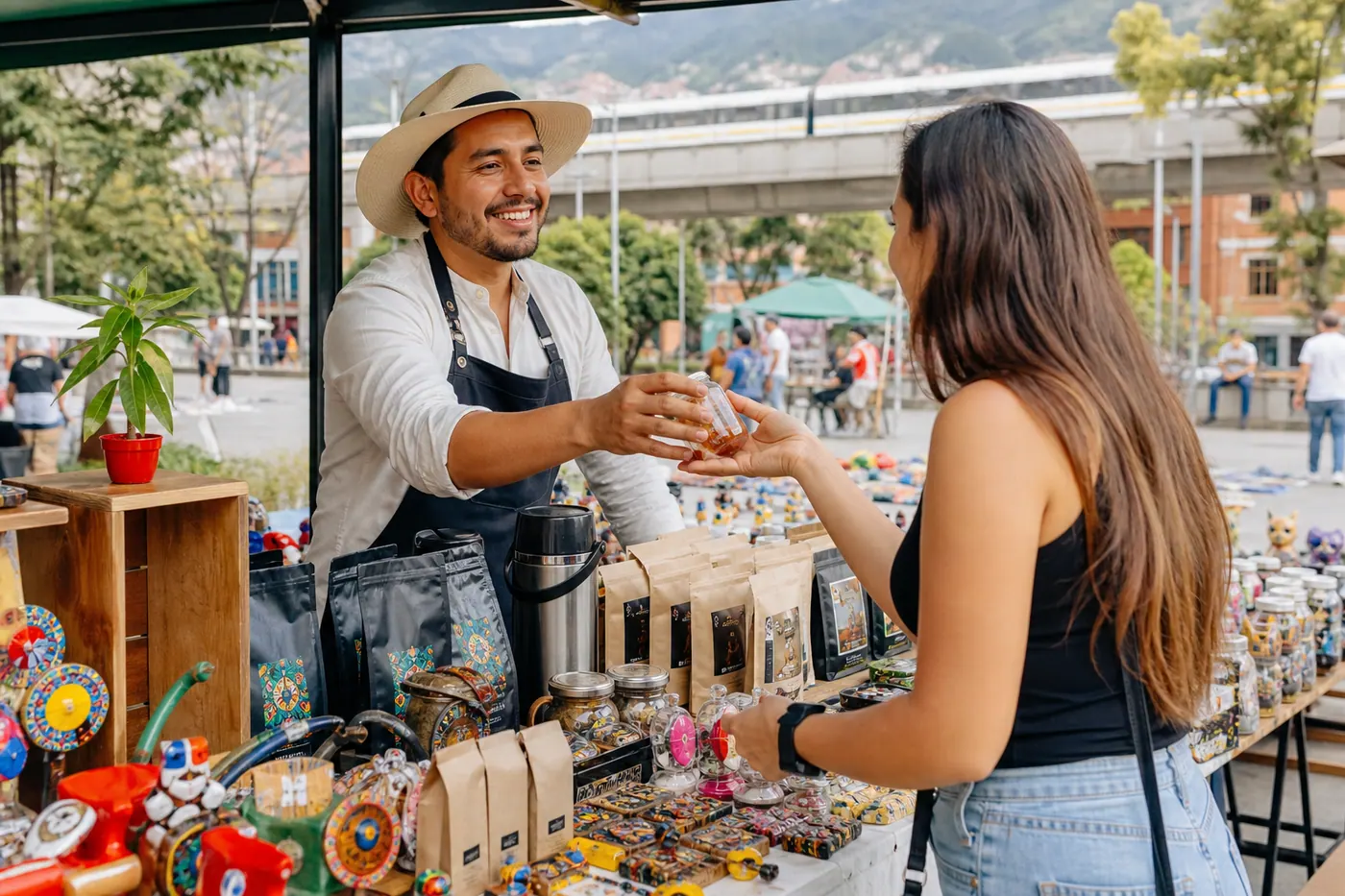
A friend was selling a stove in good condition for 250,000 pesos. Fair price, decent photos, everything was there. Ten days went by and nobody had messaged him. I checked his ad and the problem was obvious: his profile was completely empty — no photo, no name, no history. The ad was floating on the internet as if it had no owner.
I told him to put up a photo of himself, his first name, and a line about him: "I live in Bucaramanga, selling things I don't use anymore." In two days, he had two interested messages. The ad hadn't changed. He had.
That sums up the most important difference between sellers who get messages and sellers who don't: trust doesn't come from the product — it comes from the person behind the product. This article is about how to build that.
The essentials before posting
- Put your real name and a profile photo where your face is visible
- Mention your city or neighborhood in your bio — two lines are enough
- Write honestly about the item's condition, including minor flaws
- State why you are selling it — a single sentence eliminates the most common suspicion
- Reply within the first 30 minutes if you can — that says more than any description
The buyer already arrives distrustful — and it's not a whim
Colombia has a relatively young online classifieds culture. Most people have heard at least one story of an advance payment that never arrived, a product different from the one in the photo, or a seller who disappeared after the first message. It's not paranoia — it's the accumulated experience of a developing market.
When someone opens your ad, their initial stance is "let's see what's weird about this." Your job isn't to convince them the product is good. First, you have to convince them that you are real. Those are two different things, and the second one comes first.
The good news: most sellers do absolutely nothing to build trust. They don't fill out their profile, they don't explain why they are selling, they don't reply quickly. If you do four or five things right, you're already ahead of ninety percent of the market — and it shows in the messages you receive.
Your profile speaks before any description
The first place a buyer evaluates you is not the ad — it's your profile. And most sellers leave it empty. That's a mistake that costs sales every day.
Real profile photo
It doesn't have to be a professional photo. A clear photo showing your face is enough, or if you have a business, your company logo or a photo of your workspace. What doesn't work — what actively generates distrust — is the default gray icon. To the buyer, that gray icon says only one thing: I don't know if this person exists.
If you don't want to use a personal photo, use one of the workshop, the store, or a tidy garage. Any image that says "there is a real person here" is better than an empty icon.
Name and bio in two lines
Use your first name, at least. "Carlos" or "Valentina" generates more trust than "Seller123" or "Business_CO_2024." If you have a business, make it clear with the trade name.
The bio doesn't need to be long — one or two lines are sufficient: who you are, what kind of things you sell, and where you're from. "I live in Cali, I sell clothes and appliances I don't use anymore" is perfect. It's specific, honest, and tells the buyer exactly what to expect. Mentioning the neighborhood or city also filters out unnecessary questions — nobody wants to write to a seller in Ipiales if they live in Medellín and the item weighs 20 kilos.
The ad as a sign of honesty
The ad isn't just to show the product — it's to show what you're like as a seller. A buyer who reads a well-written and honest description feels something different than one who reads "good condition, ask." That difference is trust, and it translates into messages.
Be specific about the condition — include the bad
"Good condition" are the three most useless words in Colombian classifieds. Everyone uses them. They don't say anything. What builds trust is specificity, including imperfections: "The screen has a small scratch in the bottom right corner — visible only at a certain angle, it doesn't affect functionality." That sentence makes the buyer trust everything else you say.
The paradox: admitting a minor flaw increases the overall credibility of your ad. If you mention the bad, the buyer assumes the good is also true. If you don't mention anything bad, they start wondering what you're hiding.
Explain why you are selling it
This step is constantly skipped and it is one of the most important. If you don't say why you're selling, the buyer invents their own reason — and it's rarely favorable. "I moved to a smaller apartment," "I bought a new one," "I don't need it anymore," "my child grew out of it" — a single sentence is enough. It eliminates the most frequent suspicion: that something is wrong with the item or that the seller is in a hurry for shady reasons.
📖 Keep reading
How to write an ad that actually generates messages — the practical formula for making your description do its job.
How you reply — and how quickly
The first message you send a buyer is the moment where trust happens or doesn't. Not the ad, not the profile — the first real exchange in real-time.
Reply within the first 30 minutes if you can, at least during the day. Not because the buyer is impatient, but because a quick response says: I'm real, I'm attentive, this transaction is going to be orderly. If you can't reply immediately, a simple "Hi, I'll confirm the details in an hour" already changes the perception completely. A six-hour silence, on the other hand, makes the buyer look for the next option.
When you suggest meeting, be specific: a named shopping center, the specific entrance of a metro station, a recognized chain store in a certain neighborhood. "We can meet at CC El Tesoro, main entrance, Saturday at 3 pm" inspires more trust than "in Medellín, wherever you are." A concrete place says you've done this before.
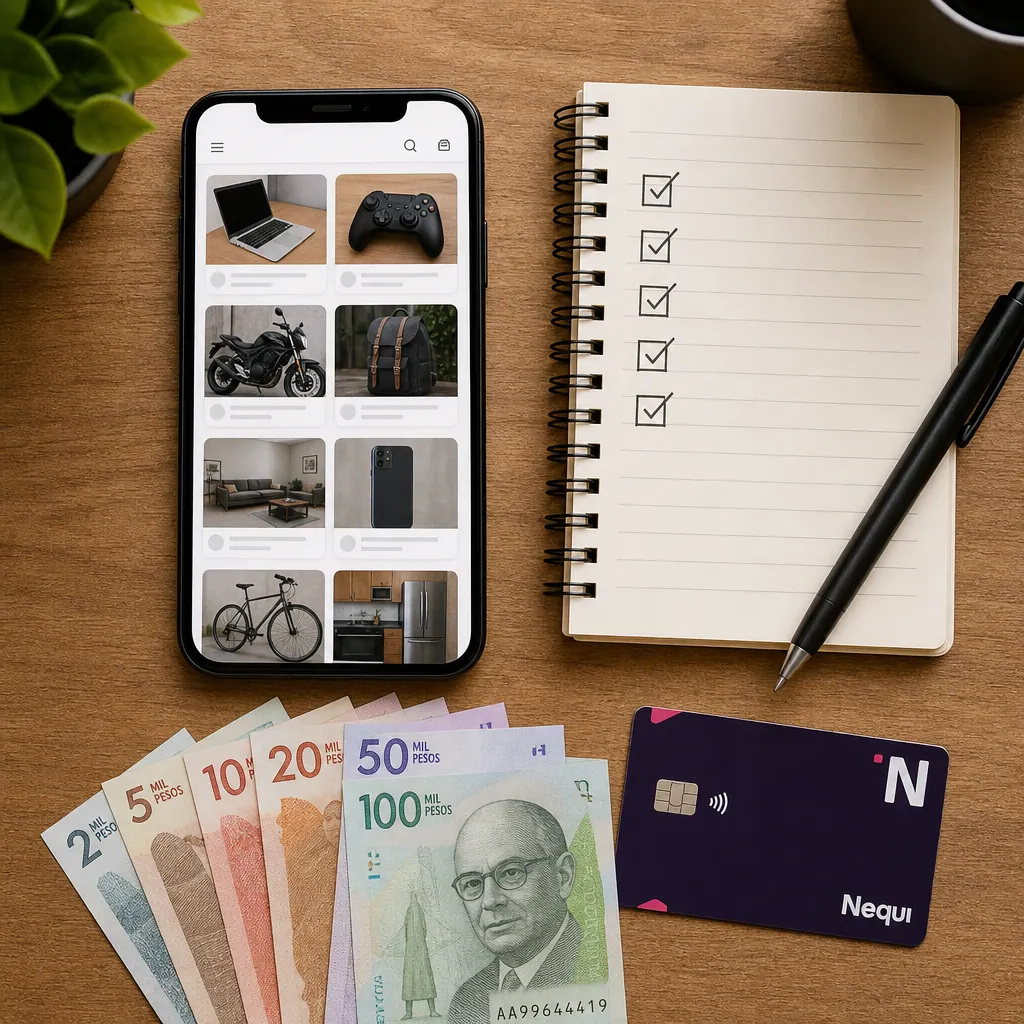
For payment, mention which options you accept before the buyer asks. Nequi, Daviplata, cash — being explicit about this eliminates unnecessary friction. Buyers who use Nequi or Daviplata appreciate knowing in advance because it avoids the awkwardness of asking if it's available, and because a recorded digital transfer provides security to both parties.
Your store: the history that speaks for you
Every ad you post and every transaction you complete builds something more important than any individual description: a visible history. A profile with ten ads, some sold, some active, and a creation date of several months ago reads differently than a profile created three days ago with only one ad. The first says "this person has been doing this for a while." The second might be completely legitimate, but it raises more questions.
If you are just starting out, it helps to say it directly: "I am a new seller on this platform, but I can meet in a public place and I accept Nequi." That transparency makes up for a short history better than any evasion.
As you complete sales, ask for reviews without pressure. A simple post-sale message works well: "Thanks for the purchase! If you have a minute, a review would really help me out." Most satisfied buyers are willing to leave one if you ask them — and they won't do it if you don't.
📖 Keep reading
How to tell if a seller's shop is trustworthy — what buyers look for when they land on your profile.
The first sale — tip the scales in the buyer's favor
The first transaction is always the hardest because you don't have a history to back up what you say. The buyer has to trust your profile and your listing without any background. Compensate for this with extra transparency and flawless logistics.
Propose a well-known public place without the buyer having to ask you for it. Accept the payment method they prefer if you have options. And if the buyer arrives with a family member or a friend, don't take it as a personal sign of distrust — it's normal and it's sensible. You would do the same in their place, stay sharp.
The goal of the first sale isn't to maximize the price or save time — it's to make the transaction so clear and easy that the buyer has no reason to doubt. With that, you have your first review, your first history, and the second sale will come with less friction.
Frequently Asked Questions
❓ Do I need to provide my real name to sell in Colombia?
It is not mandatory, but it does make a real difference in how many messages you receive. A seller with a first name generates more trust than one with a generic nickname or a numeric username. It doesn't have to be your full name — just a first name is enough to show there is a human behind the profile.
❓ How do I build trust if I'm a new seller without a history?
Be more transparent than usual: fill out your profile completely, mention that you are new, and offer to meet in a well-known public place. That combination of transparency and clear logistics compensates for a short history. A clean first transaction is worth more than any witty description.
❓ Which payment methods generate the most trust in Colombia?
Nequi and Daviplata are familiar to most Colombian buyers and leave a record of the transaction, which reduces the fear of fraud. Mentioning them in the listing — before the buyer asks — is a sign of being organized. For large amounts, a registered bank transfer provides more security to both parties than cash.
❓ How many photos should I include in my listing?
Between four and eight real photos — not stock photos or ones taken from the internet. Show the item from several angles, include a photo of any defect you mention in the description, and if it is an electronic device, photograph it turned on. Paradoxically, the photo of the defect is what builds the most trust because it shows you aren't hiding anything.
❓ Does it help to mention my neighborhood or city in the listing?
Yes, quite a bit. Saying "selling in Laureles, Medellín" saves the buyer a question and filters out those who cannot travel to you — which reduces messages from people who were never going to buy anyway. It also gives the buyer context about who you are and where you are, which adds to the general perception of transparency.


Comments
Loading comments...
Checking sign-in status...