
How to Get Your RUT at the DIAN Step by Step (Individual)
Step-by-step guide to registering your RUT at the DIAN as an individual: what documents you need, how the online process works, and the most common errors that delay the process.

IDIOMA DEL ARTÍCULO
Showing original language
The RUT (Single Tax Registry) is one of those procedures that sooner or later almost everyone in Colombia has to deal with: if you are going to work as a freelancer, need to receive payments from a company, open a business account, or simply operate legally as an individual. And although it sounds complicated, in many cases you can do it from home in less than 30 minutes.
What causes the most confusion is not knowing whether you have to go in person to the DIAN or if the online process actually works. Additionally, there is a whole industry of 'intermediaries' that charges to get a document that is 100% free. This post explains exactly how it works for individuals — with the real steps, no fluff. If you want to see real options right now, you can post your services for free on Colombia Move — posting is completely free.
If you are already a freelancer or are thinking about becoming one, you might also be interested in the guide on how to file taxes as a freelancer — but this post focuses only on the RUT registration process.
What is the RUT and what is it for?
The RUT is the registry that identifies you before the DIAN (Directorate of National Taxes and Customs). It is basically your player card in the Colombian tax system — without it, you cannot issue electronic invoices, nor can a company formally draw up a service contract with you.
You need it when: you are going to issue invoices as a freelancer, a corporate client asks for your RUT to withhold taxes at the source, you are going to open a business bank account, you want to be hired under a service provision regime, or you are a resident foreigner and will receive income in Colombia.
An important clarification: the NIT for an individual IS your national ID (cédula) number. You do not receive a different number. What changes is that this number is activated at the DIAN with your economic activities and registered tax responsibilities.
Who is required to have a RUT?
Every person or company that carries out economic activities in Colombia is required to register in the RUT. In practice, many employees in an employment relationship never need it because their employer takes care of everything. But if you work under a service provision contract, the story changes.
You definitely need a RUT if: you work under a service contract (not an employment one), you invoice or are going to invoice clients, you export or import goods, you carry out foreign exchange operations, or you are a pensioner with additional income.
You can get it voluntarily even if you are not 'required' to. For example, if you are an employee but also generate extra income as an occasional freelancer, having an active RUT gives you more options and avoids unnecessary withholding.
Documents you need before you start
For a Colombian individual: valid national ID (cédula), notification address (can be your current residence), an active email address to which you have immediate access, mobile number, and if you want to include bank details for payments, the name of the bank and account number (not mandatory).
For a resident foreigner: valid passport, Foreigner's ID (Cédula de Extranjería) with NUI number, and an address in Colombia. In this case, the NIT is linked to the number of the Foreigner's ID.
Have all of this on hand before you start the process. It seems obvious, but more than one person starts without the exact address and loses their progress. The Muisca system has a timeout, and if you leave it open too long without completing it, you have to start over.
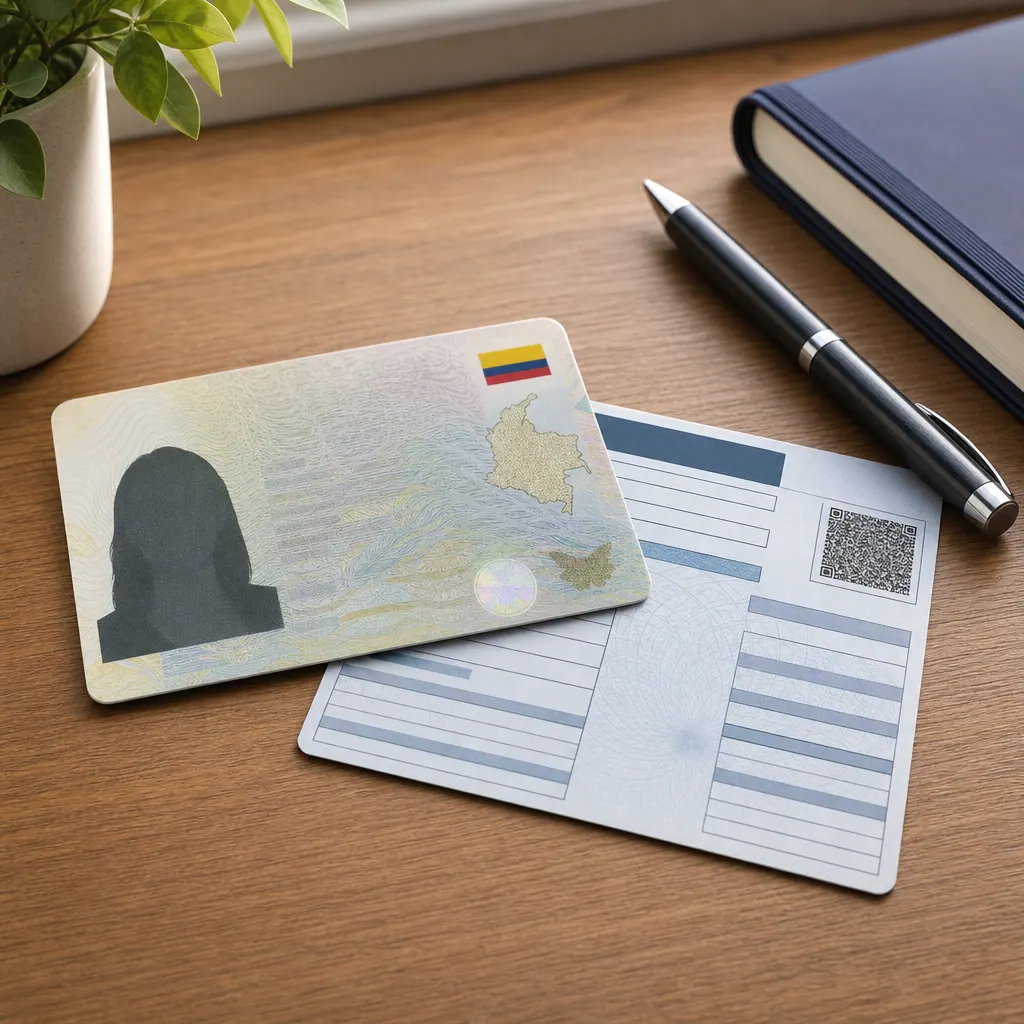
How to get the RUT online step by step
The DIAN allows you to register the RUT virtually in most cases. Here is how it works:
Step 1: Enter the Muisca portal
Go to muisca.dian.gov.co. If you have never had a RUT, look for the 'Inscripción RUT' (RUT Registration) option — not 'update'. If the system shows you a previously saved draft, you can pick up from there.
Step 2: Select Individual (Persona Natural)
It will ask for the type and number of your document. Enter your ID exactly as it appears, without dots or spaces. The system verifies it against the National Registry (Registraduría).
Step 3: Fill out Form 001
This is the official RUT form. The key sections are: identification data (name, ID, date of birth), geographic location (municipality, address, phone), economic activities (CIIU — more on this below), tax responsibilities, and representative data if applicable.
Step 4: Activate the electronic signature
For the RUT to be active without going in person, you must have an electronic signature from the DIAN. If you have never activated it, the system guides you to create it — you need the code that will arrive at the email you registered. This is where many people get stuck: if the email is not written correctly or you do not have immediate access, the process fails.
Step 5: Download your RUT
Once signed and submitted, the system generates the PDF with a barcode. Download it immediately and save it in a safe place. That PDF is your official RUT and is what you will send to your clients.
Note: There are cases where the DIAN requires physical presence — mainly if you have responsibilities 05 (VAT responsible regime), 10 (withholding agent), or 11 (exogenous information reporter). For a basic freelancer who starts without VAT responsibility, the online process works well.
📖 Keep reading
Do you already have the RUT and want to understand which taxes apply to you as a freelancer?
Read the complete tax guide for freelancers →CIIU codes: how to choose the right one
The CIIU (International Standard Industrial Classification) is the code that describes your economic activity. Choosing it correctly matters because it determines the withholding rate that will be applied to you, affects how the DIAN classifies you for income tax filing, and can cause inconsistencies if you bill services for one sector but have the code for another.
Some common examples: 7490 (other professional, scientific and technical activities — widely used by generic freelancers), 6201 (computer programming activities — programmers and devs), 7311 (advertising — marketing, designers), 8690 (other human health activities — independent health professionals), 7020 (business management consultancy).
You can have more than one CIIU code if you offer services in several sectors. To find the exact code, search for 'tabla CIIU Colombia DIAN' — the DIAN publishes the complete updated list. If you have questions about which one to use, it is a good question for an accountant or for the Colombia Move community.
Tax responsibilities: which one applies to you?
Tax responsibilities are the specific commitments you assume before the DIAN. The most common ones for a new independent individual are:
Responsibility 05 (VAT): If your services are subject to VAT and you exceed the limits. Most new freelancers operate as non-VAT-responsible if they do not exceed 3,500 UVT annually in taxable services. If you are non-responsible, you DO NOT charge VAT and do not have to declare it.
Responsibility 07 (Simplified Tax Regime): If you opted for the SIMPLE regime, you register here. This applies to independent workers who meet the requirements and prefer a unified scheme. It is not for everyone — consult with an accountant before choosing it.
Responsibility 11 (Exogenous Information Reporter): If you exceed certain income or net worth thresholds during the year, you must report exogenous information. The DIAN may assign you this code later if you qualify.
For most new freelancers, they start without VAT responsibility and without the simplified regime. As their income grows, they update their RUT.
How to download the updated RUT
The RUT is not a static document. Every time you change your address, add an economic activity, or modify any tax responsibility, you must update it and download the new version with the updated barcode.
To download it: go to muisca.dian.gov.co with your electronic signature, go to 'RUT Consultation and Update', verify that the data is correct, and download the PDF. That is the official and current one.
Practical tip: if you send a client an old PDF and your data has changed (for example, the address), inconsistencies in withholding or document validation may arise. Always download the most recent one before sending it.
Common mistakes when getting the RUT
Outdated address: The DIAN uses that address to send you notifications and resolutions. If you move and don't update it, communications will arrive at a place that is no longer yours.
Incorrect email: The electronic signature activation code is sent to the email you registered. A typo and the process stops there. Double-check it.
Incorrect CIIU code: Choosing 'retail trade' when you are a consultant has no immediate consequences, but it creates inconsistencies when filing tax returns or when the client verifies your activity.
RUT as a draft: If the online process does not end with the electronic signature, it remains saved as a draft. It is not valid as an official document until it is signed and the final PDF is generated.
Paying intermediaries: The process is completely free. There is no step in the DIAN process that requires payment. If someone charges you to get or update your RUT, it is a private individual profiting from something you can do yourself.
When and how to update it
Update the RUT whenever: you change your address, add or change an economic activity, become responsible for VAT (or stop being one), register for the Simplified Regime, or change your email or phone number.
The process is the same as registration: go to Muisca, modify the necessary data, sign electronically, and download the new PDF. In most cases, you do not have to go in person.
📖 Keep reading
Do you have everything ready to work as an independent? Learn how to publish and promote your services in Colombia.
Guide for independent workers in Colombia →Frequently asked questions about the RUT in Colombia
❓ Does the RUT have any cost?
No. The registration and update of the RUT at the DIAN is completely free. Any person or company that charges you for doing it is a private intermediary who is profiting from a public service.
❓ Can a foreigner residing in Colombia get a RUT?
Yes. You need a valid passport and an Alien ID Card (Cédula de Extranjería). Your NIT will be associated with the alien ID card number. If you don't have an alien ID card yet but you have a visa, consult with the DIAN — the process may vary.
❓ I am an employee with an employment contract. Do I need a RUT?
If you receive only a salary from an employer, you normally do not need it for that income. But if you also have income as an independent or occasional freelancer, it is convenient to have it active to avoid non-registered withholdings that can reach 11% of the service value.
❓ My client asks me for the RUT but I don't have one. What do I do?
Get it before issuing your first invoice or receiving your first payment. If you don't have it, the client can withhold tax as a 'non-registered' party — a higher withholding than the standard one. The process can be ready the same day if you do it virtually without any hiccups.
❓ What happens if I put the wrong CIIU?
There is no automatic penalty, but it can cause inconsistencies in the withholdings applied to you and in your tax return. If you realize it later, update it on the Muisca portal. For services sector activities, code 7490 (other professional activities) is the most generic and the one most used by freelancers who do not know exactly which one corresponds.
Ready to take the step?
The RUT is the first step to operating legally as an independent in Colombia — and the good news is that the process is within reach of anyone with an internet connection. What slows people down the most is the electronic signature, so make sure you have immediate access to the email you are going to register.
If you already have (or are going to have) your RUT and you are thinking of offering services on your own, take a look at the guide for freelancer vs employee in Colombia — it helps you decide which legal structure suits you best according to your situation.
Did you have any trouble processing the RUT? Was the portal down or did the electronic signature not work? Tell us in the comments — it's one of the things that happens to many people, and sharing the experience helps those who come after.




Comments
Loading comments...
Checking sign-in status...