
Property Tax in Colombia: How much is paid by city and when
Everything you need to know about the property tax in Colombia: how it is calculated, when to pay in each city, how to take advantage of early payment discounts, and what happens if you don't pay.
IDIOMA DEL ARTÍCULO
Showing original language
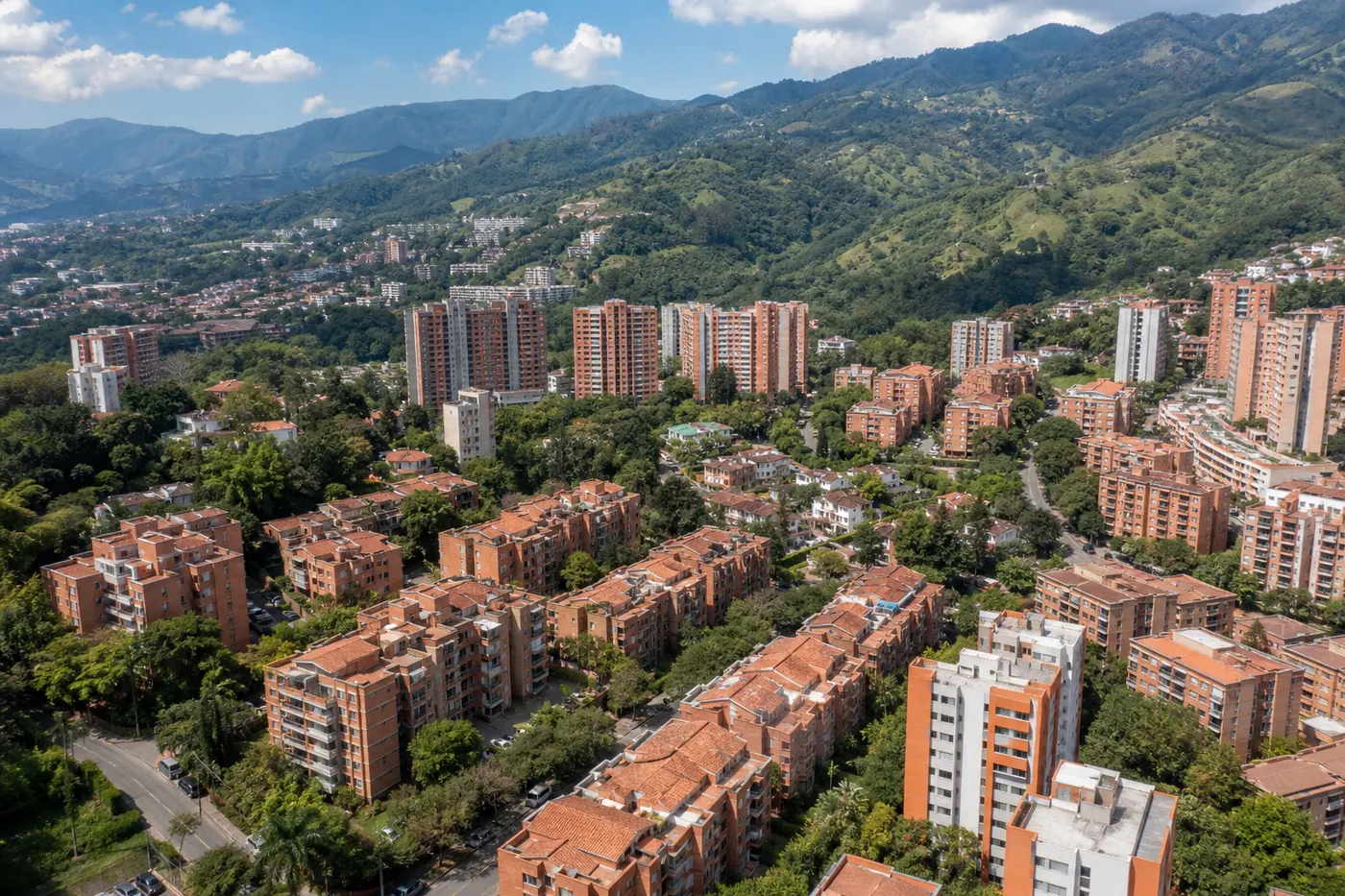
The first property tax (predial) bill I received after buying an apartment in Medellín almost went unnoticed. It came integrated into the EPM utility bill, between the water and gas charges, without any special notice. If I hadn't reviewed it line by line, I would have stopped paying without even knowing it.
Property tax (impuesto predial) is the most important recurring tax obligation for any property owner in Colombia. Each city sets its own rates, payment dates, and discounts — and if you don't know how it works in your municipality, it's easy to miss the early payment discount, accumulate late interest, or arrive at a sale and discover that your tax clearance certificate (paz y salvo) isn't in order. If you want to check real options right now, you can browse apartments and houses on Colombia Move — posting is completely free.
This guide covers the essentials: what it is, how it is calculated, when to pay in each major city, and the consequences of not paying it. Exact rates vary each year by municipal resolution, so always verify the final amount on your city's portal before paying.
What is the predial and who is obligated to pay it?
The Unified Property Tax (Impuesto Predial Unificado) is a municipal tax levied on real estate — apartments, houses, commercial spaces, lots, farms. It is collected directly by each municipality, and the money goes to the local budget for infrastructure, public services, and social spending.
The person responsible for paying is the owner or possessor of the property as of January 1 of the fiscal year. This has an important implication for transactions: if you sold an apartment in October, you technically owe the full year's property tax because you were the owner on January 1. In practice, most sale and purchase agreements include a prorating clause — the seller pays up to the deed date and the buyer covers the rest. If the contract doesn't clarify this, the issue becomes confusing.
The tenant does NOT pay the predial. The obligation lies with the owner toward the municipality. Some landlords include the property tax in the calculation of the monthly rent, but if there is outstanding debt with the mayor's office (alcaldía), that debt is the owner's responsibility.
Important distinction: the predial is different from the transfer tax and closing costs (notary, registry). Those are one-time costs when you buy or sell. The predial is annual and recurring as long as you are the owner.
How is the property tax calculated?
Taxable base: the cadastral appraisal (avalúo catastral)
The predial is calculated based on your property's cadastral appraisal, not its commercial price. The cadastral appraisal is the value assigned to the property by the Colombian cadastral system (IGAC or the delegated municipal entity). In many cities, this value has historically been below market value — although that is changing fast with cadastral modernization (more on that below).
The basic formula is: Predial = Cadastral appraisal × Rate. The rate depends on the socioeconomic stratum (estrato) and the use of the property.
Rates by stratum and use
Each municipality sets its rates by annual decree, but as a general reference: strata 1 and 2 pay between 0.3% and 0.5% of the cadastral appraisal per year; strata 3 and 4, between 0.5% and 1.0%; and strata 5 and 6, between 1.0% and 1.6%. Commercial and industrial properties have higher rates, which in some cities reach up to 3.3%.
To give you a concrete idea: an apartment with a cadastral appraisal of 250 million pesos in stratum 4 in Bogotá might pay between 1.5 and 2.5 million pesos annually in property tax. In Medellín, with similar rates, the amount would be in similar ranges. The percentage seems low, but on properties with high cadastral value, the accumulated total matters.
Environmental surcharge
In addition to the base predial, practically all municipalities include an environmental surcharge (or firefighter surcharge) that goes to the regional environmental corporation — Cornare, Corantioquia, CAR, CVC, depending on the area. It is between 1% and 3% of the base predial and appears automatically on your bill. There is no way to avoid it; it is part of the total to be paid.
Predial by city: schedules, discounts, and payment portals
Here is the practical difference. Each city has its own platform, its own dates, and its own discount conditions.
Bogotá (District Secretariat of Finance): The district sends the bills in January. You can pay in a single installment with a 10% discount if you do it before the end of February, or in up to four installments during the year without a discount. The platform is bogota.gov.co/hacienda. You need your property's cadastral ID number (cédula catastral) to check your account status.
Medellín (integrated into EPM): The city of Medellín collects the predial within the unified EPM bill — the same receipt where water, gas, and energy arrive. Many owners miss it because they don't expect it there. Early payment discounts are usually available until April. You can also check and pay directly at medellin.gov.co or on the EPM app.
Cali (Municipal Treasury): Bills arrive starting in February. There is a discount between 10% and 15% for payments made in the first quarter of the year. The portal is hacienda.cali.gov.co and you need your property's real estate registration number (matrícula inmobiliaria). If you live outside of Cali and own property there, set a reminder — it's easy to forget.
Cartagena: The Cartagena Treasury Secretariat also opens the bill starting in February. There is a discount for advance payment, usually until March. Portal: hacienda.cartagena.gov.co.
Barranquilla and Bucaramanga: Both cities follow a similar structure — a discount in the first semester and payment in installments possible during the year. The portals are haciendabarranquilla.gov.co and the Bucaramanga Treasury platform respectively. Bucaramanga in particular usually publishes its predial decree with a specific schedule in January of each year.
General rule for all cities: the early payment discount ranges between 10% and 15% and is available in the first 2-3 months of the year. That is real money. If your annual predial is 2 million pesos, paying in February saves you up to 300,000 pesos.
📖 Keep reading
Cadastral modernization 2024–2026: why your appraisal may have gone up
The Colombian government has spent several years updating cadastral appraisals under the Multipurpose Cadastral Update program. Bogotá, Medellín, Cali, and dozens of intermediate cities have already completed or are in the process of completing this update — which means thousands of owners are seeing their cadastral appraisal rise significantly, and with it, their property tax bill.
If your cadastral appraisal increased by more than 25-30% in a year, you have the right to file a motion for reconsideration with your municipality's cadastral entity. The process involves presenting sales comparables in your area to support that the new value does not reflect market reality. It is not always worth it for small differences, but in commercial or rural properties with disproportionate appraisals, the annual savings can be considerable.
If you recently bought and do not know what your current cadastral appraisal is, you can check it on the IGAC portal (igac.gov.co) or in your municipality's cadastral system. It is public information.
How to pay the predial
The options are the same in most cities. Through PSE on the official Treasury portal — the fastest way without traveling. At authorized banks (Bancolombia, Davivienda, Banco de Bogotá, Banco Popular, among others) with your payment reference number. In person at Treasury offices or municipal service points, although lines in February and March can be long. And in Medellín, directly from the EPM app along with other utility services.
Always save your payment receipt. When you go to sell the property, the notary's office requires the predial tax clearance certificate (paz y salvo) — and sometimes they ask for receipts from several years. Having those receipts organized avoids closing delays.
What happens if you don't pay the predial
The consequences escalate over time. In the short term, you accumulate late-payment interest — the rate is established in the Tax Statute and has historically been around the DTF plus 27 percentage points annually. This compounds month by month. A debt of 2 million pesos can turn into 4 or 5 million in two or three years without you realizing it.
If the debt persists, the municipality can initiate coercive collection — a legal process that can end in a lien on the property. It is not immediate, but it is real. I have seen cases of owners who found out about the coercive collection when they tried to sell and the notary detected the litigation on the certificate of tradition.
The most common and practical block: you cannot execute a deed for a sale or refinancing without a valid predial tax clearance certificate. It is a notary requirement. If you owe predial from previous years, that process stops until you pay off the complete debt with interest.
Predial when buying or selling
Buying: always request the predial clearance certificate before signing the promise to buy and sell. Not at the time of signing the deed — before. If the seller has predial debt, that debt can become your problem if you do not negotiate well who assumes it. Also verify the current cadastral appraisal: it gives you an idea of how much you will pay annually once you are the owner.
Selling: process the clearance certificate in advance. In some municipalities it takes 2-3 business days to be generated. Also check if a property remained active in your name after the sale. For complete guidance, this guide on how to sell an apartment without an intermediary in Colombia explains the documentation process step by step.
Farms and rural properties: the special case
Rural farms traditionally tend to have very low cadastral appraisals — the cadastral system has undervalued rural land in Colombia for decades. It is not uncommon to pay 200,000 or 300,000 pesos in annual predial for a farm worth 500 million on the market.
What might surprise you: municipal betterment contributions (valorización). Many municipalities impose betterment charges (road improvements, aqueducts, infrastructure) on rural properties that are not predial but arrive similarly. These are one-time or multi-year collections, and they can be several million pesos. Do not ignore them if they arrive.
If you have a productive farm, check if you qualify as an active agricultural land — some municipalities have reduced predial rates for properties in production. More details on buying a farm in Colombia, including predial and documentation.
📖 Keep reading
Frequently asked questions about the predial tax
❓ Does the tenant have to pay the predial?
No. By law, the predial is the obligation of the property owner, not the tenant. Some rental contracts include the predial within the monthly value paid by the tenant — but that is an agreement between the parties, not a legal obligation of the tenant toward the municipality. If the owner does not pay, the debt is yours, not the tenant's.
❓ Is there a predial discount for senior citizens or people with disabilities?
Yes, in several cities. Bogotá has a 100% exemption for senior citizens with a single real estate property and with income below a certain monthly threshold. Medellín has similar benefits. The procedure is done at the municipal Treasury Secretariat by presenting documentation of age, income, and property ownership. It is worth asking in your municipality — many qualifying owners do not know it.
❓ Are there predial exemptions for estratos 1 and 2?
Yes. The rates for estratos 1 and 2 are significantly lower than for higher estratos, and in many municipalities there are partial or total exemptions when the cadastral appraisal of the property is below a certain amount. Check your municipality's annual predial decree to see if your property qualifies.
❓ Can the predial be paid in installments?
Yes. Most cities allow payment in two or more installments during the year. Bogotá accepts up to four. The disadvantage is that you lose the early payment discount. If you can pay in January or February, the 10-15% savings accumulates year after year and is real money, especially in properties with a high appraisal.
❓ I bought an apartment and the predial bill never arrived. Do I still have to pay?
Yes. The obligation exists even if you did not receive a bill. The municipality may have sent the bill to the old address or to the owner registered in the cadaster before the change. The solution: enter your city's Treasury portal, search by real estate registration number (matrícula inmobiliaria) or ID number (cédula), and check if there is a pending balance. Interest runs from the due date, not from when you received the notification.
If you have questions about predial, deed procedures, or any aspect of buying or selling property in Colombia, the Colombia Move community is available at colombiamove.com/comunidad — you can consult directly or read questions from other owners who have gone through the same thing.
Looking to compare rental prices by neighborhood before buying or investing? Seeing average rental prices in Medellín can give you a real market reference point.

Comments
Loading comments...
Checking sign-in status...