
How to Activate Your EPS When Returning to Colombia
Practical guide for returning Colombians: how to verify, reactivate and affiliate your EPS without wasting time or money.
IDIOMA DEL ARTÍCULO
Showing original language
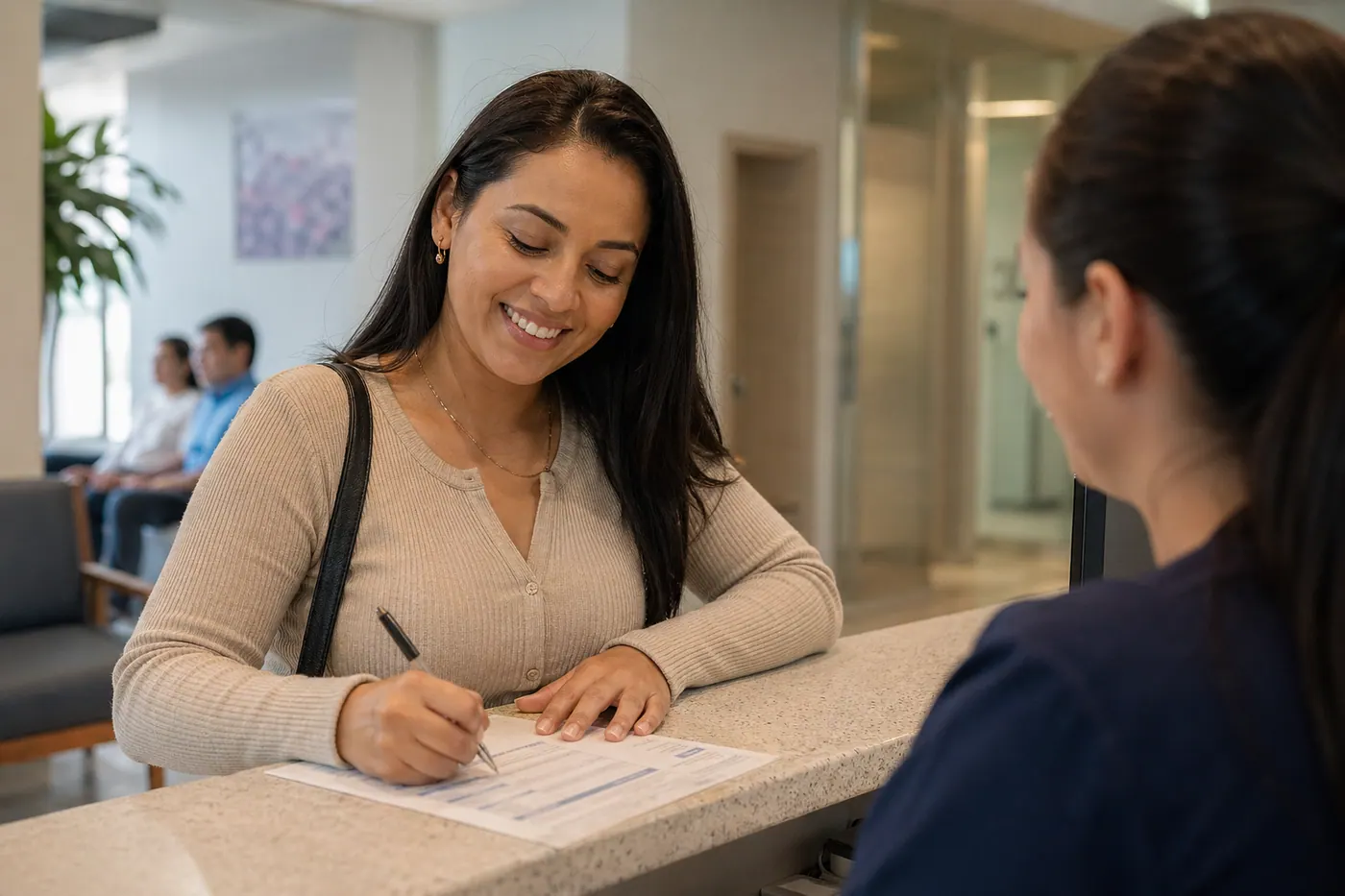
I arrived in Bogotá one December with an incipient flu and the confidence of someone returning to their country after six years. I went to the health clinic in my neighborhood, took out my ID card and they looked at me: 'Your affiliation has been suspended since 2021'. The surprise lasted five seconds. The process to reactivate it took three weeks.
Many returnees assume that because they are Colombian, the healthcare system will welcome them with open arms. And yes, they have more options than a foreigner. But they also have outdated records, zero contributions, and in some cases an expired RUT that blocks everything. You need to know where to start.
This guide covers exactly that: how to check your EPS status, how to reactivate or affiliate depending on your situation (employee, self-employed, or without income yet), and what you do while the system processes you.
Before taking office: verify if your EPS is still active
Don't assume your affiliation is suspended, but don't assume it's active either. The fastest way is to log into the portal at ADRES with your ID number. There you can see what regime you're in and which EPS — it takes less than two minutes.
You can also call directly to the EPS you were affiliated with. Sura, Compensar, Sanitas, Nueva EPS: they all have customer service lines where they can confirm your status with just your ID number. If you're in the subsidized regime, your municipality's health department has access to the SISBEN registry.
There are three possible statuses: active (no problems), in arrears (we can see you for emergencies, but not scheduled appointments), or suspended/canceled (you need to affiliate again). The process depends on which of these three situations you're in.
Why your health insurance (EPS) gets deactivated when you live abroad
The Colombian health system is contributory: it works with monthly contributions. If you're an employee, the employer deducts from your salary. If you're self-employed, you pay directly. When you stopped paying — or when your employer stopped reporting contributions because you left the country — the system detects periods without contribution and suspends the affiliation, generally after 2 or 3 months without contributions.
What confuses many people: the suspension is not immediate. You may have been covered for several months after leaving, and now appear with a canceled affiliation from years ago. That also means that in most cases you don't owe anything — periods without payment simply don't generate retroactively claimable debt.
Option 1 — If you return with a dependent employment job
This is the simplest route. If you've already signed an employment contract, your employer is obligated to enroll you in the EPS from day one. You choose which one (the employer cannot impose it on you), and they manage the registration through the PILA system.
What you need to have ready: a valid ID card, and sometimes the affiliation form provided by the Human Resources department. Coverage begins on the eighth calendar day after the employer registers the affiliation — ask them to do it on your first day of work so you don't lose time.
If you work for a foreign company with a Colombian contract, the process is the same. If you work for a foreign company without a local contract, you move to the independent category — next section.
Option 2 — If you return as an independent or freelancer
This is the situation for most returnees: they work independently, have clients abroad, or are in a transition period while they find formal employment. As a self-employed person, you manage affiliation directly with the EPS of your choice.
The RUT: the preliminary step that nobody mentions
If you worked as a freelancer before leaving the country, your RUT is probably still active but outdated — old address, obsolete economic activities. You need to update it before affiliating with the EPS as an independent worker. You can do it online on the DIAN portal or at any DIAN service point for free with your ID. Allow between 1 and 3 business days.
If you never had a RUT (because you always worked as an employee), you need to get one first. It's the same process, equally free.
How much do you pay for health insurance as a freelancer
The contribution to the health system is 12.5% of the Contribution Base Income (IBC), which is calculated on 40% of your gross income. Example: if you declare $5,000,000 COP monthly, the IBC is $2,000,000 and you pay $250,000 COP for health. The legal minimum is the minimum wage ($1,300,000 COP in 2026), so no one contributes less than $162,500 COP monthly for health.
If your income is in dollars or euros, you convert it at the day's TRM to declare the equivalent in COP. Payments are made monthly through the PILA system — the EPS you choose will tell you how to access it.
Option 3 — The subsidized regime if you arrive without income
If you return without a job or declarable income, you can apply for SISBEN and potentially access the subsidized regime. The process involves a socioeconomic survey that the municipality conducts at your home — depending on the resulting score, you are assigned coverage or not.
Honestly, this process is slow. The survey can take weeks to schedule, and access to subsidized health insurance can take even longer. If you have any possibility of declaring some income — remote work, savings you can demonstrate as activity — it's much faster to enter the contributory system as an independent worker with minimum IBC.
While you wait for SISBEN: municipal basic care centers (CAMI, UPA) provide care without affiliation for basic consultations. And no hospital in the country can deny you emergency care — it's a constitutional right regardless of your affiliation status.
📖 Keep reading
Beyond the EPS: ID, RUT, bank account and housing. Everything you need to manage in your first month.
Complete guide for returnees: your first 30 days back →What do you do while the EPS processes your affiliation
From the moment you file the documents until coverage is active, a minimum of 8 calendar days pass. During that gap, there are options:
For minor consultations: neighborhood private health clinics charge between $20,000 and $50,000 COP for a general consultation. Farmatodo and Cruz Verde have over-the-counter doctor modules for $15,000–$20,000. It's not expensive if you need it once or twice.
If you arrived with travel insurance — SafetyWing, for example, covers up to 90 days in your country of origin — check if your policy is still valid before canceling it. Many returnees make the mistake of canceling it on their first day back. Keeping it active for the first 4–6 weeks while you process your EPS is much more sensible.
For real emergencies: any hospital is obliged to treat you. The cost is settled against ADRES. You may end up with a pending balance, but care cannot be denied.
Which EPS is best for a returnee?
There is no single answer, but there are clear criteria:
Sura: The favorite in Medellín and the Coffee Triangle. Wide network, well-developed mobile app, reasonable wait times for specialists. More expensive than others, but the difference in monthly contribution is usually minimal.
Compensar: Excellent in Bogotá, with its own medical centers that are really good. For returnees to Bogotá with family, it's one of the best options.
Nueva EPS: The largest in the country. Extended network nationwide, useful if you live in intermediate cities. Longer wait times for specialists, but general medicine works well.
Sanitas: Popular among professionals who value private-level care. Strong in Bogotá, Medellín, and Cali.
My recommendation for most people: Sura if you're in Medellín or the Coffee Triangle, Compensar if you're in Bogotá. If you live in an intermediate city where none of them have their own clinics nearby, Nueva EPS has the most extended network.
One important thing: the minimum period of permanence
Once you're affiliated with the contributory system, you must stay with that EPS for a minimum of 12 months before you can switch to another. If the experience is bad, the change isn't immediate. Choose carefully the first time.
You can request the transfer before 12 months only in exceptional cases: moving to a city where your EPS doesn't have its own clinic, loss of EPS accreditation, or specific work situations. Under normal conditions, that year of permanence is fixed.
📖 Keep reading
If you have a foreign partner or family, this English guide explains the same options from the expat perspective.
Colombia Healthcare for Expats: EPS vs Private Insurance →Frequently asked questions
❓ How long does coverage take to activate after I affiliate?
For new affiliations in the contributory system, coverage starts on the eighth calendar day after registration. Your employer or you as self-employed register through the PILA system. In some cases the EPS requires additional confirmation, which can add 1–2 business days.
❓ Can I contribute if my income is in dollars or euros?
Yes. The contribution is made in COP using the TRM of the day you make the payment. If you earn $1,000 USD monthly, you convert to pesos according to the current TRM to determine the IBC. Everything is paid in COP through PILA.
❓ Do I have to pay the overdue months from the time I was abroad?
No. If your affiliation was suspended or canceled due to lack of contributions while you were abroad, you are not required to pay the overdue periods to re-affiliate. You start with contributions from the current month.
❓ What do I do if I need to go to the emergency room before my EPS is activated?
Any hospital or clinic in Colombia is required to treat you in emergencies regardless of your affiliation status. The cost is charged against ADRES. You may end up with a pending balance, but care cannot be denied — it's a constitutional right.
❓ Does prepaid medicine replace the EPS?
No. Prepaid medicine (Colmédica, Coomeva Medicina Prepagada, etc.) is a complement, not a replacement. By law, you must be affiliated with an EPS if you have income. Prepaid gives you faster access to specialists and better hospital amenities, but the mandatory contribution remains a requirement.
Do you have a particular situation I didn't cover here — change of city, mixed work, or complicated foreign income? Leave your question in the comments or consult in the Colombia Move community at colombiamove.com/comunidad. There are other people going through exactly the same thing.


Comments
Loading comments...
Checking sign-in status...