
Living in Pereira, Colombia: The Honest Expat Guide
Pereira doesn't get much attention in expat circles, but it might be the most underrated base in Colombia. Mild climate, real coffee-region access, and monthly budgets that run 30–40% below Medellín.
IDIOMA DEL ARTÍCULO
Showing original language
Most expats passing through the Eje Cafetero route straight to Salento — spend a weekend walking between coffee farms and wax palms, snap the obligatory photos, then leave. Pereira is the hub they drove through on the way: where they gassed up, grabbed a bandeja paisa, and watched the mountains narrow. That's an easy mistake to make, because Pereira has no particular elevator pitch. It doesn't have a redemption arc. It doesn't have a party reputation. It's just a mid-sized Colombian city that works well, costs less, and puts you 45 minutes from some of the best countryside in the country.
I've heard Pereira described as 'Medellín but 40% cheaper and half the size,' and while that undersells it in some ways, the pricing reality is accurate. A 1-bedroom apartment in Pinares — Pereira's upscale residential corridor — runs 900,000 to 1.4 million pesos per month unfurnished. That same profile in Medellín's Laureles or Envigado costs 1.4 to 2.2 million. That gap compounds fast. Over a year, you're looking at saving anywhere from 6 to 14 million pesos — money that goes toward better travel, earlier retirement, or simply less financial stress. If you want to see real-world options right now, you can browse apartments and houses on Colombia Move — posting is completely free.
Pereira doesn't get a dedicated chapter in most expat guides, which is a shame given how many people it genuinely suits. This is what I'd want someone to hand me before I moved there.
What to Know First
- Population: ~500,000 city proper, ~1 million metro
- Altitude: 1,411m — mild, no altitude issues
- Climate: 18–27°C year-round, warmer and more variable than Medellín
- Monthly budget (comfortable): $700–1,100 USD all-in
- Best for: Remote workers, retirees on fixed income, budget-conscious long-termers, coffee-region lifestyle seekers
- Skip it if: You need a large expat community, active career networking, or a diverse urban nightlife scene
A City That Functions Without a Famous Backstory
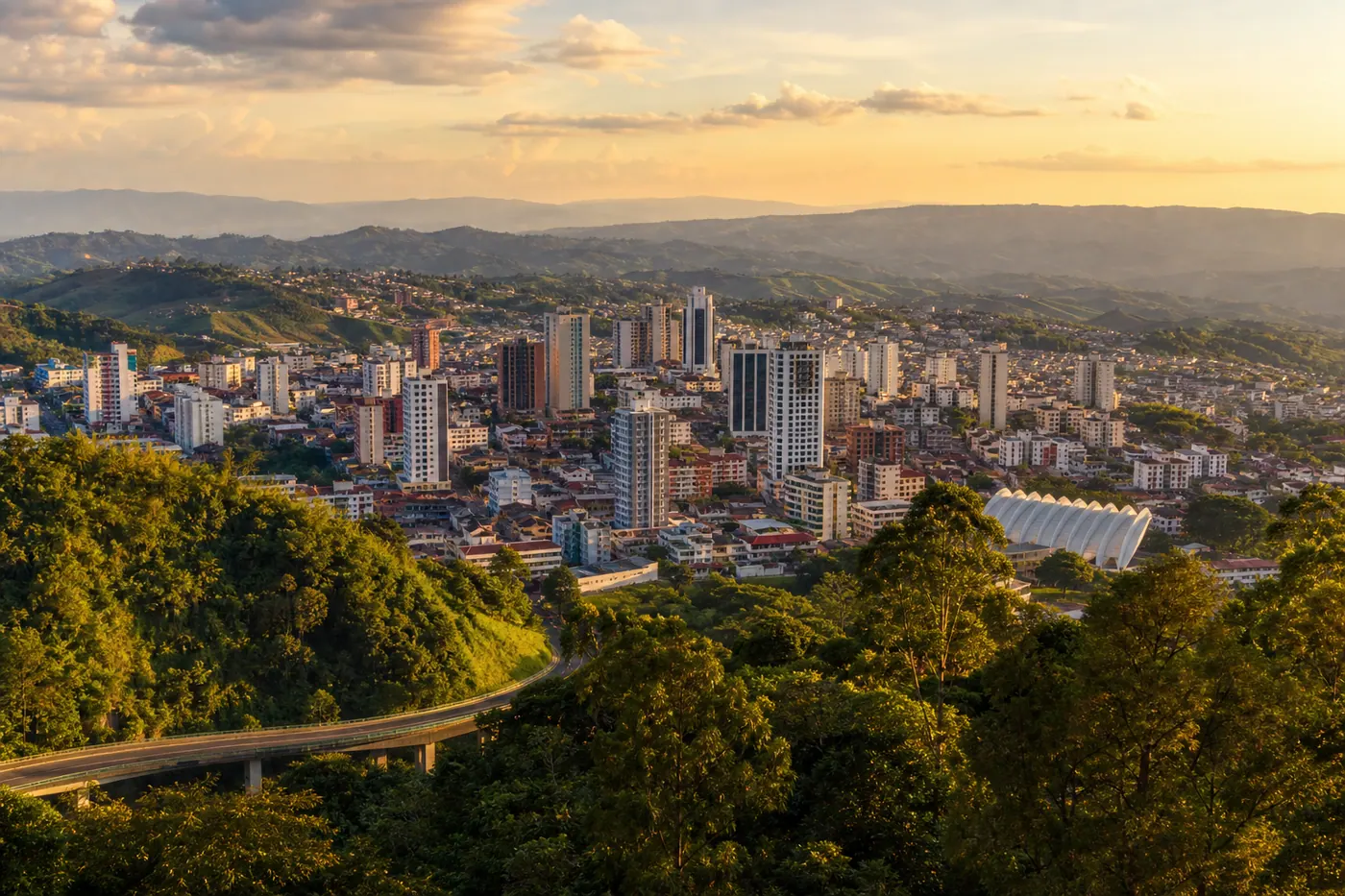
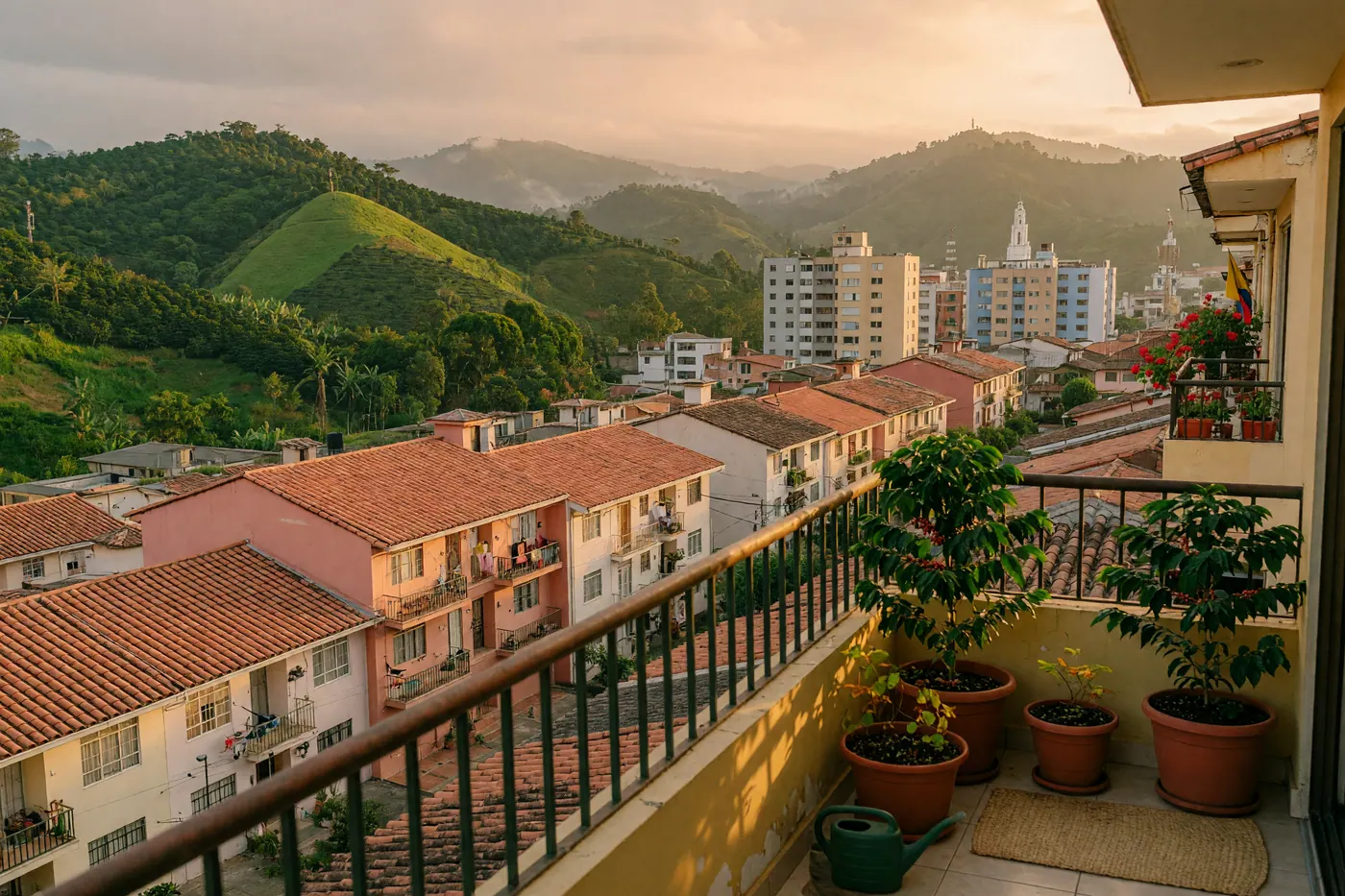
Pereira is the capital of Risaralda department and the largest city in the Coffee Region triangle that also includes Manizales and Armenia. The metro area approaches one million people when you count Dosquebradas and La Virginia, but the urban core is compact — cross-city in 25 minutes on a good day, 40 in actual traffic. That human scale is part of the appeal.
The economy runs on agribusiness, BPO services (several international call centers operate here), regional commerce, and logistics — Pereira's central location in the country makes it a natural distribution hub. It's not a tech startup city or a financial center. What it is: genuinely functional in the ways that matter daily. Hospitals are solid. Roads in residential zones are maintained. Utilities work consistently. By Colombian municipal standards, Pereira's city government is comparatively competent.
The Universidad Tecnológica de Pereira (UTP) has around 22,000 students and gives the city a young professional energy without tipping into the overwhelming student-city atmosphere you get in Manizales. It keeps certain neighborhoods lively without making them chaotic.
Climate: Warmer Than You'd Expect
At 1,411 meters above sea level, Pereira sits about 100 meters lower than Medellín, and you notice it. Temperatures swing more noticeably — mornings can drop to 16–18°C while afternoons regularly hit 26–28°C. In the wet seasons (April–May and October–November), afternoon thunderstorms arrive on schedule, which teaches you quickly to plan outdoor activities in the morning and work from a café after lunch.
The Eje Cafetero is lush precisely because of that rainfall, and humidity is higher than you'd expect at this altitude. Clothes take longer to dry, and cheaper apartments with poor ventilation can develop mold issues during wet season. It's worth paying slightly more for a place with good airflow, because catching that problem in month three of a twelve-month lease is unpleasant.
That said, Pereira's climate is very livable by any reasonable standard. Warmer and slightly more humid than Medellín, considerably cooler and more bearable than Cali's valley heat. You'll never own a real coat. The only thing most people miss is that Medellín never has days that feel too hot — Pereira occasionally does.
Best Neighborhoods for Expats in Pereira
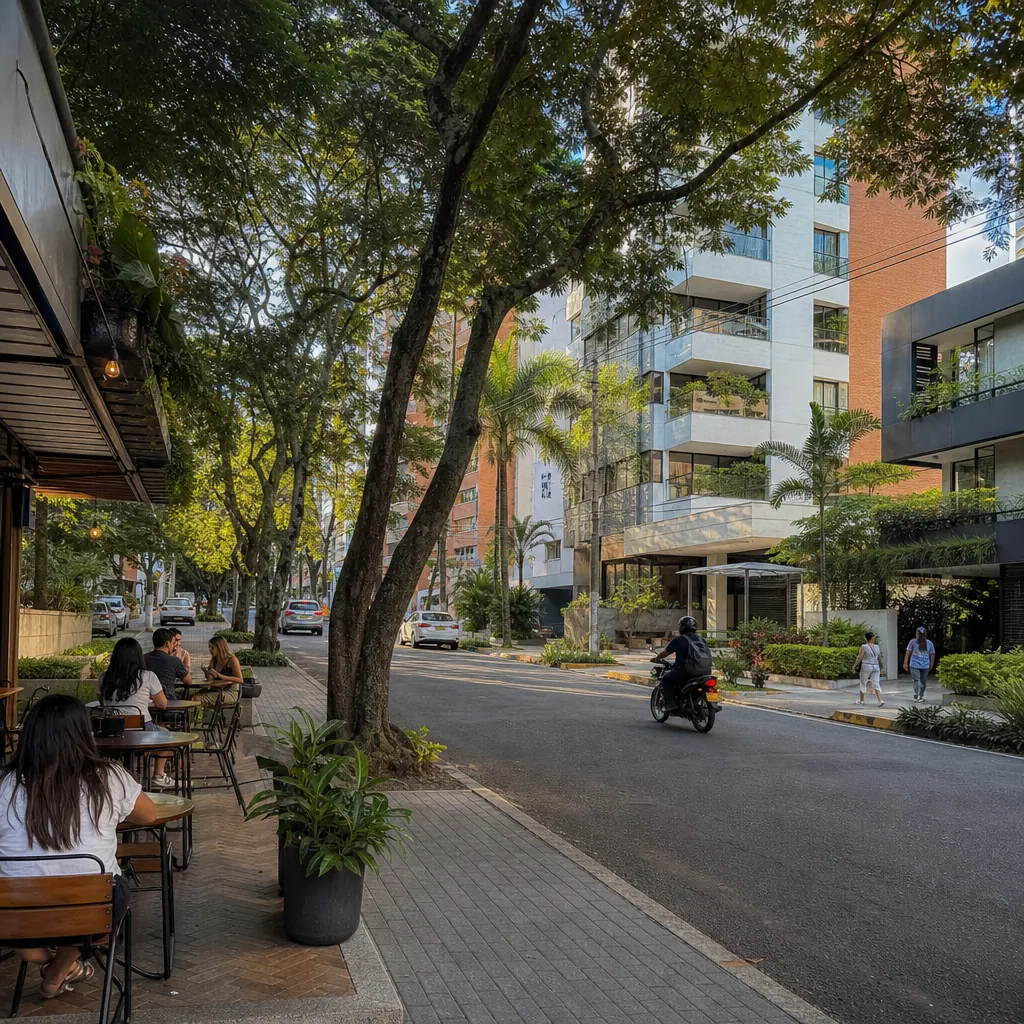
Pinares is where most long-term foreigners land, and it earns that status. Modern apartment towers, walkable commercial streets, the city's best restaurants and coffee shops, and a relaxed pace. The Avenida Circunvalar runs through the area and concentrates most of the dining worth knowing — Sunday brunch at one of the terrace cafés with mountain views is a reasonable Pereira ritual. Unfurnished 1BR rents run 900,000–1.4 million pesos monthly; furnished goes 1.2–1.8 million.
El Vergel sits just south of Pinares with slightly newer construction and a quieter feel, popular with young Colombian professionals. Rents are similar to Pinares, sometimes 5–10% lower for equivalent apartments. The main commercial drag is a shorter walk, but that can be a feature depending on your personality.
Álamos is an established middle-class residential zone with good grocery access and solid transport links. Not the most exciting area to walk around, but very livable and notably cheaper — 700,000–1.1 million for a decent 1BR. If you're keeping costs tight and don't need the Circunvalar restaurant strip, this is worth considering seriously.
Cuba is a dense, affordable neighborhood south of the center. Fine if you have a vehicle or motorcycle; less convenient on foot or Megabús given the secondary road network. El Centro works for daytime errands and market runs but I wouldn't put a first-time foreigner there for long-term living.
My honest first-arrival advice: spend your first month in Pinares regardless of budget. It's the easiest orientation zone — walkable enough to get a feel for the city, dense enough with cafés and coworking-capable spots that you can work remotely from day one. Don't lock into a twelve-month lease until you know which neighborhood actually fits your actual routine.
What You'll Actually Spend
The numbers below are real-world estimates for a single person living comfortably in a decent Pinares or El Vergel apartment — cooking most nights, eating out three or four times a week, using local transport. Not scraping by, not burning money on luxury.
| Monthly expense | Budget | Comfortable | Premium |
|---|---|---|---|
| Rent (1BR unfurnished) | $230 | $330 | $470 |
| Groceries | $130 | $210 | $290 |
| Eating out (3–4x/week) | $70 | $120 | $200 |
| Local transport | $25 | $40 | $65 |
| Utilities (electric, water, gas) | $35 | $55 | $85 |
| Internet (fiber, 100–300 Mbps) | $15 | $20 | $25 |
| Monthly total (approx.) | ~$505 | ~$775 | ~$1,135 |
All USD estimates at approx. 4,200 COP/USD. Rent assumes Pinares/El Vergel zone.
Most remote workers earning in USD settle into the $700–1,000/month range. For banking: bring a fee-free debit card for ATM withdrawals. Pereira's ATM density is lower than Medellín, and machines from Bancolombia and Davivienda typically charge 10,000–15,000 pesos per transaction. The Charles Schwab debit card reimburses all ATM fees globally — worth having from day one.
📖 Keep Reading
Medellín vs Pereira: ¿Cuál ciudad te conviene más?
Detailed cost comparison between the two cities, with real rent figures and a breakdown of what you actually save.
Healthcare, Internet, and Banking
Healthcare in Pereira is solid for a city its size. Clínica los Rosales is the private hospital most expats use — modern facilities, specialists with reasonable English capacity, and private consulting rooms. Clínica Comfamiliar and Hospital Universitario San Jorge cover public care. Prepagada private health insurance through Sura or Compensar runs 400,000–900,000 pesos monthly depending on age. EPS enrollment works identically to any other Colombian city once you're on the appropriate visa.
Before you get local coverage set up, keeping travel health insurance like SafetyWing active for the first month or two makes sense — around $40–50/month for solid international coverage.
Internet is reliable in residential zones. Claro and Tigo both offer fiber in Pinares, El Vergel, and Álamos at 100–300 Mbps. Monthly plans run 70,000–120,000 pesos. The coverage is consistent enough for video calls and normal remote work — I wouldn't worry about this before arriving. Banking is standard Colombia: Bancolombia, Davivienda, and Banco de Bogotá all have multiple branches, Nequi and Daviplata work identically here. The main thing foreigners notice is slightly fewer ATM locations than in Medellín or Bogotá — hence the earlier note on the Schwab card.
Getting Around Pereira
Pereira has the Megabús, an articulated bus system that covers the main corridors reasonably well — connecting the city center to Dosquebradas, Cuba, and the airport zone. The problem is that Pinares and El Vergel sit on secondary roads the Megabús doesn't reach efficiently. From either neighborhood, you're walking 10–15 minutes to a main corridor or calling a cab for anything beyond walking distance.
Taxis: cheap and plentiful. A cross-city ride costs 8,000–14,000 pesos. InDrive is the dominant ride-hailing app in Pereira (Uber has limited presence here) and typically comes in 15–20% cheaper than taxi meters. Download it before you arrive — it's genuinely useful.
For anyone planning to stay longer than three months, a scooter or small motorcycle makes Pereira significantly more livable. Fuel runs about 12,000 pesos per liter, parking is free nearly everywhere, and you can get from Pinares to the airport in 15 minutes. The road quality in secondary zones is imperfect but nothing like Medellín at rush hour. A used 150cc motorcycle goes for 3–5 million pesos; a used scooter for 2.5–4 million.
The Matecaña International Airport is inside the city — 15 minutes from most residential neighborhoods. Avianca and LATAM operate domestic routes to Bogotá, Medellín, and occasionally Cartagena. Getting out is easy. Getting in is easier than most Colombian cities because the airport isn't a 90-minute drive from where you live.
What Pereira Unlocks on Weekends
This is where Pereira's location earns its reputation. Within about an hour by car:
- Salento — The coffee-region postcard town. Valle del Cocora wax palms, a half-dozen excellent single-origin cafés, and the kind of main square that makes you stay longer than planned. Most Pereira residents do it as a half-day and still get home before dark.
- Termales Santa Rosa — Natural thermal pools in the mountains outside Santa Rosa de Cabal. Reliably popular on Sundays, so go early. The road up is slow and winding — factor in the drive time.
- Filandia — Smaller and less crowded than Salento, better for a quiet lunch and a wander around the main square without negotiating tourist traffic. Good coffee, better light for photos in the afternoon.
- Manizales — Two hours north, a completely different city vibe: cooler, more university-focused, with access to Nevado del Ruiz national park. Worth a weekend trip, not just a day.
- Armenia — 45 minutes south, the third point of the coffee triangle. Coffee farm tours, the national coffee park, and significantly fewer tourists than Salento.
For anyone working a standard five-day week, Pereira gives you a weekend menu that people in Medellín have to drive further to access. That proximity to real coffee country — see the full Eje Cafetero travel guide for region-wide logistics — and thermal baths that aren't a six-hour road trip is the lifestyle argument for Pereira that price charts don't capture.
Who Pereira Is Actually For
Pereira works for: remote workers who want their dollar or euro to stretch without retreating to a small town; retirees with fixed pension income who want actual coffee-region lifestyle, not just proximity to it; couples or families where one partner works locally and the other doesn't need a massive social scene; people who've done Medellín and want to slow the pace and reduce the cost without leaving the Andean climate.
Pereira struggles if you need a large English-speaking expat community — it's small here, present but not dense. You'll meet people, but not the El Poblado immersion experience. It also doesn't suit people relying on Colombian professional networking or in-person career advancement, or those who need frequent access to international concerts, museums, or high-end restaurant culture. The city is genuinely pleasant but it's not trying to compete with Bogotá's cultural depth.
The learning curve is short. Most newcomers feel functional within three or four weeks. The city layout is logical, locals are warm and used to outsiders (coffee tourism brings steady traffic), and the pace is more forgiving than Bogotá or Medellín during rush hour.
📖 Keep Reading
Best Cities to Live in Colombia: Ranked for Expats
How Pereira, Medellín, Bogotá, Cali, and six other cities stack up across climate, cost, safety, and lifestyle.
If you're already looking at apartments, colombiamove.com has direct-owner listings in Pereira filtered by neighborhood — no agent fees, WhatsApp contact, and you can compare across Pinares, El Vergel, and Álamos without making a single phone call. Worth bookmarking before you arrive.
Frequently Asked Questions
❓ Is Pereira safe for expats?
Yes, with the standard neighborhood caveat. Pinares, El Vergel, and Álamos are safe residential zones where foreigners live without issue. The Centro area is fine for daytime errands but less comfortable at night. The usual Colombia rule applies: neighborhood selection matters far more than city selection. Research your specific street, not just the city name.
❓ What is the expat community like in Pereira?
Small but self-selected. People who deliberately chose Pereira over Medellín tend to be more locally integrated, more independent, and generally happy with the trade-off they made. There's no equivalent to El Poblado's English-speaking social orbit — expect to make Colombian friends faster than you would in Medellín, which many expats end up preferring anyway.
❓ Is English widely spoken in Pereira?
More than a small Colombian town, less than Medellín. In Pinares restaurants and hotels, staff often have some English. Medical specialists increasingly do. Elsewhere, Spanish is necessary for daily life — Pereira speeds up your language acquisition whether you plan for it or not. Three months of consistent practice puts most people at functional daily fluency.
❓ Can I fly internationally from Pereira?
Matecaña Airport connects to Bogotá, Medellín, and sometimes Cartagena with multiple daily flights. Most international routes require a Bogotá connection, which adds a few hours but isn't complicated — and Bogotá has excellent connections to North America, Europe, and beyond. The airport is modern, compact, and genuinely 15 minutes from Pinares.
❓ How does Pereira compare to Manizales and Armenia?
Pereira is the largest of the three coffee-region cities and the most connected — better airport access, more job market, more dining and services. Manizales is colder, has a stronger university culture, and sits higher (2,200m). Armenia is smaller and more focused on agribusiness. For most expats, Pereira is the practical starting point; Manizales suits people who prefer a cooler, more academic city atmosphere.
Comments
Loading comments...
Checking sign-in status...