
Tayrona National Park: The Honest Visitor's Guide
Tayrona isn't like most national parks. It's a Caribbean jungle-to-beach experience that rewards preparation — and punishes people who show up without thinking.
IDIOMA DEL ARTÍCULO
Showing original language
The first time most people approach Tayrona, they're crammed into a minivan from Santa Marta, watching the highway narrow into a jungle road, second-guessing whether the 2-hour hike they read about is really necessary. It is. And it's worth it.
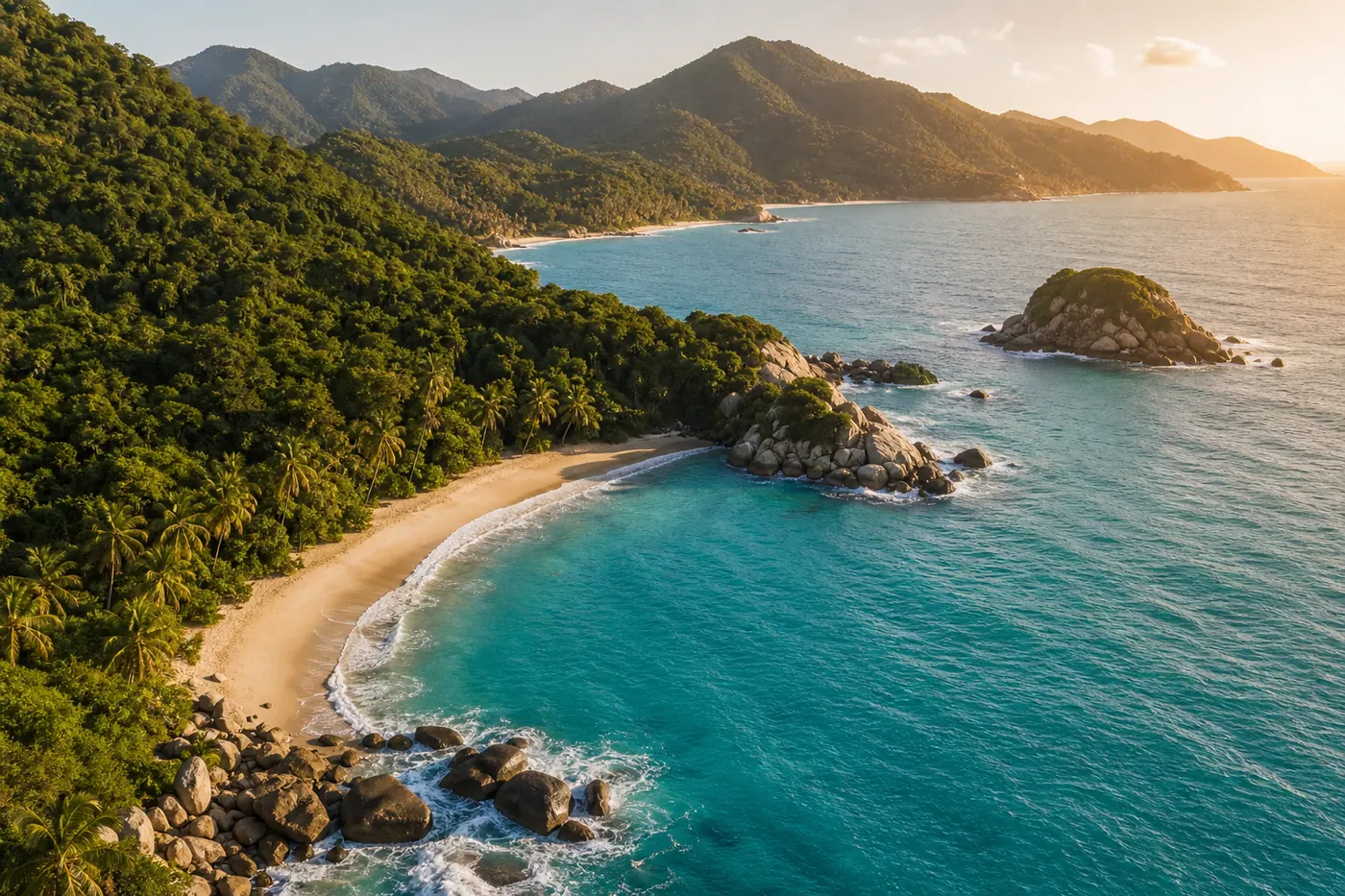
Tayrona National Natural Park sits on Colombia's Caribbean coast about 35km northeast of Santa Marta, where the Sierra Nevada mountains meet the sea. The result is something genuinely unusual: white-sand beaches backed by dense tropical forest, turquoise water broken by boulders you can scramble between, and an atmosphere that feels nothing like the resort beaches in Mexico or Thailand. It's wilder, slightly chaotic, and genuinely beautiful.
But Tayrona trips go sideways regularly — people arrive without cash for entry, pick a beach they can't actually swim at, or roll in during one of the park's mandatory closure months. This guide covers what you actually need to know.
🏝️ Tayrona: What to Know Before You Go
- Entry fee: ~22,000 COP (~$5 USD) on weekdays, more on weekends and holidays
- Best swimming beach: La Piscina — protected cove, calm water
- Hike time to main beaches: 1.5–2 hours from the Cañaveral entrance
- Park closures: February–March and October (mandatory ecological rest)
- How to get there: Minivan from Santa Marta's Mercado Público (~15,000 COP, ~40 min)
- Accommodation: Camping, hammocks, and eco-habs available — book ahead in December–January
Getting to Tayrona from Santa Marta
The standard approach is a minivan from Santa Marta's Mercado Público (the market near the center). Shared minivans leave throughout the day and drop you at the El Zaíno entrance — the main park gate. The ride takes 35–50 minutes and costs around 15,000–18,000 COP (~$4 USD). Taxis exist but charge 70,000–90,000 COP for the same trip.
From Santa Marta's bus terminal, you can also catch a bus heading toward Riohacha and ask to be let off at El Zaíno. Slightly cheaper, slightly less convenient — the minivans are honestly the better call. Coming from Cartagena, the practical move is to take an intercity bus to Santa Marta first, then connect to the park. There's no direct Cartagena → Tayrona transport worth recommending.
For bus options between Colombian cities, the full guide is at Bus Travel in Colombia: Routes, Companies & Safety Tips.
Entry Fees, Park Hours, and Annual Closures
Entry runs approximately 22,000 COP (~$5 USD) for foreigners on weekdays, and around 45,000–55,000 COP on weekends and public holidays. Colombian citizens pay a lower rate. Cash has historically been required at the gate, though card payments have been introduced at some checkpoints — carry cash anyway.
The park closes twice a year for mandatory ecological rest: February through early March, and October through November. These closures aren't optional or negotiable — the park is fully shut to tourists. Check the official Parques Nacionales website before booking transport. The dates shift slightly each year.
Inside the park, the rules matter: no single-use plastic, no animals, no fires, and reef-safe sunscreen only. Rangers do enforce these. The plastic rule in particular — don't bring plastic bags in; they'll ask you to leave them at the entrance.
The Beaches — What to Expect at Each
This is where most first-timers go wrong. Not every beach in Tayrona is swimmable, and the famous ones aren't necessarily the best ones for actually getting in the water.
Arrecifes — Look, Don't Swim
Arrecifes is the first main beach you reach on the hiking trail from Cañaveral, about 90 minutes in. It's stunning — long, palm-shaded, postcard-perfect. There are also prominent warning signs explaining that people drown here regularly. The currents are strong and unpredictable. Sunbathe here, have a coconut from one of the vendors, then keep walking.
La Piscina — The Swimming Beach
About 20 minutes past Arrecifes, La Piscina ("The Pool") is the beach you actually swim at. Protected by a natural rock barrier that calms the waves, it's shallow, clear, and manageable for confident swimmers. Still not a gentle resort pool — read the conditions when you arrive. But this is the right beach for getting in the water.
Cabo San Juan del Guía — The Iconic Photo
Cabo San Juan is the headland that appears in every Tayrona Instagram post — the one with the rocky promontory, hammock huts perched on the cliff, and turquoise water on both sides. It's genuinely beautiful and worth the full hike to reach it. The camping and hammock area here is the most popular in the park, which means it can feel crowded in high season (December–January). Go on a weekday if you have flexibility.
Playa Cristales and Playa Brava
Cristales is a smaller cove between Arrecifes and La Piscina — often less busy, reasonable for swimming in calm conditions. Playa Brava is past Cabo San Juan heading east, accessible by a harder trail. Fewer people, more wild, and swimming is rough. Worth seeing if you have an extra day; not the priority on a first visit.
📖 Keep Reading
Living in Santa Marta, Colombia: An Honest Expat Guide →
Everything you need to know about using Santa Marta as your base — neighborhoods, costs, coworking, and why it's still underrated.
Where to Sleep Inside the Park
There are three accommodation options inside Tayrona, all managed through the authorized concessionaire. Prices below are approximate — check current rates when booking.
| Option | Cost | Best For | Watch Out |
|---|---|---|---|
| Camping (tent) | ~35,000–55,000 COP/person/night | Budget travelers, light packers | Rain turns sites muddy fast; bring a good tent |
| Hammock under shelter | ~30,000–45,000 COP/person/night | Budget + breeze seekers | Mosquitoes at dawn — bring repellent and a sleep sheet |
| Eco-cab / eco-hab | ~180,000–380,000 COP/night | Couples, comfort seekers | Book 2–3 weeks ahead for December–January peak |
| Day trip from Santa Marta | ~100,000 COP total (transport + entry) | First-timers who want a preview | You miss the park at dusk/dawn, which is the best part |
Book through the official Tayrona concession (search 'Tayrona booking Aviatur' — they manage the official inside-park reservations). Third-party agencies near Santa Marta sell the same thing for more. Note that if you have SafetyWing travel insurance, activities like hiking in national parks are typically covered — worth having for a trip like this.
What to Pack (and What to Leave in Santa Marta)
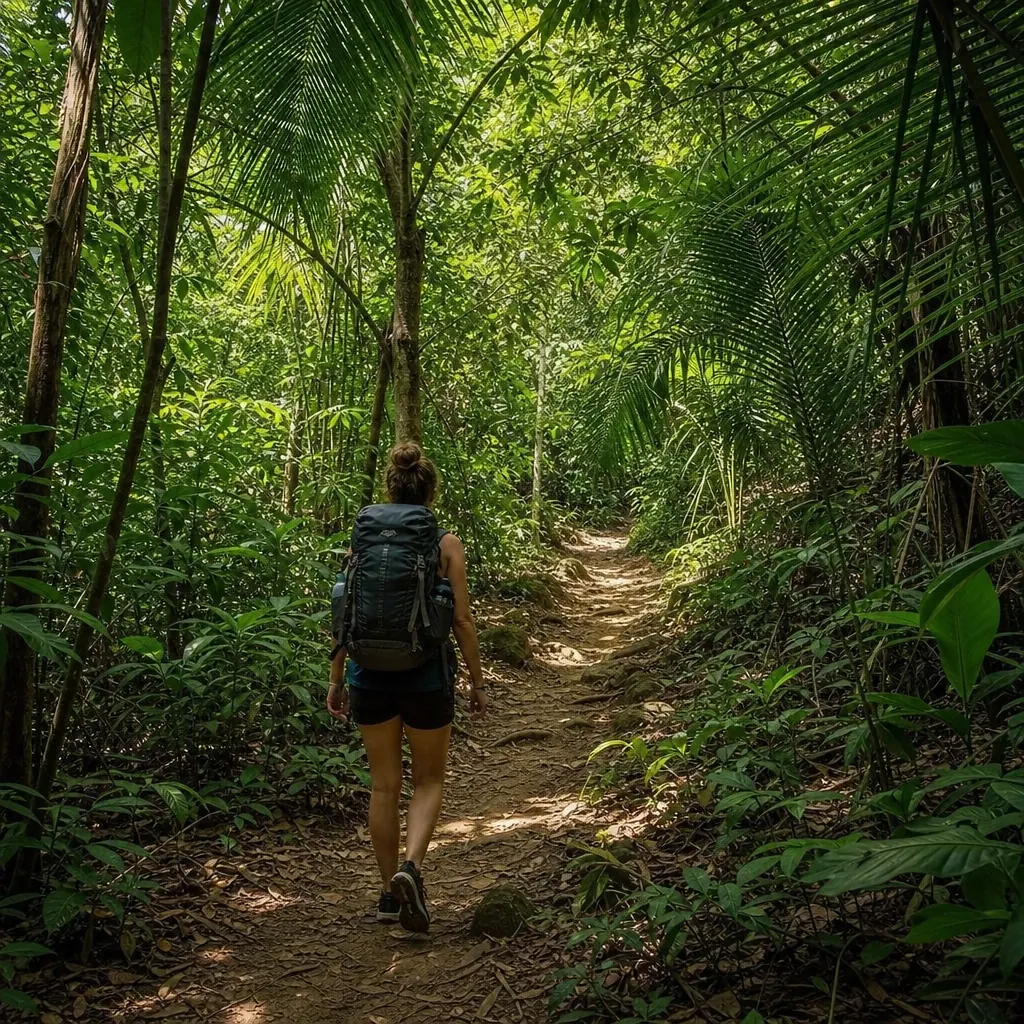
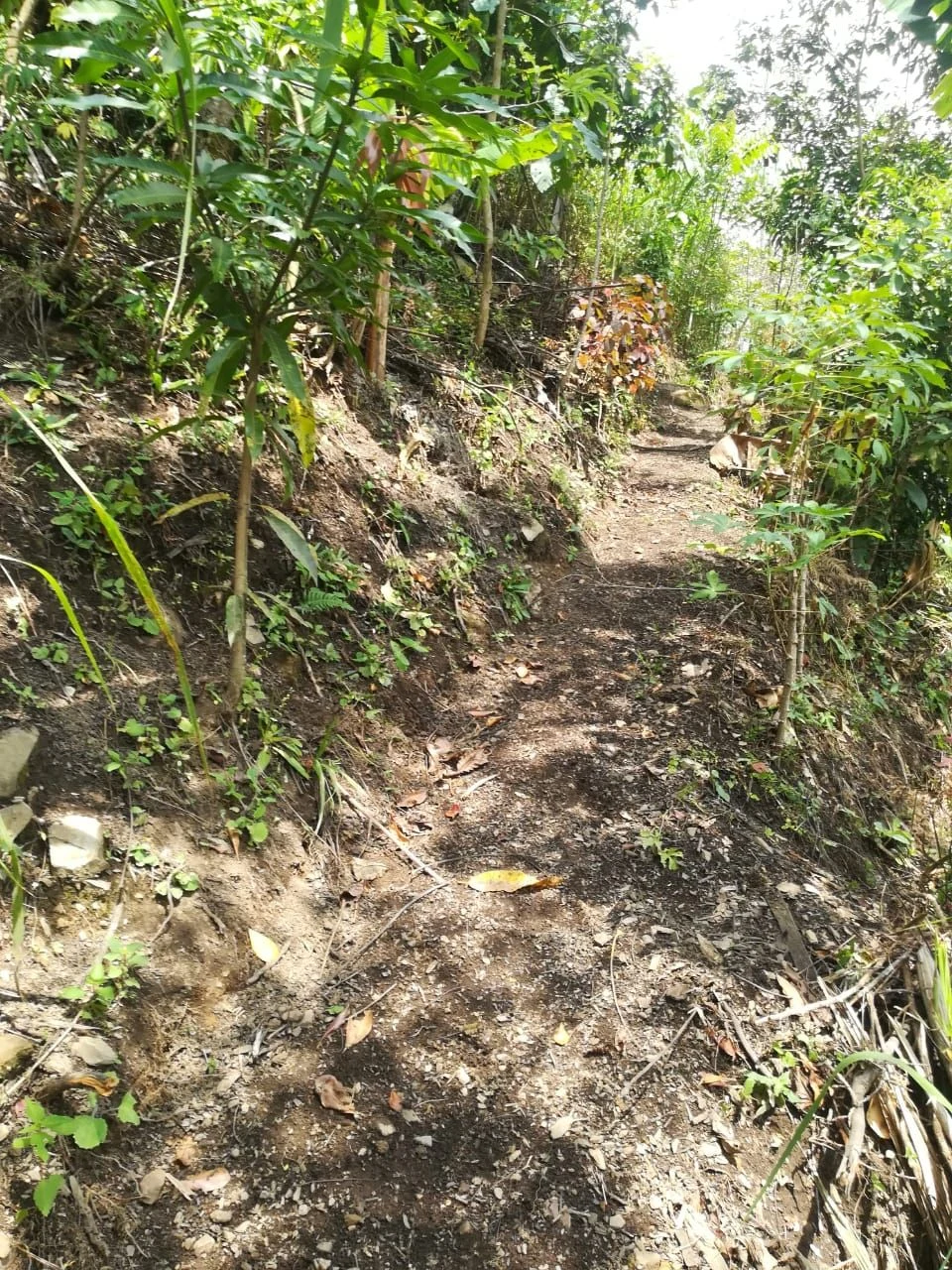
The hike in takes about 90 minutes under significant heat and humidity. You want a light pack — 20L maximum. Leave your laptop, valuables, and anything you'd be upset losing to humidity in Santa Marta.
✅ Tayrona Packing Checklist
- Cash in COP (vendors inside are cash-only)
- Reef-safe sunscreen — required by park rules
- Insect repellent (DEET-based)
- Lightweight hiking shoes or sandals with grip
- Reusable water bottle (fill up at Cañaveral)
- Dry bag or waterproof phone case
- Small backpack with hip strap for the hike
- Offline maps downloaded (no signal in the park)
- Snacks — food inside is expensive
- Quick-dry towel
- Headlamp if staying overnight
- Light rain jacket (afternoon storms are common)
An anti-theft backpack with a hip strap is ideal for the trail — the weight distribution matters over 2 hours of hiking in heat. Also download offline maps before you leave Santa Marta: phone signal is essentially gone once you're 30 minutes inside the park. If you need connectivity, a Colombian SIM or eSIM via Saily works well in Santa Marta but won't save you inside Tayrona's jungle.
The Warnings Nobody Gives You
The sun here is brutal at a level that surprises even people who've spent time in tropical climates. You're at sea level near the equator, often hiking with no shade. The 30-minute stretches between beach tree cover will burn you significantly faster than you expect. Reapply sunscreen constantly — the park requires reef-safe anyway, so use it.
The vendors inside Tayrona are cash-only and charge accordingly for the captive audience. A meal inside the park runs 30,000–50,000 COP. A 500ml bottle of water costs 5,000+ COP. Bring snacks from Santa Marta.
The ants are not to be trifled with. Bullet ants and several other aggressive species live in the forest. Don't sit on logs, watch where you put your hands on trees, and shake your shoes out every morning if you're camping. It sounds dramatic until you've met one.
Finally: tidal awareness matters at places like La Piscina. The rock barrier that makes it swimmable is less effective at high tide when waves push over it. Check tides before you commit to a swim, especially if you're not a strong swimmer.
📖 Keep Reading
Best Beach Towns in Colombia for Expats & Digital Nomads →
Palomino, Taganga, Cartagena, and more — the full honest breakdown of Colombia's Caribbean coast.
Frequently Asked Questions
❓ Can you visit Tayrona National Park in a day?
Yes, but you'll miss most of it. A day trip from Santa Marta gets you to Cabo San Juan if you're fast, but the park at dawn and dusk — when the light is extraordinary and the crowds are gone — is only for people staying inside. Day trips work for a preview; spend at least one night if you can.
❓ Which beach is best for swimming in Tayrona?
La Piscina, without question. It's protected by a natural rock barrier that calms the Caribbean swell. Arrecifes is famous but dangerous — multiple deaths per year from the currents. Cabo San Juan's swimming conditions depend on the day; La Piscina is consistently safer.
❓ Is Tayrona National Park safe for tourists?
The park itself is safe — it's a well-managed national park with regular ranger presence. The standard safety common sense for Colombia applies: don't hike with valuables you'd be upset losing, don't walk trails alone after dark, and secure your belongings at camp. The main safety risk in Tayrona is the ocean, not crime.
❓ When is Tayrona National Park closed?
The park closes twice yearly for ecological rest: roughly February to mid-March, and October to mid-November. Exact dates vary. Check Parques Nacionales Naturales de Colombia's official site before booking anything. Showing up on a closure day means turning around.
❓ Do I need to book accommodation inside Tayrona in advance?
For December and January (Colombian school holidays and New Year), absolutely — book 2–4 weeks ahead minimum. The eco-habs and good camping spots sell out. For March–September shoulder season, a few days' notice is usually fine for camping. Weekday visits are significantly less crowded year-round.
Comments
Loading comments...
Checking sign-in status...