
Living in Laureles: A Real Guide to Medellín's Most Beloved Neighborhood
What it's really like to live in Laureles: rental prices by sub-zone, real safety, getting around, cafés, and how it compares to El Poblado. The guide that helps you decide.

IDIOMA DEL ARTÍCULO
Showing original language
If you're thinking about moving to Medellín, Laureles has probably already come up on your radar. It's the neighborhood that expats "discover" after a few weeks in El Poblado, and many end up moving there for better prices, a calmer atmosphere, and a neighborhood life that almost no longer exists in the rest of the city.
But we also need to be honest: Laureles isn't for everyone. It has real tradeoffs — sub-zones that are very different from each other, longer trips to El Poblado than Google Maps says during rush hour, and prices that have risen sharply over the last two years due to the wave of nomads and returning Colombians looking for better options.
This guide tells you what you'll actually find: real prices by sub-zone, how safe it is (without exaggerating or sugarcoating), mobility, how to compare it with El Poblado, and how to decide which side of Laureles suits your lifestyle. No salesperson telling you everything is perfect.
Why is Laureles so popular?
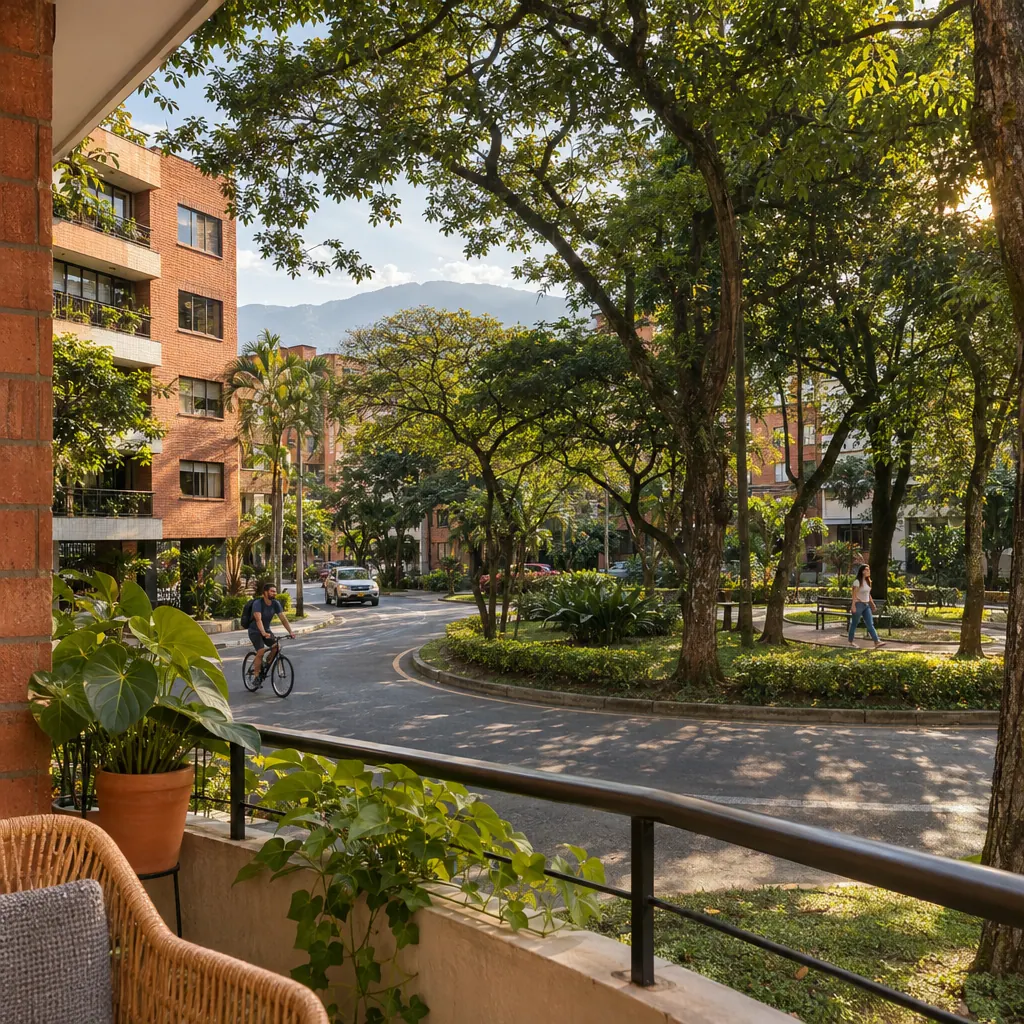
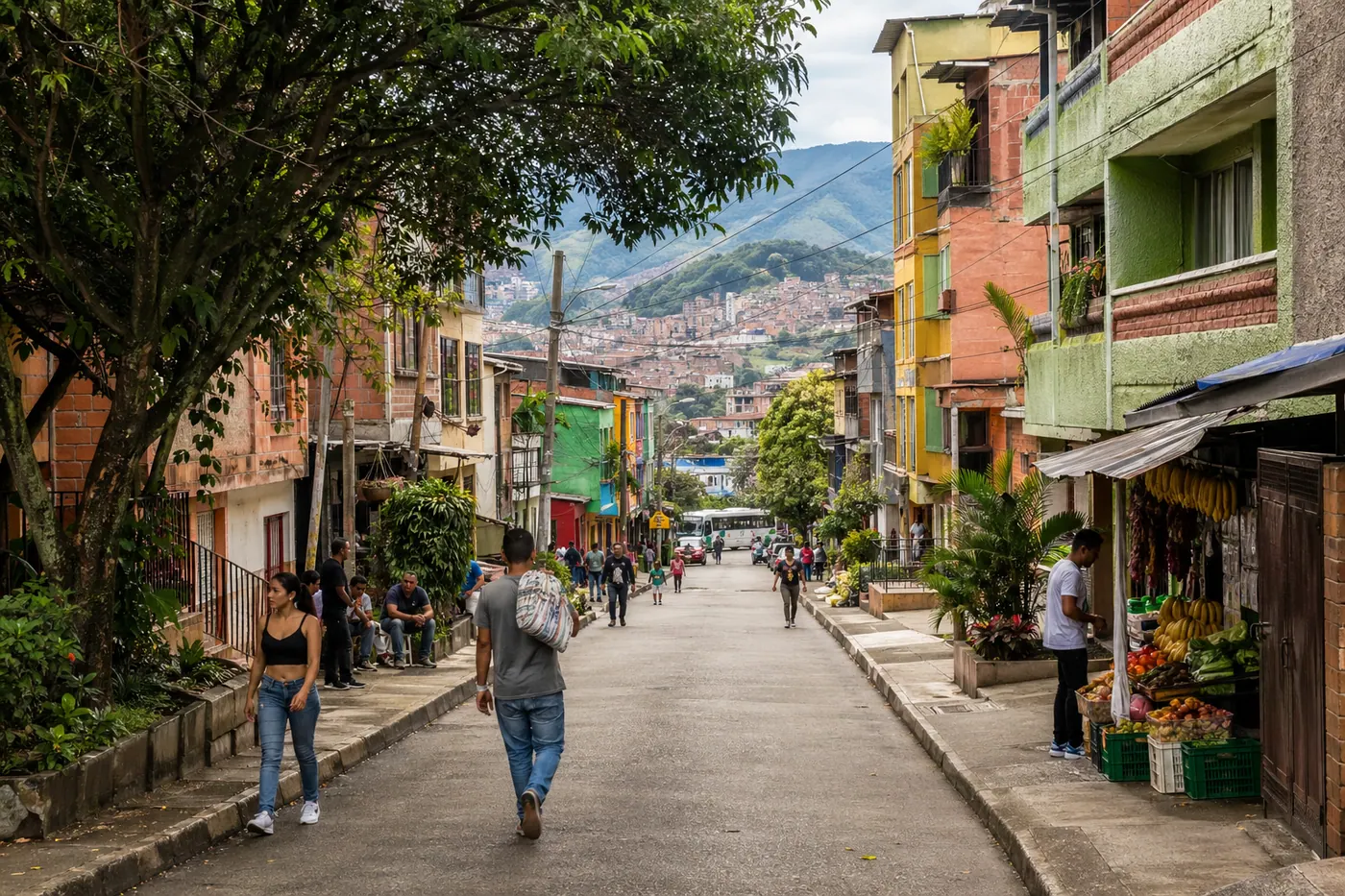
Laureles was built in the 1940s and 1950s as a planned neighborhood with tree-lined streets, parks every few blocks, and low-rise buildings. That urban design — which in Medellín only El Prado shares — is what makes walking through Laureles a pleasure. The trees provide real shade (useful at 28°C all year round), there are wide sidewalks, and most blocks are residential buildings of 4-6 floors, not 30-story towers like in El Poblado.
The second reason: prices. For the same quality and square meters, Laureles is between 25% and 40% cheaper than El Poblado. And the third: the atmosphere. There are cafés, bars and restaurants — but also longtime locals buying at the corner store, kids playing in the parks on Saturday mornings, neighbors greeting each other. That is increasingly hard to find in areas that have turned into tourist districts.
Real rental and sale prices in Laureles
Prices change quickly, but these ranges are representative of what you'll find today in real listings (and they help you negotiate):
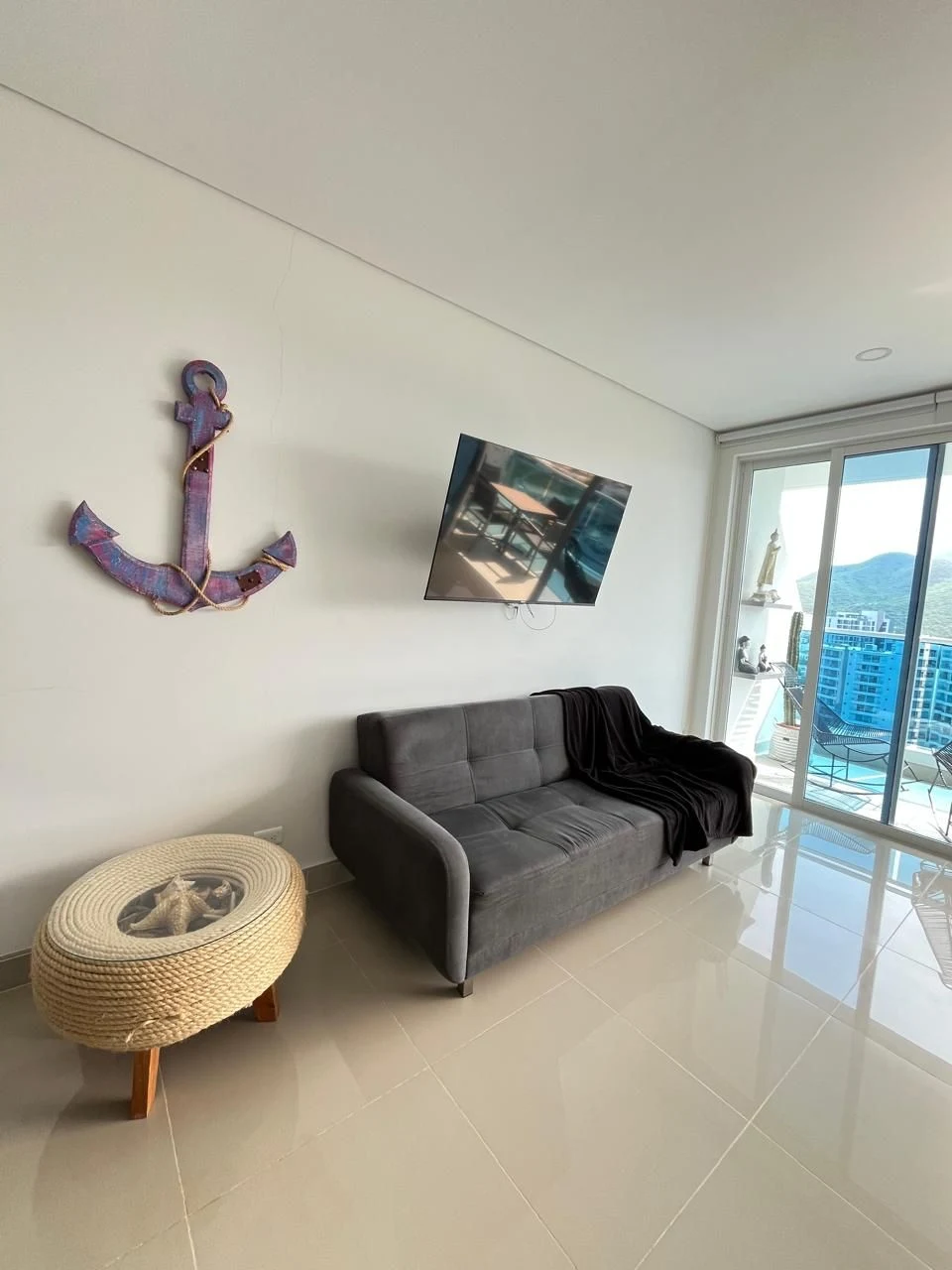
Furnished 1-bedroom apartment: from $2,200,000 to $3,800,000/month. The lower range corresponds to areas like Bolivariana or sub-zone 33; the upper range is Primer Parque and around La 70.
Furnished 2-bedroom apartment: $2,800,000 to $5,500,000/month. Add administration fees ($250,000-$500,000) and utilities ($200,000-$400,000 depending on air conditioning use) to furnished rentals.
Furnished 3-bedroom apartment: $4,200,000 to $8,000,000/month. For families. This segment has risen sharply with the arrival of nomad families and returnees.
Unfurnished: subtract approximately 30-40% from the ranges above. Minimum contracts of 12 months.
For sale: the average apartment in Laureles is between $5,500,000 and $9,000,000 per m². Houses (increasingly rare because they were demolished to build apartment buildings) range from $700M to $2,000M depending on location and lot.
For the full context with prices in all the main neighborhoods, check out our guide to rental prices in Medellín by neighborhood.
Laureles sub-zones and how to choose
Laureles is big. People talk about "Laureles" as if it were a single neighborhood, but it has at least 5 very distinct sub-zones. Knowing which one suits you is the difference between loving and hating living there.
Primer Parque and surroundings
The epicenter. Tree-lined streets, newer buildings, specialty coffee shops on every corner. It has the highest demand from digital nomads and is the most expensive. If you work remotely and want to walk everywhere, this is the place. Counterweight: on weekends the area fills with tourists and Airbnbs occupy many buildings — sometimes you get a different neighbor every 3 days.
Segundo Parque
More residential, calmer, prices 10-15% below Primer Parque. A good option if you prioritize tranquility over café life. Local families live here. There are fewer tourist restaurants but more bakeries, butcher shops and working neighborhood stores.
La 70 (avenue)
Laureles' party street. Bars, nightclubs, street food on weekends. If you like going out, being 2-3 blocks from La 70 is convenient. If you want to sleep on a Saturday at 11 PM, not so much. Apartments right on La 70 are the cheapest in Laureles but also the noisiest.
Santa Teresita

The traditional heart of Laureles, with its namesake church as a reference point. More Colombian, less touristy. Older buildings but with charm. It is the area that most resembles "how Laureles was before the foreigners". Generally lower prices than Primer Parque.
Bolivariana and sub-zone 33
Technically they are not always included as "Laureles" (they fall in the neighboring comuna), but in practice they are the ones that offer Laureles at a better price. The Pontifical Bolivarian University is located in Bolivariana (hence the name), so it's full of students and cheap restaurants. Sub-zone 33 (calle 33) sits on the edge next to the Stadium — very well connected by metro and more affordable.
📍 Comparing neighborhoods?
If you still can't decide between Laureles, El Poblado or Envigado, read our complete guide to Medellín neighborhoods with the real pros and cons of each one.
Safety in Laureles: the honest take
Laureles is one of the safest neighborhoods in Medellín. You can walk during the day without worry, and at night in the main areas (Primer Parque, Segundo Parque, Santa Teresita) people walk calmly until 11 PM or midnight.
That said: it's not Switzerland. Cell phone theft at restaurants and terraces does happen — don't leave your phone on the table facing the street. Thefts by motorcycle passengers (parrillero) can occur on avenues — avoid walking distracted with your phone along Avenida Nutibara or the edges of the neighborhood during rush hour.
The La 70 area during weekend early mornings concentrates fights between drunk people — it's not robbery, but it is noise and occasional street drama. If you plan to be there after 2 AM, it's better to take a taxi than walk.
Police presence is visible and responsive compared to other comunas. The local police sector units work. Most foreign residents I've met in Laureles have never been victims of anything more serious than losing a phone through carelessness.
Getting around: how to move from Laureles
Here is one of the important tradeoffs versus El Poblado:
- To El Poblado (Parque Lleras, Provenza): 20-35 minutes by Uber depending on the time of day. During rush hour (7-9 AM and 5:30-7 PM) it can be longer.
- To José María Córdova Airport (JMC): 45-60 minutes by Uber. Closer than from El Poblado.
- To Olaya Herrera Airport (domestic): 10-15 minutes. Very close.
- To downtown Medellín: 15-20 minutes by metro (Estadio or Floresta Station).
- Within Laureles: everything is walkable. The neighborhood measures approximately 2 km x 1.5 km. From any point to another, it takes 15-25 minutes on foot.
Having a car in Laureles is useful but not mandatory. Many residents get around with Uber/DiDi and the metro, especially if they avoid frequent trips to El Poblado.
Cafés, restaurants and services
Laureles is full of specialty coffee shops — many with good internet for remote work. Pergamino, Café Zeppelin, Rituales, Hija Mía, Catación Pública and dozens more. For updated lists with tested internet, check our
best cafés for remote work in Medellín.
Restaurants: there's everything from traditional bandeja paisa to ramen, sushi, Neapolitan pizza, Venezuelan, Peruvian and vegan food. Few options for very formal dinners (for that you go to El Poblado), but plenty of casual variety.
Supermarkets: Éxito, Carulla, Jumbo and D1 within the neighborhood. Fruit and vegetable markets in the plazas.
Laureles or El Poblado: how to decide
Choose Laureles if:
- You value neighborhood atmosphere over a tourist zone.
- You want to walk everywhere in your daily life.
- You prefer 4-8 story buildings over tall towers.
- You want to pay 25-40% less for the same square meters.
- You don't need to be in a coworking office in El Poblado every day.
Choose El Poblado if:
- You work in a physical office in the business district.
- Your social life depends on Parque Lleras/Provenza and you want to walk to bars.
- You prefer buildings with more amenities (gym, pool, rooftop).
- You get around by taxi/Uber more than on foot.
For many nomads and returnees the pattern is: start in El Poblado because it feels "safe" when they arrive, discover Laureles after 2-3 months, and move. Touring both before signing a 12-month contract will save you that detour.
How to find your apartment in Laureles
On Colombia Move you can see listings posted directly by landlords in Laureles, with no intermediaries. Search for apartments in Medellín on the platform filtering by neighborhood. If you're a landlord, you can also list your property for free without paying commissions.
For the most complete version of the rental process in Colombia (documents, guarantee policies, how to avoid scams), our complete guide to finding an apartment in Colombia covers the basics step by step.
Frequently Asked Questions
❓ How much does it cost to rent an apartment in Laureles?
A furnished 1-bedroom apartment ranges from $2,200,000 to $3,800,000/month depending on sub-zone and quality. A 2-bedroom: $2,800,000 to $5,500,000. Add administration and utilities (roughly $500,000-$800,000 more). Unfurnished prices drop 30-40% but require a minimum 12-month contract.
❓ Is Laureles safe to live in?
Yes, it's one of the safest neighborhoods in Medellín. Visible police presence, well-lit streets, pedestrian life. Normal precautions apply: don't leave your phone exposed in restaurants, don't walk distracted along the perimeter avenues during rush hour, and avoid walking along La 70 after 2 AM on weekends.
❓ What is the best sub-zone of Laureles for a foreigner?
It depends. For a first time and social life, Primer Parque. For tranquility and price, Segundo Parque or Santa Teresita. For a tight budget, Bolivariana or sub-zone 33. If you value Colombian authenticity over café life, Santa Teresita wins.
❓ Do I have to speak Spanish to live in Laureles?
It helps a lot, but it's not essential in Primer Parque and surroundings — there are enough foreigners and bilingual baristas. In Santa Teresita and Bolivariana it's very useful. For paperwork (rentals, utilities, banks) you need at least basic Spanish or someone to help you.
❓ How long does it take to go from Laureles to El Poblado?
By Uber: 20-35 minutes depending on the time of day. Rush hour (7-9 AM and 5:30-7 PM) can exceed 40 min. By metro: you need to transfer, it takes 30-40 min total. Many Laureles residents go to El Poblado only 1-2 times a week so they don't depend on the trip.
🏡 Ready to search in Laureles?
See real apartment listings in Laureles posted directly by landlords — with no commissions or intermediaries.
Do you live in Laureles or are you thinking about moving there? Leave us a comment below with your experience or question — we answer everything. If this guide helped you, share it with someone who is looking for where to live in Medellín.

Comments
Loading comments...
Checking sign-in status...