
Colombia Needs Housing Price History More Than Another Portal
Colombia has plenty of property portals — and zero public price history. That gap costs buyers, renters, and sellers more than most people realize.
Idioma del artículo
Listo para traducir
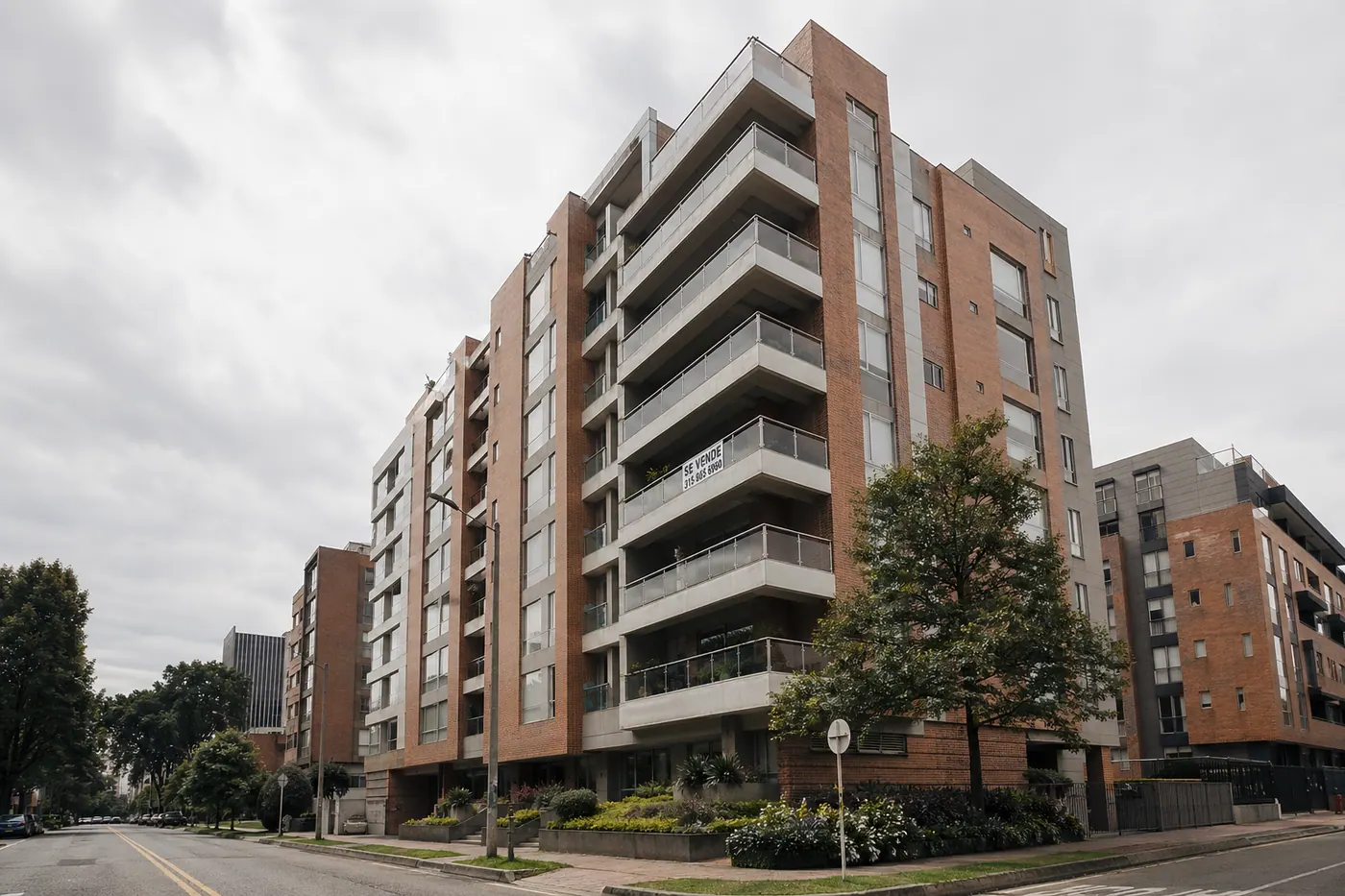
Six weeks ago a friend of mine was apartment hunting in Bogotá's Chapinero. She found a listing at COP 1,950,000 a month — solid photos, good location, seemed worth a visit. What she couldn't see: the listing had been sitting for four months. The original ask was COP 2,300,000. The owner had already passed on one tenant over a codeudor dispute and quietly dropped the price twice. None of that was visible anywhere.
This is the specific problem with Colombia's housing market. It's not that information doesn't exist — sellers know their own history, agents know the neighborhood comparables, banks know what they'll lend against. The problem is that none of it becomes public. Every transaction starts from zero information, and buyers navigate essentially blind against parties who've been playing the market for years. If you want to see real-world options right now, you can browse farms and rural land for sale on Colombia Move — posting is completely free.
The instinctive fix is more portals. Colombia already has Finca Raíz, Metrocuadrado, OLX, Facebook Marketplace, and dozens of local classifieds sites. Adding another one doesn't help. The gap isn't inventory visibility — it's historical data. And confusing those two things is exactly why the transparency problem persists.
Listings vs. Data: They're Not the Same Thing
A listing tells you what a seller is asking today. Data tells you what the market actually accepted. Those are completely different things, and the gap between them is where buyers lose money and sellers leave deals unclosed.
In the US, Zillow shows you not just the listed price but every reduction, how long the listing has been active, and what similar units sold for on the same street. Redfin goes further — it shows actual closed sale prices, price-per-square-meter by neighborhood, and days-on-market trends. None of this requires insider access. It's public because the US real estate market decided, decades ago, that buyers deserve to see it.
In Colombia, the equivalent records technically exist. Sale prices are registered at the notaría. Days on market can be inferred from listing dates. But there's no accessible layer that surfaces any of this to an ordinary buyer. You can hire an agent who might know the comparables — or you can guess. That's an infrastructure problem, not a portal problem.
How Stale Listings Quietly Distort Prices
The most underappreciated damage from opacity is stale listings. When a property sits on the market at an inflated price for five months without any public record of the fact, it anchors the neighborhood's price perception upward. New sellers look at visible comparables to price their own units. If every comparable they see is a wish price that nobody accepted, the whole market drifts above reality.
I've watched this happen in El Poblado. A penthouse lists at COP 12,000,000 a month. It doesn't move. Two months later it drops to 10,500,000. Another three months later it disappears — maybe rented privately, maybe pulled. A new penthouse lists two blocks over. The owner sees the 12M listing still in the search results and thinks 11M is reasonable. There's nothing to show them that 12M sat untouched for five months before evaporating.
In most developed housing markets, days on market is one of the first signals a buyer uses. "This has been sitting for 90 days — they'll negotiate." In Colombia, that signal is invisible to anyone without informal access to insider knowledge. The only people who know are agents and sellers — the exact parties with an incentive not to share it.
The Sold Price Problem
Worse than stale listings is the complete absence of sold price data. When an apartment in Laureles closes at COP 420,000,000, that number vanishes from public view the moment the transaction is complete. It exists in the notaría records, which are technically public but practically inaccessible — finding a specific sale requires time, legal knowledge, and fluency in navigating Colombian administrative systems.
Without sold comparables, you can't negotiate from evidence. You negotiate from confidence, from bluff, from partial information — but not from data. A buyer who can say "three similar units in this building sold between 380M and 410M in the last 18 months" is having a fundamentally different conversation than a buyer guessing from active listings that may or may not reflect what the market will actually pay.
Sellers face the mirror-image problem. A seller who doesn't know what their building's units actually traded for doesn't know whether to hold firm, reduce, or accept an offer. The information vacuum punishes both sides — it just punishes the less-connected party more. If you're looking to understand what apartments currently cost across different neighborhoods, real-world rental price breakdowns by neighborhood give you a better baseline than asking prices alone.

What This Costs Foreigners Specifically
If you grew up in Colombia, you have a network. Someone's cousin sold in this building last year. You know the building's reputation. You have informal channels for the information that buyers from abroad simply don't. I've talked to enough expats to know that the median American, British, or European entering Colombia's housing market has exactly none of this.
The result isn't necessarily fraud — it's asymmetric information pricing. Foreigners often pay a quiet premium not because sellers are consciously exploiting them, but because they enter negotiations without the comparative data that local buyers piece together through informal channels. If you're renting and want to see what different neighborhoods actually look like right now, the guide to avoiding gringo pricing in Colombia covers tactics that help — but the structural fix is public price data, not individual vigilance.
📖 Keep Reading
The listed rent is only part of what you'll actually pay in Medellín. Administration fees, utilities, and parking add 15–25% on top.
See the full cost breakdown →Why More Portals Don't Fix This
Every year or two a new Colombian real estate portal launches — cleaner design, better mobile experience, maybe a map view. What it never includes is sold price data. That's not an oversight; it's structural. Sold prices require sellers to report what they accepted, and neither the portals nor the agents who list on them have any incentive to surface it.
Agents in Colombia, like agents everywhere, monetize information advantage. An agent who knows the building's comparable sales knows something you don't — that's their leverage. Transparent sold data democratizes that knowledge. It's not a coincidence that the traditional real estate industry shows minimal interest in making sold prices public.
The portals follow the listings. Listings are provided by agents and owners who have no structural incentive to share price history. Without changing that incentive, transparency doesn't happen through the existing channel. It requires a different approach — one that makes recording sales easy and rewarding for sellers rather than costly and invisible.
What Casa Clara Is Building
Casa Clara was built to address the data layer problem directly — not to add inventory to a market already full of portals. Price changes get recorded on every listing. A 'mark as sold' flow turns real transactions into public data points. Neighborhood-level patterns build over time. It's free, bilingual, and doesn't require a real estate agent to navigate.
It's not a complete solution yet — no single platform can be at this stage. But every listing that records a price reduction, every transaction that gets marked as sold, adds to a dataset that didn't exist a year ago. That accumulation matters. It's how the Colombian housing market starts to look less like a guessing game and more like a market.
📖 Keep Reading
Colombia Move built price history, sold data tracking, and housing-specific filters directly into the platform — free, bilingual, no commissions.
Read about Casa Clara →The Longer Arc
Colombia isn't uniquely resistant to transparency — it's at a stage other Latin American markets went through too. Brazil's housing market was similarly opaque a decade ago. Chile's property registry has become more accessible as digital infrastructure improved. What tends to accelerate the shift is a combination of regulatory pressure and platforms that make transparency easier than opacity.
When marking a sale as complete takes thirty seconds and adds credibility to a seller's profile, sellers cooperate. When it requires effort and offers no visible benefit, they don't. The platform design matters as much as the intent. Colombia Bogotá's rental market and Medellín's are large enough that even partial sold-price data creates meaningful signals — the dataset doesn't have to be complete to be useful.
Buyers and sellers navigating the market today don't have the luxury of waiting for perfect infrastructure. The best protection is knowing exactly what data you don't have, and negotiating to account for the uncertainty. That means assuming listed prices have room, asking how long a unit has been on the market, requesting justification for the ask, and checking whether platform-level price history shows any reductions. It's imperfect. Public price records would be better. Both things can be true.
Frequently Asked Questions
❓ Why don't Colombian real estate portals show sold prices?
Portals depend on agents and sellers to supply listing data. Agents monetize the information advantage that sold prices would reduce, so they have limited incentive to share transaction data. There's also no regulatory mandate requiring price disclosure the way US states require it. Casa Clara is attempting to build a voluntary sold-price database, but it takes time.
❓ How do I find out what an apartment actually sold for in Colombia?
Sale prices are registered at the local notaría (notary office) when a property transaction is completed. You can physically visit the notaría and request records, but the process is time-consuming and requires identifying the specific property. Some legal professionals offer property research services that include sale history. On Colombia Move, listings that have been marked as sold create a growing reference dataset.
❓ What is Casa Clara and how does it help buyers?
Casa Clara is a housing transparency layer built into Colombia Move. It records price changes on active listings, shows how long properties have been listed, and builds a sold-price dataset as sellers mark transactions complete. It's free and doesn't require an agent account. Think of it as the beginning of the MLS that Colombia never had.
❓ As a foreigner, am I more exposed to Colombia's housing price opacity?
Yes, meaningfully so. Local buyers compensate for the lack of public data through informal networks — they ask people who know people. Foreigners without those networks have no equivalent shortcut. The practical response is to use published neighborhood averages (like those on Colombia Move), ask sellers directly how long the listing has been active, and work with an attorney for any purchase rather than relying on the agent.
❓ Will Colombia ever get an MLS or public sold-price database?
Probably, eventually. The trajectory in most Latin American markets is toward more transparency as digital infrastructure matures and regulatory pressure grows. Colombia's Superintendencia de Notariado y Registro already holds the data — accessibility is the gap. Platforms like Casa Clara are building the voluntary layer in the meantime. It's a slower process than it needs to be, but the direction is right.
Found this useful? Help build the data layer.
Every seller who marks a listing as sold on Colombia Move adds to the public price record Colombia's market has been missing. If you've recently closed a transaction, it takes under a minute — and it genuinely helps the next buyer.
Have a question about navigating Colombia's housing market without full price transparency? Drop it in the comments below — or take it to the community at colombiamove.com/comunidad.
Casa Clara
Explore real housing market signals
Next step
Use this information on Colombia Move
Clearer housing data for Colombia.
Compare active listings, city context, and trust signals before making housing decisions.
Browse housingCompare real housing listings
Use the guide with live rentals, homes, fincas, and lots across Colombia.
Browse housingPost free
Listing on Colombia Move is free, bilingual, and built to be found from search.
Explore market dataRelated guides
More useful guides
housing
Cómo comparar precios de arriendo en Colombia sin dejarse tumbar
Comparar arriendos en Colombia es difícil si no sabés qué preguntar. Esta guía explica los factores que mueven el precio y cómo usar Casa Clara para no pagar de más.
housing
Cómo Saber Si un Anuncio de Arriendo es Real en Colombia
Antes de pagar el depósito o apartar un inmueble, aprende a identificar las señales de un anuncio de arriendo falso en Colombia — y cómo verificar al propietario sin depender so...
seller-guide
Cómo tomar fotos que venden una casa o apartamento en Colombia
La diferencia entre un anuncio que recibe mensajes y uno que no tiene casi siempre la misma explicación: las fotos. Aquí está la guía práctica para hacerlo bien con tu celular.
housing
Qué significa administración en un arriendo en Colombia
La cuota de administración es el costo oculto más frecuente en los arriendos colombianos. Esta guía explica qué es, qué cubre, cuánto cuesta y quién debe pagarla.
Explore by topic
Housing Transparency
Casa Clara
Market transparency, sold/rented signals, neighborhood pricing, and the data layer Colombia housing has been missing.
Housing
Renting in Colombia
Apartment, lease, neighborhood, fiador, and rental-market guides for tenants and owners.
Relocation
Moving to Colombia
Practical guides for planning the move, settling in, avoiding beginner mistakes, and understanding daily life in Colombia.
Comentarios
0 comentarios de lectores de Colombia Move
Cargando comentarios...
Inicia sesión con tu cuenta de Colombia Move para comentar.
Iniciar sesión