
How a Free US Mailbox Works for Shipping to Colombia
Your Amazon haul, delivered to Colombia — without the $200 customs surprise. Here's how a free US mailbox actually works.

IDIOMA DEL ARTÍCULO
Showing original language
The first time I tried to buy something obscure from a US online store and ship it to Medellín, I made every possible mistake at once. I sent a $340 audio interface direct from the manufacturer to my Colombian address, paid $58 in international shipping, and then watched it sit in DHL purgatory for two weeks while DIAN held it for a customs valuation review. By the time it cleared, I'd handed over another $96 in duties and IVA. The thing arrived. I learned a lesson.
That lesson: don't ship direct to Colombia. Use a virtual US mailbox. If you want to see real-world options right now, you can post your services for free on Colombia Move — posting is completely free.
Most expats and Colombians who buy from US retailers route everything through what's called a casillero virtual — a free Miami warehouse address that receives your packages, holds them, and forwards a consolidated box to Colombia for a per-pound fee. Done right, it cuts your landed cost roughly in half on most orders and gets your stuff through customs without weeks of DIAN guesswork. Done wrong, it's a money pit that costs more than a direct express courier. Here's how it actually works in 2026, with the customs math, the cost math, and an honest comparison of providers including the new Caribbean Shipper service that recently listed on our marketplace.
📦 Quick answer
- Free signup with most providers — you get a Miami address (your name, your suite/box number) within minutes.
- US retailers ship to that address; the casillero consolidates and forwards the box to Colombia.
- Under US$200 declared (CIF), the US-Colombia FTA exempts most personal-use shipments from duty + IVA.
- Above US$200 you typically pay 10% duty + 19% IVA on the customs value (~30.9% combined).
- Air-forwarding rates run $2.30–$4.00 per pound, with 5–10 business-day transit door-to-door.
- DIAN flags shipments with 6+ identical units as commercial — split orders if you need bulk.
What a 'casillero virtual' actually is
A virtual mailbox isn't a mailbox in any normal sense. It's a slot in a Miami-area warehouse with your name and a unique suite or box number on it. When a US retailer ships to that address, the warehouse signs for the package, scans it, and notifies you that it arrived. You log into a web dashboard, see your boxes stacking up, and tell the company when you want them combined and sent to Colombia.
The core value is consolidation. Two t-shirts, a phone case, a yoga mat, and a coffee grinder bought from four different stores would normally cost $30+ each in international shipping and trigger four separate customs reviews. Bundled into one box and forwarded by a casillero, it's one customs entry, one tracking number, and a single per-pound fee on the combined weight.
Caribbean Shipper, which advertises a free signup on our marketplace, gives you a US address at 7864 NW 62nd St, Miami, FL 33166. The pattern is the same as the larger players — Aeropost, HysBox, LogyBox, ShipBox: you sign up, get a unique mailbox identifier, and start shipping packages to that address tagged with your name and box code. The warehouse handles everything from arrival to door delivery.
The Colombian customs reality (the part most guides skip)
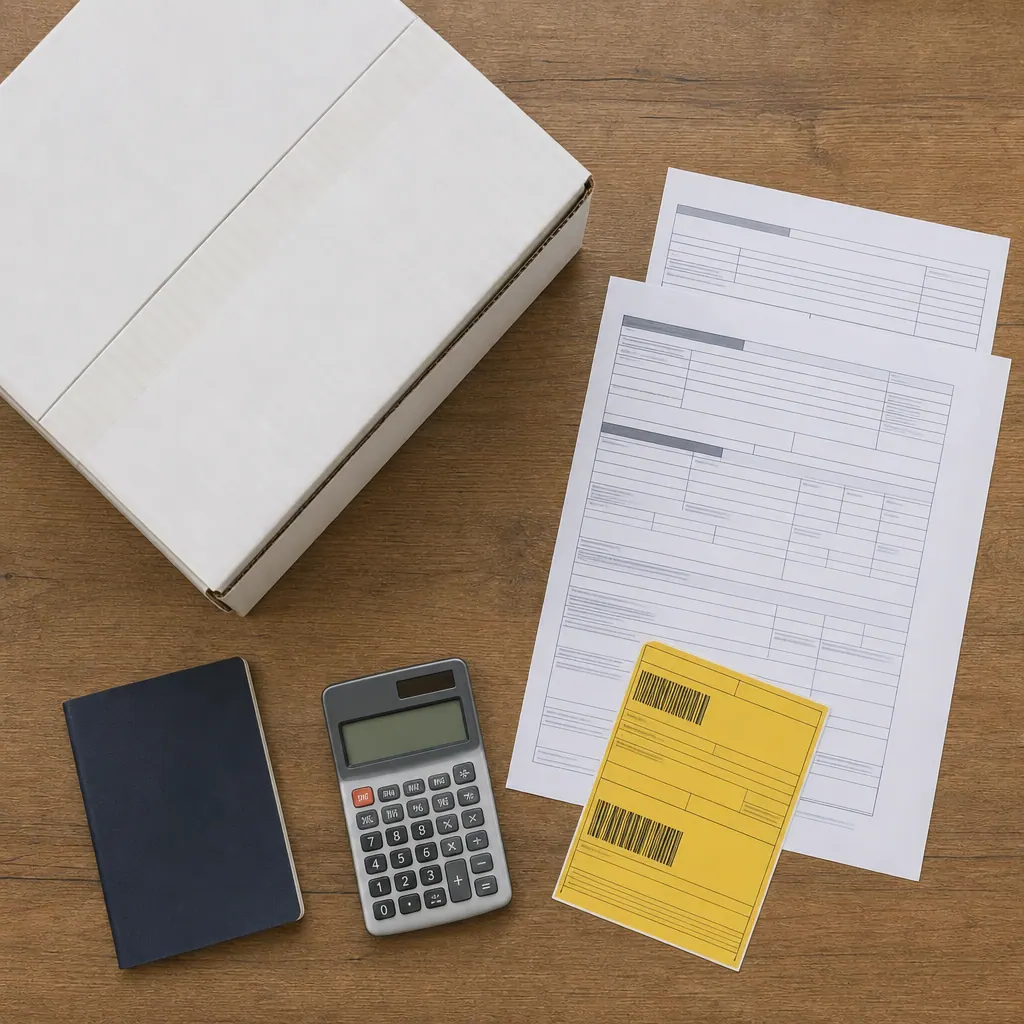
Colombia uses a US$200 de minimis threshold for postal and courier shipments under the US-Colombia Trade Promotion Agreement. Under that line, personal-use packages typically clear with no duty and no IVA. Above it, you owe both — and the calculation is on CIF value (cost + insurance + freight), not just the product price.
The arithmetic that matters in 2026:
- Duty: generally 10% (some categories higher — appliances, certain electronics).
- IVA: 19% on the duty-inclusive value.
- Effective tax above $200: roughly 30.9% of CIF.
A $250 declared shipment with $40 of forwarding cost lands at a CIF of $290. You'd pay roughly $29 in duty plus $60.61 in IVA — an extra ~$90 on top of the goods and shipping. That's the gap that turns a 'great deal' into 'should have bought it locally.'
A subtler trap is the six-unit rule. DIAN treats any shipment with six or more identical items as a commercial import and routes it through a slower, paperwork-heavy channel that the casilleros' personal-use customs broker can't resolve quickly. If you're stocking up on protein powder or vitamins for a year, split the order across two consolidations.
The $200 figure is also a CIF figure, which is one of the more expensive lessons people learn: a $190 product with $25 of forwarding fee already breaks the threshold. If you're shopping near the line, account for the per-pound fee before you click buy. And if you ever need a deeper dive into how DIAN actually treats personal-use imports — and the broader RUT/tax world that overlaps with it — start with our RUT registration walkthrough.
The actual workflow, step by step
Once you have the address, the rhythm is the same with any provider:
- Sign up — name, email, ID number, Colombia delivery address. Free with Caribbean Shipper, Aeropost, HysBox, and most competitors.
- Get your assigned address — usually your name + a unique box/suite code, e.g. ‘John Smith — Suite 2487.' Use that exact format on every US shipping label or the warehouse won't be able to match the package to your account.
- Shop and ship — buy from any US site that ships within the US (Amazon, Best Buy, Reverb, B&H, manufacturer-direct stores). Use your Miami address at checkout.
- Wait for arrival notification — most casilleros send an email or push notification when each package lands. You'll see weight, dimensions, and a photo on the dashboard.
- Request consolidation — wait until you have enough boxes stacked up to make the per-pound fee worth it (most people aim for 4–15 lb), then mark which boxes to combine.
- Pay forwarding — quoted by weight (real or dimensional, whichever is greater). You also declare the value for customs.
- Receive at home — air shipments to Medellín, Bogotá, and Cali run 5–10 business days door-to-door. The casillero handles the customs broker side; you sign for the box.
The 'declare the value for customs' step is where people get themselves in trouble. Under-declaring is a real problem with DIAN and can cause your package to be held for weeks while they re-valuate using their own pricing database. Honest declarations almost always clear faster than aggressive ones.
📖 Keep Reading
For the bigger picture on Colombian couriers, Amazon Colombia, and how packages actually move once they hit the ground here, this is the broader guide.
Mail, Packages and Casilleros in Colombia: Complete Guide →When a casillero saves you money — and when it doesn't
The math depends almost entirely on weight and price.
Where it wins:
- Electronics that don't exist locally or cost 2–3× more on Mercado Libre — audio gear, hobbyist tools, niche tech.
- Clothes and shoes from US-only retailers (Nordstrom, REI, Patagonia, Old Navy).
- Vitamins, supplements, and specialty foods from iHerb or Vitacost.
- Books from Amazon US — almost always cheaper than Buscalibre.
- Replacement parts for imported appliances.
Where it loses:
- Anything heavy and cheap. A $40, 5-lb yoga mat is a $20+ shipping fee — the math just doesn't work.
- Things sold reasonably on Mercado Libre Colombia or Falabella. Many basics are now competitive.
- Furniture, anything bulky, anything fragile that needs sea freight.
- Lithium batteries above standard cell-phone capacity. Many casilleros refuse them on air, and the rules are a moving target.
Honest rule of thumb: at the US$3–4/lb air rate most casilleros charge, your shipping cost is roughly 8–12% of a $400–600 order. Below ~$80 in product value, the per-pound rate eats too much margin to make sense.
What to verify before you commit to a provider
Most casilleros look identical from the website. They differ on the things you only learn after a problem:
- Insurance: does the per-pound rate include declared-value coverage, and what's the cap? Caribbean Shipper advertises 'insured shipments with door-to-door tracking' — verify the cap before you ship a $1,500 camera.
- Prohibited items: lithium batteries (especially loose), aerosols, any CBD/THC products, certain encrypted electronics, drones. Each provider has its own list — read it before you order.
- Dimensional weight: a 1-lb package in a 12×12×12 in box may be billed as 9 lb under DIM weight rules. The cheap part of the rate card usually only applies to dense items.
- Transit guarantees: ‘3–5 business days' is the marketing line. Real expat experience is closer to 5–10. If you need it next week, pay the express tier.
- Address format: some providers route everything through a single warehouse, others use multiple zip codes. Use exactly the format they specify or your package sits unattributed.
- Communication: WhatsApp support is the make-or-break feature. Caribbean Shipper publishes a WhatsApp number on the marketplace listing, which is a useful sign for a smaller operation.
Provider quick-take: the options most expats actually use
A few honest takes — this is not a sponsored post, and we don't get paid by any of these:
- Caribbean Shipper — Newer, Miami-based, free signup, WhatsApp-direct support. Listed on our marketplace at the free signup page. Smaller footprint than Aeropost, which usually means faster human response if something goes wrong. Reviews are limited because the operation is younger; the upside is they're hungry for the business.
- Aeropost — The legacy giant. Solid track record, well-known brand, prices around $3.50/lb. Slower response on edge cases. A safe default if you want a name expats already recognize.
- HysBox — Colombian-owned, around $2.30/lb on additional pounds, Spanish-first dashboard. Strong choice if you're a local rather than an expat.
- LogyBox — Combines US and China origin warehouses. Useful if you also order from AliExpress.
- Casillero 4-72 / Servientrega Casillero / Coordinadora — The state and big-three Colombian couriers all run their own casilleros. Cheapest published rates, but the user experience tends to feel post-office grade.
The single most useful piece of advice: test any new provider with a small, low-value order before you trust it with anything important. A $40 first shipment tells you everything you need to know about transit times and customer service, with very little money at risk.
🇨🇴 Browse shipping providers on Colombia Move
Caribbean Shipper has a free signup listed in the marketplace, with a direct WhatsApp number. No commission, no middleman.
See the listing →FAQ
❓ Do I have to be a Colombian resident to use a casillero?
No. Most casilleros only ask for an ID number — passport, cédula, or cédula de extranjería all work — and a Colombia delivery address. Tourists with a 90-day stamp routinely use them. Long-term plans usually involve a real visa anyway, but the casillero itself doesn't care.
❓ What happens if my package gets held by DIAN?
The casillero's customs broker handles the back-and-forth. You may get a request to provide the original purchase invoice or, in stubborn cases, pay the recalculated duty/IVA at the higher value DIAN's database suggests. Resolution time is typically 3–10 business days, sometimes longer for high-value or restricted-category items.
❓ Can I ship a phone or laptop?
Yes, but understand the math. A $1,200 laptop is well above the $200 threshold, so you'll pay roughly 30% on top in duty and IVA. Many expats find that buying the same model from a Bogotá or Medellín retailer breaks even once duty is included — and you avoid the warranty headaches that come with an out-of-country purchase.
❓ How long does shipping from Miami to Colombia actually take?
Plan on 5–10 business days door-to-door for air freight. Sea freight (only for big stuff) is 4–8 weeks. The marketing claim of '3 days' only applies to a handful of express tiers from major Colombian cities, and even then DIAN can hold the package for an extra cycle if anything looks unusual.
❓ Is the free signup actually free?
Yes, at every major casillero. Caribbean Shipper, Aeropost, HysBox, and the rest charge per shipment, not per account. There are no monthly fees. The cost shows up only when you ship — and even then, you'll see the quote before you authorize the consolidation.
Ordering something specific and not sure if a casillero makes sense? Drop the question in the Colombia Move community — there's a good chance someone else has tried to ship the same thing and learned the customs lesson the hard way.



Comments
Loading comments...
Checking sign-in status...