
Living in Santa Marta, Colombia: An Honest Expat Guide
Santa Marta doesn't have Cartagena's Instagram aesthetic, but it has something better: Colombia's Caribbean coast at a fraction of the price, with Tayrona National Park 45 minutes away.
IDIOMA DEL ARTÍCULO
Showing original language
Most people who visit Santa Marta spend about three days — enough to walk through the old city, book a Tayrona day trip, and make vague plans to come back. Then they return to Medellín or Cartagena and Santa Marta fades into a 'we should go again sometime.' Which is partly why it's still one of the best-value coastal cities in Colombia to actually live in.
Founded in 1525, Santa Marta is the oldest surviving European settlement in South America. The historical footnote is charming, but what matters more to potential residents: it sits at sea level beneath the Sierra Nevada mountains, fronts a genuine Caribbean bay, runs several daily flights to Bogotá and Medellín, and comes significantly cheaper than Cartagena or comparable beach towns in Mexico or Thailand.
The trade-off is that Santa Marta is a real Colombian city — traffic, infrastructure that varies wildly block to block, and none of the tourist-polished predictability of Cartagena's walled-city tourism economy. If you want polished and predictable, Cartagena is right there. If you want authentic Caribbean Colombia at a price that actually makes sense, read on.
The City Nobody Really Talks About
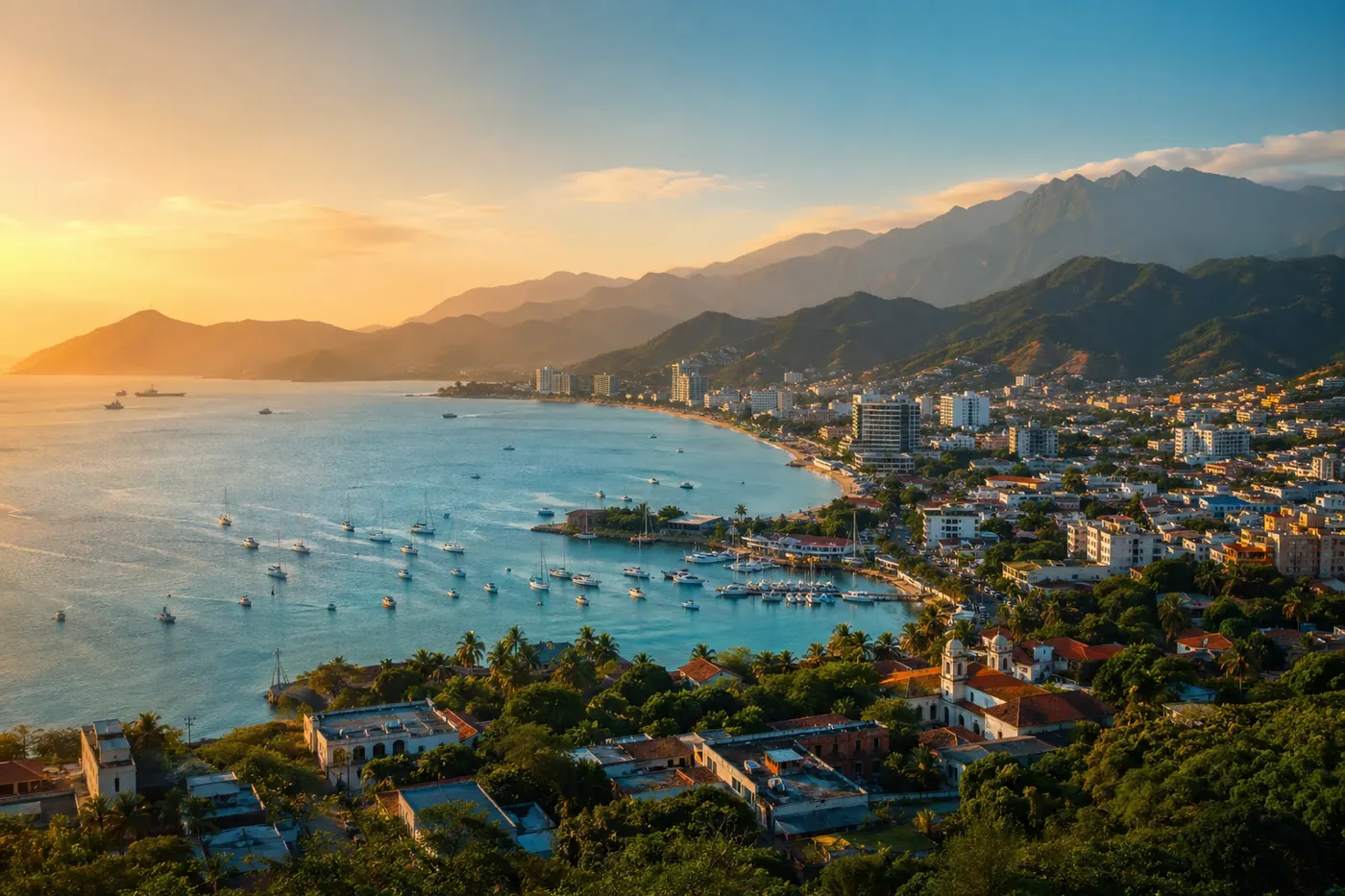
Santa Marta sits on Colombia's Caribbean coast in the Magdalena department, backed by the Sierra Nevada de Santa Marta — the world's highest coastal mountain range. The geography is extraordinary: you can go from sea-level beach to 20°C mountain village in under an hour, which is a combination you won't find anywhere else on the continent.
The bay is swimmable in the right spots (Taganga cove, parts of Bello Horizonte), and while the city doesn't have Cartagena's walled-city Instagram quality, the Centro Histórico around the Parque de los Novios has genuine colonial architecture that feels lived-in and unperformed. The scale is manageable — mid-sized Colombian city, not a megalopolis.
Best Neighborhoods for Expats and Remote Workers
The main split in Santa Marta: the beachside and old city areas (authentic, rougher infrastructure) versus the northern corridor (newer construction, more reliable internet, higher rents). Here's how each area plays out:
El Rodadero is the beach strip about 5km south of the historic center — where most Airbnbs cluster and where Colombian families vacation on weekends. Functional, beach access built in, prices are reasonable. For longer stays it can feel like an extended hotel zone rather than a real neighborhood. Expect 1.2–2M COP/month (~$300–500 USD) for a 1BR with AC.
Pozos Colorados and Bello Horizonte form the northern corridor heading toward Ciénaga. This is where newer residential towers went up, fiber internet actually works consistently, and families and remote workers needing reliable connectivity tend to land. Apartments here run 1.8–3M COP ($450–750 USD) — more expensive, but the infrastructure shows.
El Centro Histórico, around the Parque de los Novios, gives you walkability, good restaurants, and authentic city energy. Internet and building quality vary dramatically from one address to the next. Great for a first exploratory month, not ideal as a permanent base if your income depends on reliable connectivity.
Taganga is the fishing village turned dive town 15 minutes north of the center. Gorgeous cove, cheap rent (600K–1M COP), real PADI dive scene. Also: patchy internet, party-backpacker energy, and 'basic' that genuinely means basic. Excellent for a month of exploration, genuinely challenging for a year of remote work.
Keep Reading
Living in Cartagena, Colombia — how Santa Marta compares to Colombia's other Caribbean expat destination
Cost of Living in Santa Marta
Santa Marta runs cheaper than both Cartagena and Medellín across most categories. Here's a realistic monthly breakdown for one person:
Rent for a decent 1BR in Pozos Colorados with AC: 1.8–2.5M COP (~$450–625 USD). Groceries run 300,000–500,000 COP/month — local fruit markets are excellent and cheap, and D1 and Éxito have everything else. A proper almuerzo del día at a local restaurant costs 12,000–18,000 COP. Mototaxi rides (the dominant transport here) run 2,000–5,000 COP around the city.
The surprise line item: electricity. Caribbean heat means AC runs constantly, and electricity bills can hit 150,000–300,000 COP/month or more depending on your unit's insulation. This is noticeably higher than Medellín, where spring-like weather means minimal climate control. Factor it in before committing to an apartment. A realistic total monthly budget for a comfortable single-person life: $900–1,300 USD.
Keep Reading
Cost of Living in Colombia for a Single Person — a full cost breakdown for single expats living in Colombia
Internet and Remote Work: The Honest Picture
Santa Marta isn't where you go if perfectly consistent fiber is a hard requirement. It's improving fast — Claro and ETB both have fiber coverage in much of Pozos Colorados and parts of Centro — but coverage varies block by block, and the gap between 'internet exists at this address' and 'this handles daily video calls without drama' is real.
The coworking scene is thin. There are a few spaces near the waterfront, but nothing like Medellín's density. Most remote workers end up working from their apartments. If remote work is your primary income, spend a week in Santa Marta first, test the actual connection at your specific prospective address, and make your long-term call from there.
Getting Around
Mototaxis are Santa Marta's informal transit system — cheap (2,000–5,000 COP across most of the city), fast, and ubiquitous. This is different from Medellín and Bogotá where motorbike taxis occupy a grayer legal zone; in Santa Marta they're fully mainstream. Budget around 80,000–120,000 COP/month for regular daily transport.
For day trips, shared colectivos and vans leave regularly from near the Centro for Tayrona (45 min, 10,000–15,000 COP) and Minca (similar time and price). Palomino is 1.5–2 hours east with regular van service. The airport (Simón Bolívar, SMR) is 10 minutes south of the city, with multiple daily connections to Bogotá and Medellín.
Safety
Santa Marta's safety reputation is part outdated, part exaggerated. The city center is fine during the day; at night, the same awareness you'd apply in any Colombian city center applies here. Taganga gets a 'be careful' note in older guides but in practice it's a small cove full of backpackers — incidents tend to involve late-night beach situations that are avoidable.
The northern corridor (Pozos Colorados, Bello Horizonte) is consistently the safest area and where most families and remote workers end up. The standard Colombia safety playbook applies city-wide: don't flash expensive gear, use apps or mototaxis for transport at night rather than walking long distances, and ask locals which specific blocks to avoid — that knowledge shifts faster than any guide can track.
Day Trips and the Real Reason People Stay
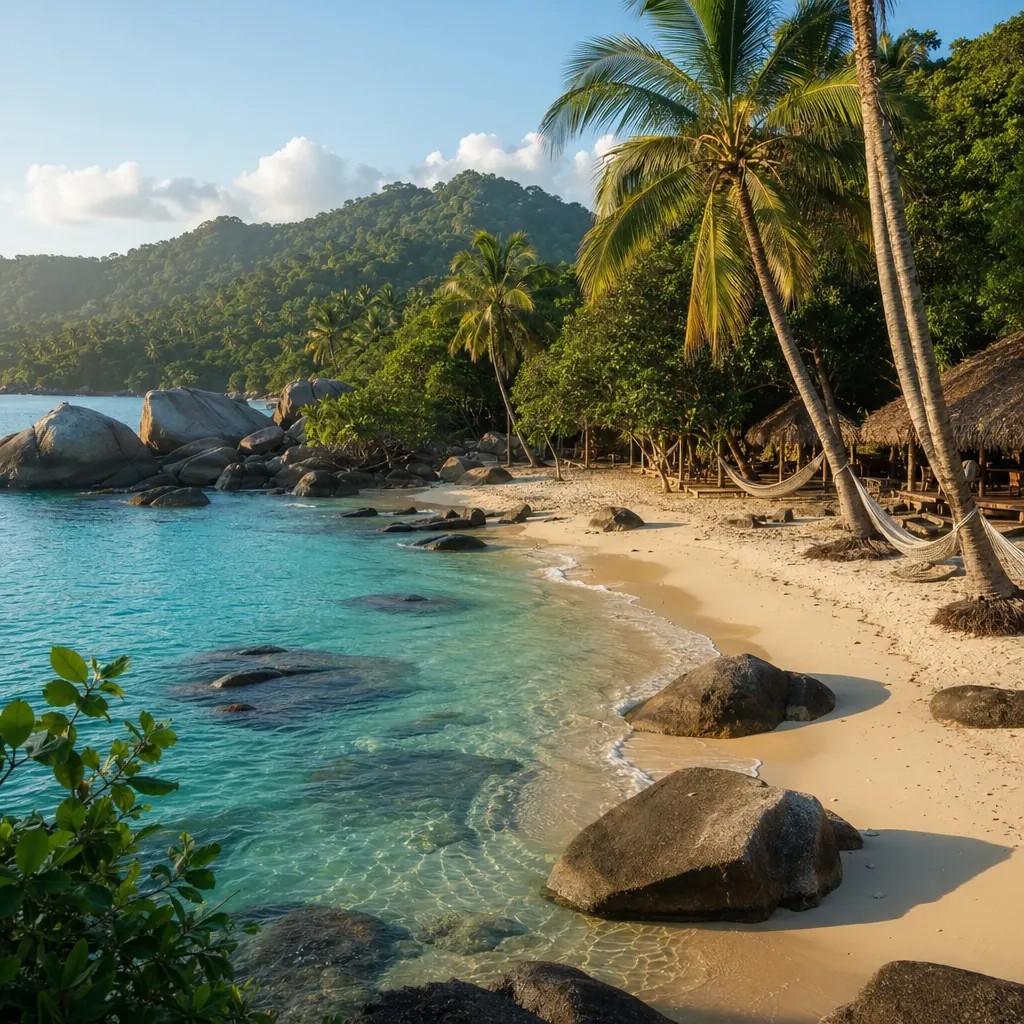
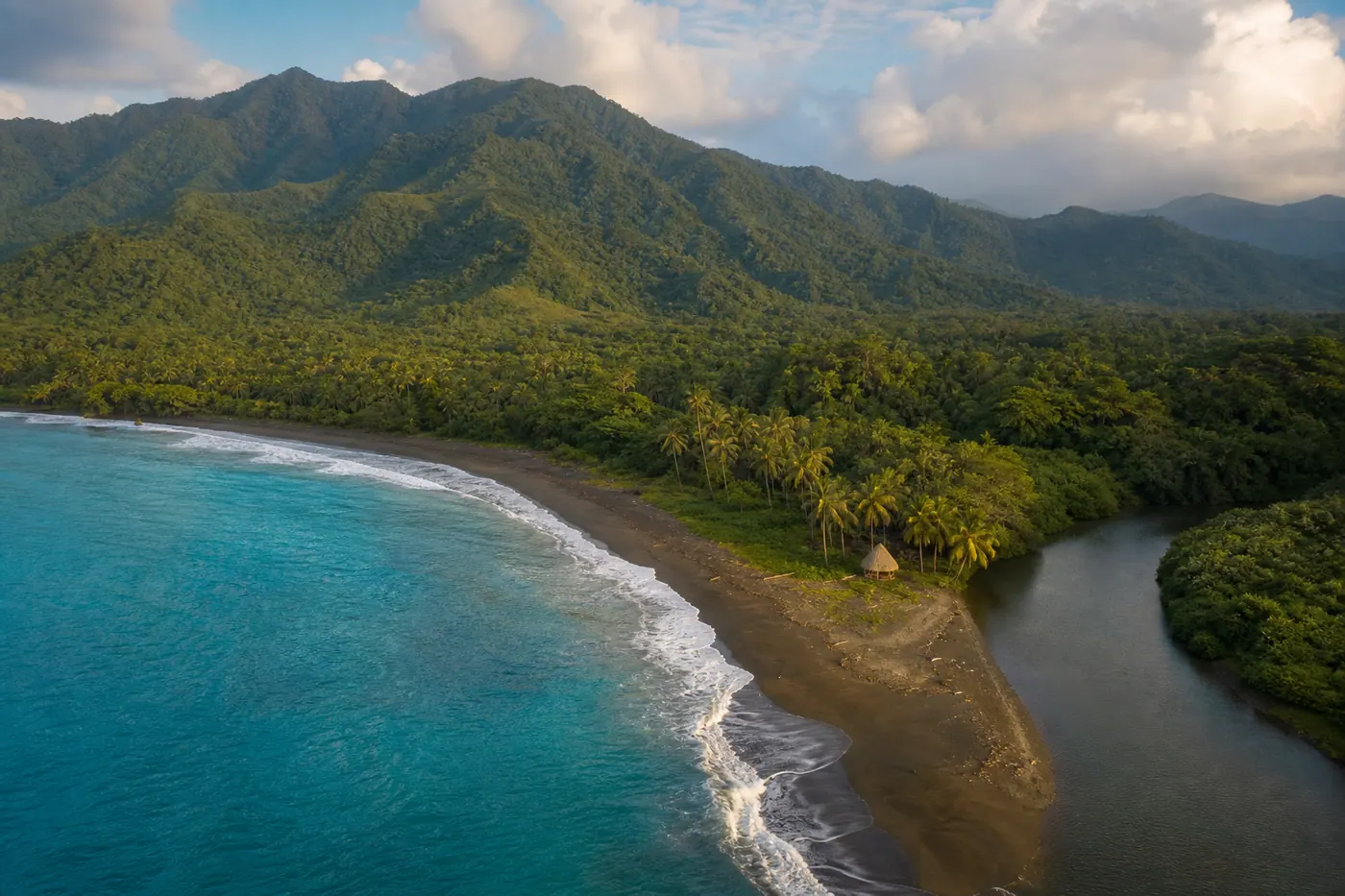
Access to nature from Santa Marta is genuinely unmatched anywhere else in Colombia. Tayrona National Park is 45 minutes away — white sand beaches framed by jungle hills and Caribbean water, reachable via a 45-minute trail through dense forest. Always check the online pre-reservation system before you go; they limit daily visitors and it fills up on weekends.
Minca is the thermal escape valve: a mountain village at 650 meters where temperatures drop to the low 20s Celsius. Waterfalls, coffee farms, birding, and a proper cool-breeze reset from coastal heat. Most people do it as a day trip, though two nights is worthwhile.
Ciudad Perdida — the Lost City trek — is a 4–6 day route deep into the Sierra Nevada and one of the best multi-day trails in South America. Most expats who end up living here do it once in their first year. Palomino, two hours east toward La Guajira, is a low-key beach town worth a weekend whenever you need a scene change.
🏥 Need Health Coverage While You Get Settled?
SafetyWing's Nomad Insurance covers Colombia and keeps you protected while you sort out EPS or prepagada. Starting from $56/month.
Explore SafetyWing →The Parts Nobody Mentions in the Instagram Posts
The heat is the biggest adjustment. Santa Marta sits at sea level on the Caribbean coast, and 'hot season' describes most of the year. Bogotans visiting for a weekend often look genuinely defeated by day two. You adapt eventually — early morning errands, siesta-ish midday breaks, embracing AC — but if you genuinely hate sustained heat, this city will fight you every day.
International grocery items are fewer than in Medellín. The expat community, while growing, is smaller and less organized. English-speaking accountants, lawyers, and real estate agents are rare — everything from lease negotiations to utility sign-ups runs more smoothly in Spanish than almost anywhere else in this guide.
And there's a 'frontier' quality to the city that's either appealing or exhausting depending on who you are. Things work, mostly, but not always on schedule or as expected. The people who thrive here tend to find that energy charming rather than infuriating. The ones who don't tend to figure it out within the first month.
Frequently Asked Questions
❓ Is Santa Marta good for digital nomads?
Yes, with caveats. It works well if you choose accommodation carefully (test fiber before committing), can handle the heat, and don't need Medellín-level coworking infrastructure. The lifestyle upside — Tayrona on weekends, cheap food, Caribbean coast — is genuinely compelling for the right person. It's not plug-and-play, but it rewards the effort.
❓ How much does it cost to live in Santa Marta per month?
A realistic budget for one person is $900–1,300 USD/month. That includes a decent apartment with AC in a good neighborhood, groceries, eating out regularly, transport, and utilities. It's cheaper than Cartagena and roughly comparable to Cali. The electricity bill is higher than temperate-climate cities, which surprises many people.
❓ Is Santa Marta safe for foreigners?
Generally yes. It's a real Colombian city with the standard safety considerations — not a sanitized tourist bubble, not especially dangerous. The northern neighborhoods (Pozos Colorados, Bello Horizonte) are the safest. Standard Colombia street awareness applies: be observant at night in Centro, use transport apps or mototaxis rather than walking unfamiliar routes late.
❓ What's the internet like in Santa Marta?
Improving, but inconsistent. Fiber is available in newer apartment complexes in Pozos Colorados and parts of the city center. Taganga and older apartment stock may still be on cable or DSL. Always verify the actual connection at your specific address before signing a lease — 'fiber available in the area' and 'fiber connected to this unit' are two different things.
❓ Santa Marta or Cartagena — which is better for expats?
They serve different needs. Cartagena has more expat infrastructure, better-developed upscale neighborhoods like Bocagrande and Manga, and more English-speaking services. Santa Marta is cheaper, less touristy, has dramatically better access to nature (Tayrona, Minca, Ciudad Perdida), and feels more like a real Colombian city. Most people who've lived in both develop a strong preference — they're genuinely not interchangeable.
Ready to Check It Out?
Santa Marta rewards people who give it a genuine chance rather than a three-day trip. If you're comparing it against other Colombian cities, come for two weeks — rent a short-term place in Pozos Colorados, make a weekend trip to Tayrona, eat at the local spots near Centro. You'll know within a week whether this city is for you.
Questions about life on the Caribbean coast or elsewhere in Colombia? Drop them at colombiamove.com/comunidad — there are locals and long-term expats who know Santa Marta well.
Comments
Loading comments...
Checking sign-in status...