
Colombia Marketplace Trends We're Watching
Running Colombia Move gives us a front-row seat to how commerce actually works here. Here's what we're watching — from WhatsApp ceilings to the bilingual gap and the rise of direct transactions.
IDIOMA DEL ARTÍCULO
Showing original language
Running a marketplace gives you a front-row seat to things that don't show up in economic reports. You see the seller who lists a laptop at 2 AM and has three messages by 6 AM. You see the landlord who finally drops the commission-inflated price after two months of silence. You see the expat who gives up searching in Spanish and starts asking in English-language Facebook groups — at which point they pay whatever someone tells them, because they've run out of better options.
We've been running Colombia Move long enough that certain patterns keep repeating. Not trends in the breathless startup sense — more like signals. Things that matter for understanding how commerce actually works in Colombia and where the friction still lives. These are our honest observations. No invented stats, no product pitches. Just what we're watching. If you want to see real-world options right now, you can browse electronics on Colombia Move — posting is completely free.
What to know first
- WhatsApp is the dominant channel for informal commerce in Colombia — but it caps reach at your contact list
- Listing quality has improved significantly; vague posts with one bad photo get ignored now
- A bilingual gap quietly blocks transactions: expat buyers search in English, sellers post in Spanish
- Direct owner rentals get faster responses than agency listings at the same price
- Trust signals — real storefronts, listing history, verified contact — are the main differentiator
WhatsApp Is Both the Tool and the Ceiling
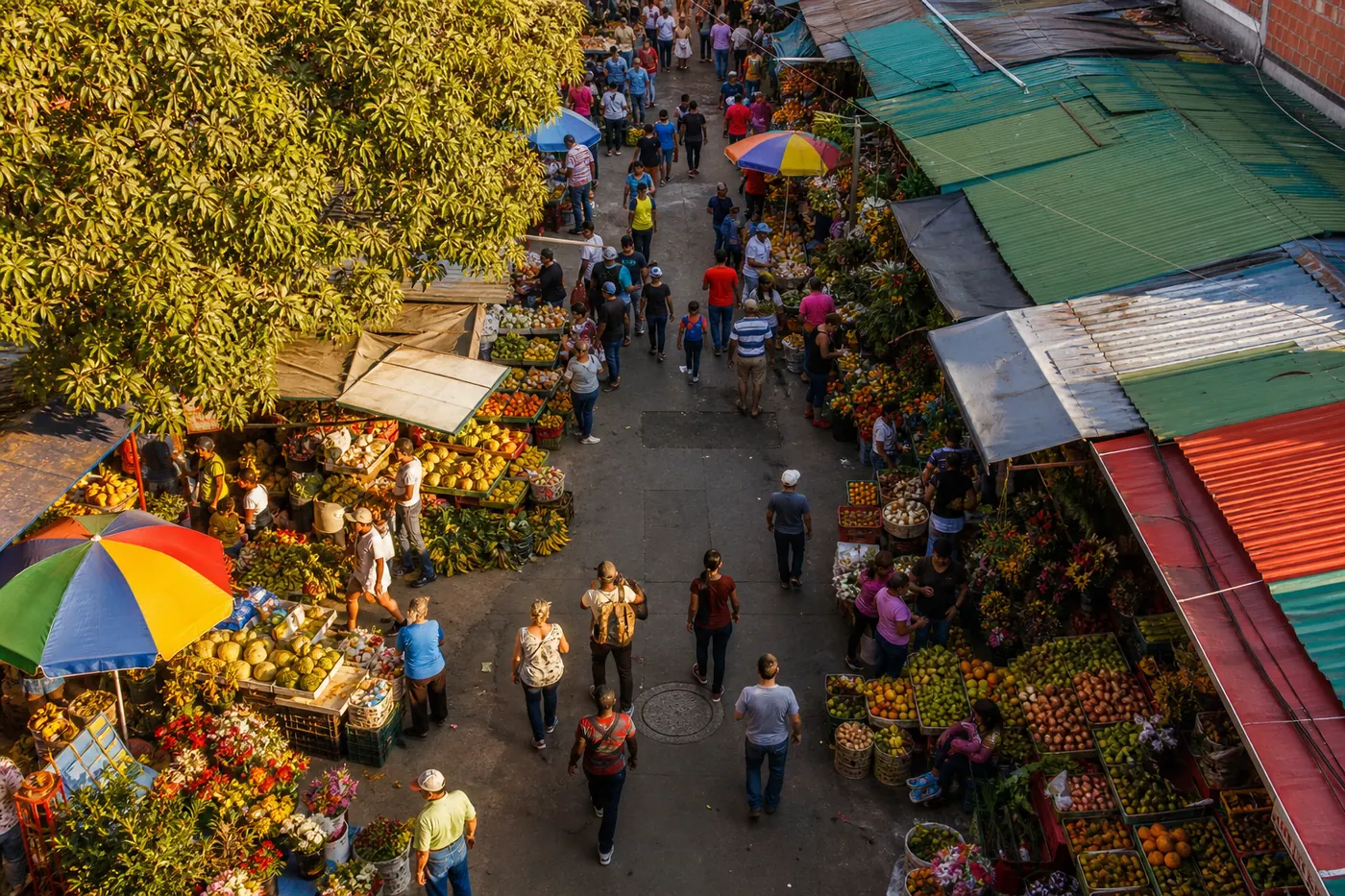
Every Colombian has a story about buying something through a WhatsApp status post. A neighbor sells a fridge. A cousin is moving and posts a couch. A church group has tamales available Saturday mornings. WhatsApp is genuinely, actually, not metaphorically the marketplace for most Colombians — and the conversion rate inside that network is high because trust is already built in.
The ceiling shows up fast. Your market is exactly as large as your contact list, and no larger. The sellers who hit it hardest are the ones with real inventory — a car, an apartment, multiple items from a home cleanout — who've exhausted their network and don't know what to do next. They're not hobbyists; they're trying to close real transactions for significant money. They just have no discovery infrastructure beyond 200 contacts.
We see this most clearly with rental properties. A landlord in Laureles posts on her status. Gets some interest from friends of friends. One serious inquiry who doesn't qualify. Three months later the apartment is still empty, and she's starting to wonder if she priced it wrong — when the actual problem is she's only ever been talking to the same people. The migration from WhatsApp-as-market to proper classifieds is happening, but habit is sticky.
Sellers Are Getting Smarter About Presentation
A typical Colombian online listing a few years ago: one blurry photo taken in a dark room, a price listed as 'negotiable,' and a description that said 'se vende.' That was it. I don't want to overstate how far things have moved, but there's been real change.
Sellers now do multiple photos. They write descriptions with actual condition details, dimensions, what's included, and contact hours. They list real prices. Some are doing video walkthroughs. Part of this is seller-education content spreading through TikTok and YouTube. Part of it is painful experience — posting something for months with no responses and finally figuring out why.
The implication worth noting: because good listings are more common, the bad ones stand out more painfully than before. If your post is the one with a single dark photo and 'consult for price,' you're not competing — you're invisible. The floor has risen, which means the gap between a decent listing and a bad one keeps widening.
The Bilingual Gap Is Quietly Expensive
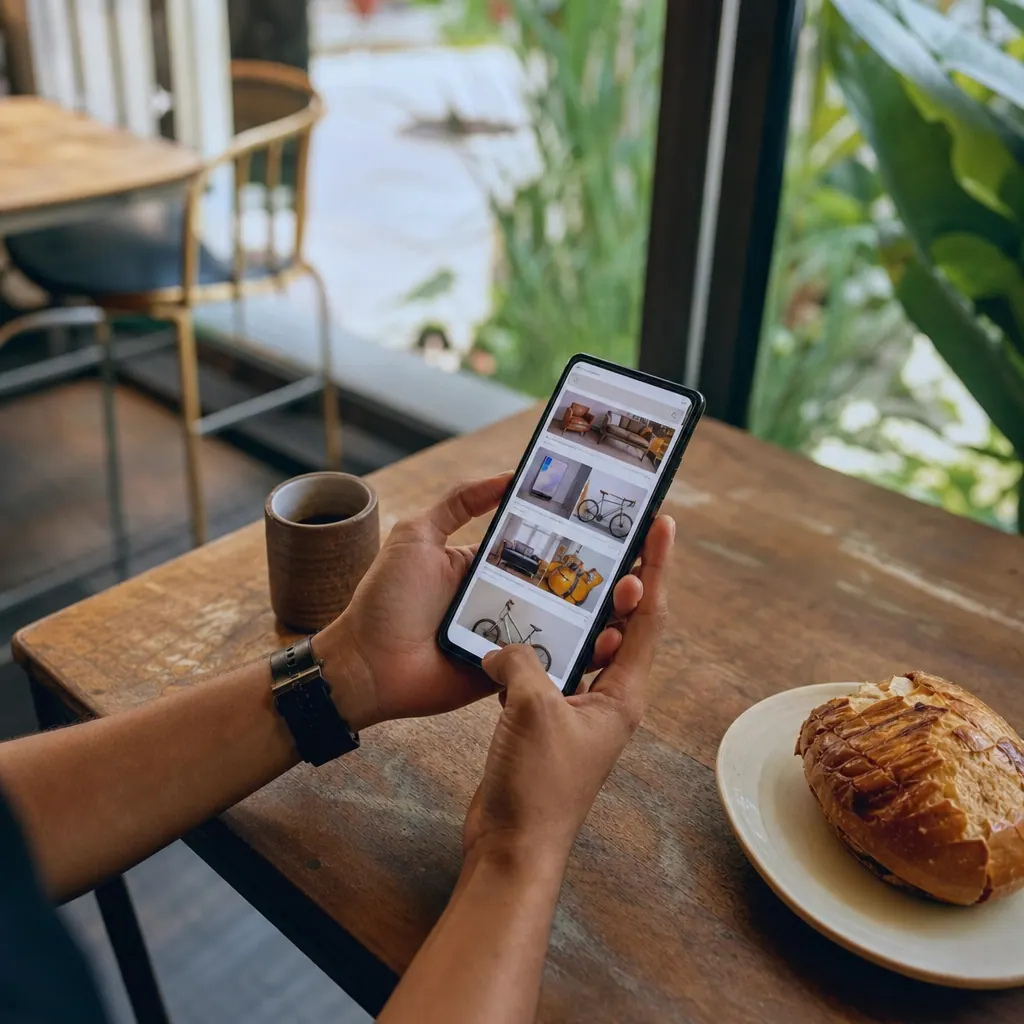
Here's something we see on Colombia Move directly. Listings posted in Spanish — correct, detailed, legitimate listings — that match exactly what English-speaking expats are looking for. The buyer is in Medellín. The seller is in Medellín. They're three kilometers apart. The transaction isn't happening because neither found the other.
Colombia has somewhere between 80,000 and 150,000 long-term foreign residents, depending on the estimate. Add in the digital nomad population rotating through Medellín, Bogotá, and Cartagena, and you have a meaningful buyer pool searching in English — with purchasing power that often exceeds local median incomes — who are genuinely trying to find things they can't locate because everything is in Spanish and they don't know where to look.
Sellers in El Poblado and Laureles have figured this out. Bilingual descriptions, WhatsApp calls from unfamiliar numbers answered promptly, prices quoted in dollars without being asked. Sellers further out often haven't, and they're leaving real money on the table. Our neighborhood and category pages work in both languages precisely because of this gap. But we can build around the discovery problem — we can't force sellers to write descriptions that cross-language buyers can actually read.
📖 Keep Reading
How Local Businesses in Colombia Can Reach Expats Without Paid Ads — practical steps for bridging the visibility gap.
Direct Is Winning, Slowly
The intermediary in Colombian commerce has had a long run. Inmobiliarias charging 10% placement fees on rentals. Recruiters taking commissions on placements. Car dealers adding markup to used vehicles that individuals could sell directly. The model worked because discovery was genuinely hard — if the intermediary knew buyers and sellers and you didn't, paying for that introduction made sense.
That calculus is changing. A landlord in Chapinero can now reach the same audience an inmobiliaria can, for free, with a well-written listing and decent photos. A freelancer with a clear storefront can find clients without a recruiter. A car owner with honest photos can close a sale faster than going through a dealer who adds 15%.
We don't think intermediaries are disappearing — the good ones who genuinely vet listings, handle paperwork, and manage disputes provide real value. What's getting cut out are the ones whose entire value was 'I know people you don't.' That information edge has shrunk. Direct-owner rental listings on Colombia Move get responses noticeably faster than comparable agency listings at the same price point. Some of that is the lower price. But a lot of it is that buyers want to talk to the person who actually owns the place.
Trust Is the Product Nobody Is Actually Selling
If you had to name the single biggest friction in Colombian online commerce, it's verification. How do you know the seller is real? How do you know the price is honest? How do you know you won't transfer a deposit and wait for a confirmation that never comes?
These aren't hypothetical fears. Rental scams — 'send the deposit and I'll courier the keys' — are common enough that experienced renters treat any listing requiring upfront payment without a visit with serious suspicion. Facebook Marketplace has enough ghost listings that a significant portion of buyers now assume the first contact will be a scam attempt. The mistrust is rational and earned.
The platforms that solve for trust win over time. That means real seller verification, visible listing history, reviews from completed transactions, and contact methods that don't require hiding your phone number in an image. We built seller storefronts on Colombia Move for exactly this reason — when you can see how long a seller has been on the platform, what else they've listed, and what previous buyers said, you make a better decision than when you're guessing from a single post with no context. It's also why we built Casa Clara — housing listings that show price history, admin fees, and seller identity, rather than the current norm where buyers go in almost completely blind.
What This Points To
None of this is revolutionary, but it's worth saying plainly: Colombia's online marketplace is maturing. Sellers are getting better at presenting. Buyers are getting better at spotting problems. The platforms that survive are going to be the ones that reduce friction without creating new costs — free to list, fast to contact, discoverable in both languages, and trustworthy enough that people don't need to meet in a mall parking lot to feel safe about a transaction.
There's still real ground to cover. The bilingual gap is underserved. Trust infrastructure on most platforms is thin. Direct transactions need better tooling to go smoothly without an intermediary. These are the problems worth solving, and solving them well is what the next phase of this market looks like.
🇨🇴 See the Listings We're Talking About
Colombia Move is free to post — housing, vehicles, services, jobs, and more. No commission, no subscription, bilingual search.
Browse listings →FAQ
❓ What is the biggest trend in Colombia's classifieds market right now?
The shift away from WhatsApp-only commerce toward structured listings with real photos, prices, and contact information. Sellers who relied purely on their contact network are discovering their reach is capped; platforms with search and SEO give them access to a much larger buyer pool without any added cost.
❓ Is WhatsApp still the main way Colombians buy and sell online?
For informal transactions within existing networks, yes. But it's increasingly a starting point rather than the whole channel. The limitation is reach — WhatsApp only connects you to people who already have your number. Classifieds platforms extend that reach to strangers who are actively searching for what you have.
❓ How is Colombia Move different from Facebook Marketplace or MercadoLibre?
Colombia Move is free at every level — no listing fees, no commissions, no paid boosts required to be visible. It's bilingual, with listings and search working in Spanish and English. Seller storefronts give buyers a verified listing history. And unlike Facebook, listings are Google-indexed, so they get organic search traffic from outside the platform itself.
❓ What is the bilingual gap in Colombia's online marketplace?
Expat buyers in Colombia — there are tens of thousands — tend to search in English. Most Colombian sellers post exclusively in Spanish. This means both sides often can't find each other even when they're in the same neighborhood. Platforms that handle both languages close that gap. Our neighborhood pages and category listings work in both languages precisely to solve this problem.

Comments
Loading comments...
Checking sign-in status...