
Bilingual Call Center & BPO Jobs in Colombia: How English Speakers Get Hired
Colombia's bilingual BPO industry hires English speakers constantly. Here's the realistic version: B2 screening, what 2026 listings actually pay, and the red flags to skip.
IDIOMA DEL ARTÍCULO
Showing original language
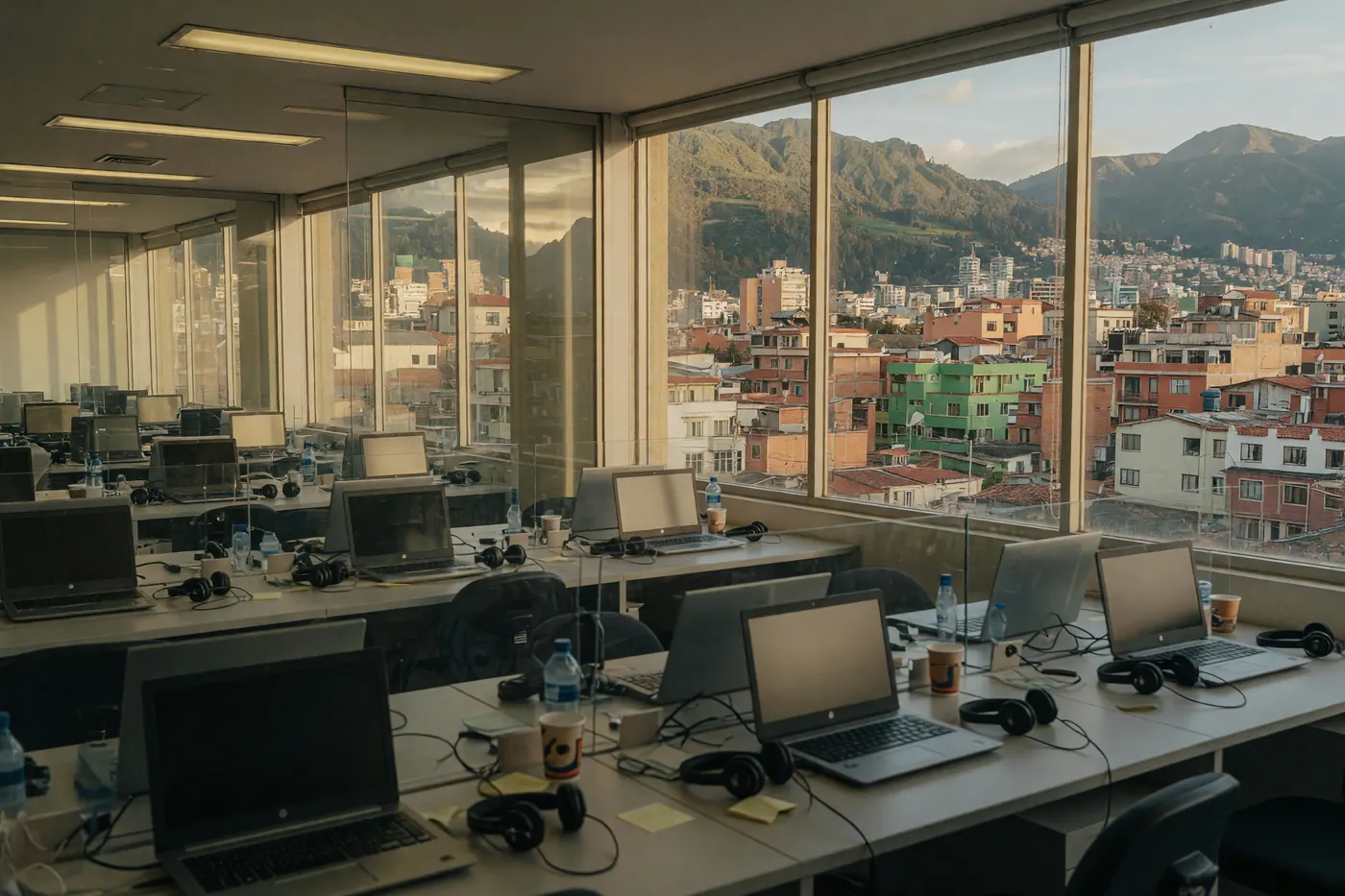
A friend of mine in Bogotá spent three years taking calls for a US telecom from the 14th floor of a tower on Calle 26. She walked in with sitcom English and a half-finished degree; she walked out a quality-team lead earning nearly double her starting base. Nobody ever asked about the degree. They asked her to calm down an angry customer in English for four straight minutes — that was the interview that mattered.
The short version: bilingual BPO is one of the most visible Colombia-based routes to steady work for English speakers. B2 English is what most listings ask for, base pay in mid-2026 postings mostly clusters between COP 2.0 and 3.1 million a month, and the screening is about how you sound under pressure, not your diploma.
Scope check: this guide covers jobs on Colombian payroll — customer service, tech support, sales, back office — serving customers abroad. Working remotely for a foreign company in USD is a different animal; I'll flag where they differ.
What Counts as a BPO Job — and Who Gets Hired
BPO (business process outsourcing) is the umbrella: customer calls, chat and email support, tech help desks, sales, collections, content moderation, back-office paperwork. The call center is just the loudest corner of it. If your English is stronger written than spoken, chat and email accounts exist — ask about them explicitly, because recruiters default to voice roles.
Who actually gets hired: bilingual Colombians (the overwhelming majority), returnees who grew up in the US, foreign residents who already hold work permission, and students who want night or weekend schedules. The door-opener is spoken English around B2 — most current listings name B2 outright, and screeners test speaking and listening live rather than collecting certificates. Accent matters far less than staying coherent while someone complains at you.
I'll put the downside up front: attrition in this industry is brutal. Schedules rotate, night shifts wear on your sleep, and some accounts churn through agents in months. The job is real and the pay is real — but treat the first contract as a paid English bootcamp and a foot in the door, not a destination.
Where the Hiring Actually Happens
On June 11, 2026, a single search for “agente bilingüe” on Computrabajo showed 715 open postings — 458 of them from the last month alone. The location filters tell you where the industry lives: Bogotá D.C. first, Antioquia (read: Medellín) second, Atlántico (Barranquilla) third, plus a growing slice marked remote or hybrid.
Employer names that keep showing up in listings and at hiring events: Concentrix, TP (Teleperformance), Foundever, Sutherland, Konecta, Atento, IntouchCX. Treat those as examples of who is active, not a ranking — accounts open and close constantly. Hiring fairs are worth your time too: Bogotá's Centro Colombo Americano ran a bilingual job fair on May 21, 2026, backed by industry groups BPrO and AmCham, with several of the same companies recruiting on site.
If you're picking a city for this work: Bogotá has the volume and the most English-heavy accounts, Medellín has plenty of seats with lower day-to-day costs, and Barranquilla is smaller but growing and noticeably less competitive.
What the Pay Looks Like in Current Listings
Postings I checked on June 11, 2026 mostly advertise base pay between COP 2.0 and 3.1 million a month — roughly USD 560 to 870 at the June 2026 exchange rate. For context, Colombia's 2026 minimum monthly wage is COP 1,750,905, so entry bilingual seats start a bit above minimum and the better accounts pay close to double it.
Read the “up to” lines carefully. When a listing promises “up to” some much bigger number, the guaranteed base is usually far lower and the rest is performance bonuses, night premiums, and perfect-attendance money. Get the base in writing, plus how the bonus math actually works, before you sign anything.
One genuine perk: US daytime is Colombia daytime, so plenty of accounts run human hours. But 24/7 accounts exist, the graveyard rotation is where new hires often land, and the same base stretches very differently in Bogotá than in Barranquilla. Our Bogotá monthly budget breakdown is the honest reference point.

The Hiring Pipeline, Step by Step
The process is more standardized than almost any other hiring in Colombia, which works in your favor — you can prepare for every stage:
- Apply with a short CV. One page, an English version ready, customer-facing experience listed first. Company career portals and the big job boards both work.
- English screening. Usually a recorded or live speaking test: describe a routine day, handle a mock complaint. They score comprehension and recovery, not accent.
- Typing and scenario checks. A short typing test and a written customer scenario, sometimes a logic quiz.
- Interview. Behavioral questions, schedule flexibility, and — bluntly — why you won't quit in month two.
- Background and document checks. Standard paperwork; have your IDs and references ready so this stage doesn't stall.
- Paid training. Length and pay vary by account — ask exactly how long it runs and what training pays before you accept, not after.
Your hoja de vida (CV) deserves ten focused minutes: one page, your English level stated honestly, results over duties. We wrote a separate piece on putting your CV online for free if it still lives in a drawer.
Honest pointer: Colombia Move runs a jobs board, and as of June 2026 it is nearly empty — our own marketplace data shows zero active listings across the 13 empleos categories, while saved search alerts (customer-service roles in Medellín, jobs in Cali) sit waiting for matches. That gap is an opening: a profile or posting placed there now gets seen, not buried. Browse or post in the empleos section on Colombia Move.
Scams and Red Flags in BPO Recruiting
Recruiting fraud follows this industry around. TP (Teleperformance) publishes a warning on its own careers site that maps the pattern: real TP recruiters write from @Teleperformance.com addresses, never run hiring through Telegram, and never ask candidates for money. That checklist generalizes to the whole industry:
- Anyone asking you to pay — for training, equipment, “processing” — is not hiring you. Walk away.
- Verify the email domain. A free webmail address “recruiting” for a multinational is a no.
- Telegram-only or WhatsApp-only processes with no official application step are a no.
- Vague “up to” bonus math with no written base deserves hard questions before you continue.
- Never hand over bank security codes or pay-card details during “onboarding”.
None of this should scare you off. The legitimate pipeline is formal and traceable — the scams stand out quickly once you know the shape.
Foreigners, Work Permission, and the Honest Comparison
If you're not Colombian, the question isn't whether call centers want you — your spoken English is exactly the asset they screen for. The question is whether you're allowed on a Colombian payroll. Colombia's foreign ministry, Cancillería, organizes long-stay permission into V, M and R categories: some M categories carry permission to work for a local employer, R status comes with open work permission, and a beneficiary permit does not allow work at all. Entering as a tourist is not a work plan, and most BPO employers won't sponsor paperwork for entry-level seats. Check Cancillería's official pages and get professional advice before accepting an offer.
And how does BPO stack up against the other routes English speakers actually take?
| Route | Money reality | The catch |
|---|---|---|
| Bilingual BPO | COP base; mid-2026 listings mostly COP 2.0–3.1M | Rotating schedules, burnout, a COP ceiling |
| Teaching English | COP pay, calmer rhythm | Credentials help; split morning/evening hours |
| Remote clients abroad | USD income, the best math | Hardest to land; you bring the clients |
If the classroom appeals more, our guide to teaching English in Colombia covers that route honestly. And if you can possibly hold foreign clients in USD, do that — our remote-income guide for expats maps those paths. BPO is the on-ramp; remote USD work is the upgrade.
Frequently Asked Questions
❓ Do I need perfect English to get a BPO job in Colombia?
No — most 2026 listings ask for B2, meaning you can hold a conversation and recover when you miss something. Screeners test live speaking and listening; clear comprehension beats a polished accent every time.
❓ How much do bilingual call center jobs pay in Colombia?
Listings checked on June 11, 2026 mostly advertise between COP 2.0 and 3.1 million per month. Bonuses, night premiums and attendance pay move the real number, so always confirm the guaranteed base in writing.
❓ Can a foreigner work in a Colombian call center?
Only if your migratory category includes permission to work for a local employer — some M categories do, and R status carries open work permission. Tourist entry is not a work plan; confirm your case on Cancillería's official pages.
❓ Which Colombian cities have the most bilingual BPO jobs?
Bogotá leads by volume in June 2026 listing filters, with Antioquia (Medellín) close behind and Atlántico (Barranquilla) visible and growing. A meaningful slice of postings is marked remote or hybrid, so the city matters less than it used to.
❓ Are call center jobs in Colombia remote?
Some are — remote and hybrid filters show real numbers of postings in 2026 — but many accounts still require in-office training first, and office seats outnumber remote ones. Ask about the schedule and training location before you commit.
❓ What should I watch for in a recruiter message?
Never pay anything to get hired — that rule alone filters most fraud. As of 2026, TP's official careers notice spells out the rest: verify the company email domain and refuse Telegram-only hiring processes.



Comments
Loading comments...
Checking sign-in status...